
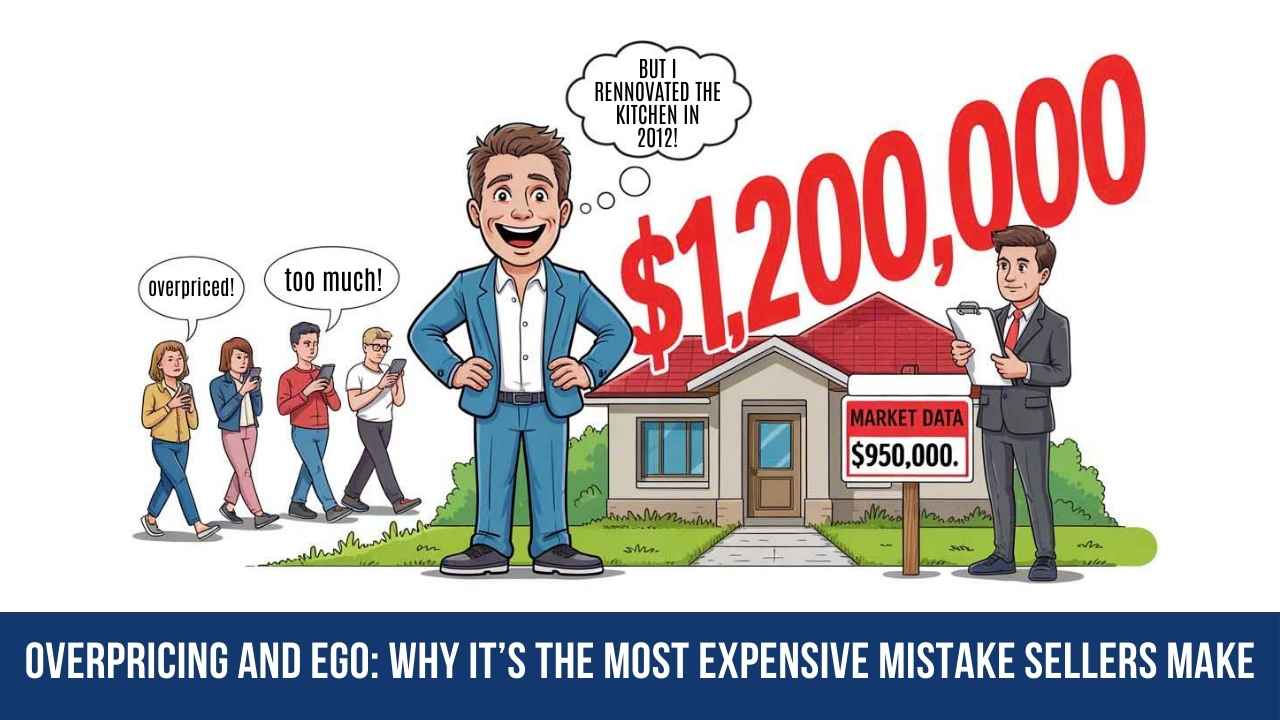

Overpricing a home is not just a pricing error—it is often a behavioral mistake. Sellers naturally associate their home with memories, effort, upgrades, and pride. The market, however, evaluates only data: comparable sales, supply, demand, and buyer behavior.
When pricing is driven by emotion rather than market evidence, the financial consequences can be significant.
Why Sellers Overprice
- Emotional attachment – Owners value their home based on personal meaning, not market comparables.
- Anchoring bias – Sellers fixate on the highest recent sale in the area, even if it is not comparable.
- “Testing the market” mindset – Belief that starting high leaves room to negotiate.
- Overestimating upgrades – Renovations rarely return 100% of cost.
- Advice from non-experts – Friends and neighbors often base opinions on outdated or incomplete data.
What Actually Happens When a Home Is Overpriced
1. Reduced Buyer Interest
Today’s buyers are data-informed. If a property is priced outside its competitive range:
- It receives fewer showings.
- It is excluded from common online price filters.
- It is immediately compared to better-valued alternatives.
2. Longer Time on Market
Properties that linger:
- Develop a stigma (“What’s wrong with it?”).
- Attract lower offers over time.
- Lose negotiating leverage.
The first 1–2 weeks on market typically generate the highest traffic and strongest offers. Overpricing weakens this window.
3. Price Reductions Signal Weakness
Multiple reductions can:
- Invite aggressive negotiations.
- Encourage buyers to wait for further drops.
- Create perception of seller urgency.
Data consistently shows that correctly priced homes often net more than homes that start high and reduce later.
4. Emotional Burnout
Extended market time increases:
- Seller stress
- Frustration with agents
- Reactive decision-making
Ironically, this often results in accepting a lower final price than if the home had been positioned correctly from the start.
The Financial Impact
Overpricing can cost sellers in multiple ways:
- Additional mortgage payments
- Carrying costs (taxes, insurance, utilities)
- Missed opportunities to purchase another property
- Final sale price below true market value
In competitive markets, pricing accurately can generate multiple offers. In balanced or slower markets, precision pricing is even more critical.
Strategic Pricing vs. Emotional Pricing
Strategic pricing:
- Based on recent comparable sales
- Adjusted for condition, location, and market velocity
- Designed to attract maximum early interest
Emotional pricing:
- Based on hope or past value
- Detached from current buyer behavior
- Assumes negotiation will “fix” overpricing
Final Thought
The market does not reward ego. It rewards alignment with reality.
Pricing is not about proving what your home is worth to you. It is about positioning it where buyers perceive value and act decisively.
Choosing the right pricing strategy and the right listing agent to execute it is often the difference between a smooth sale and an expensive lesson.
Download these helpful checklists to guide you through your buying and selling journey.

Home Buyer’s Checklist

Home Seller’s Checklist

Mistakes To Avoid

10 Body Changes After 60 Worth Discussing With Your Doctor
Download these helpful checklists to guide you through your buying and selling journey.Home Buyer's ChecklistHome Seller's ChecklistMistakes To Avoid

Morning Headaches in Seniors: 9 Causes, Warning Signs and What to Do
Download these helpful checklists to guide you through your buying and selling journey.Home Buyer's ChecklistHome Seller's ChecklistMistakes To Avoid

Sudden Weight Gain From Fluid Retention: Causes, Warning Signs & What to Do
Download these helpful checklists to guide you through your buying and selling journey.Home Buyer's ChecklistHome Seller's ChecklistMistakes To Avoid