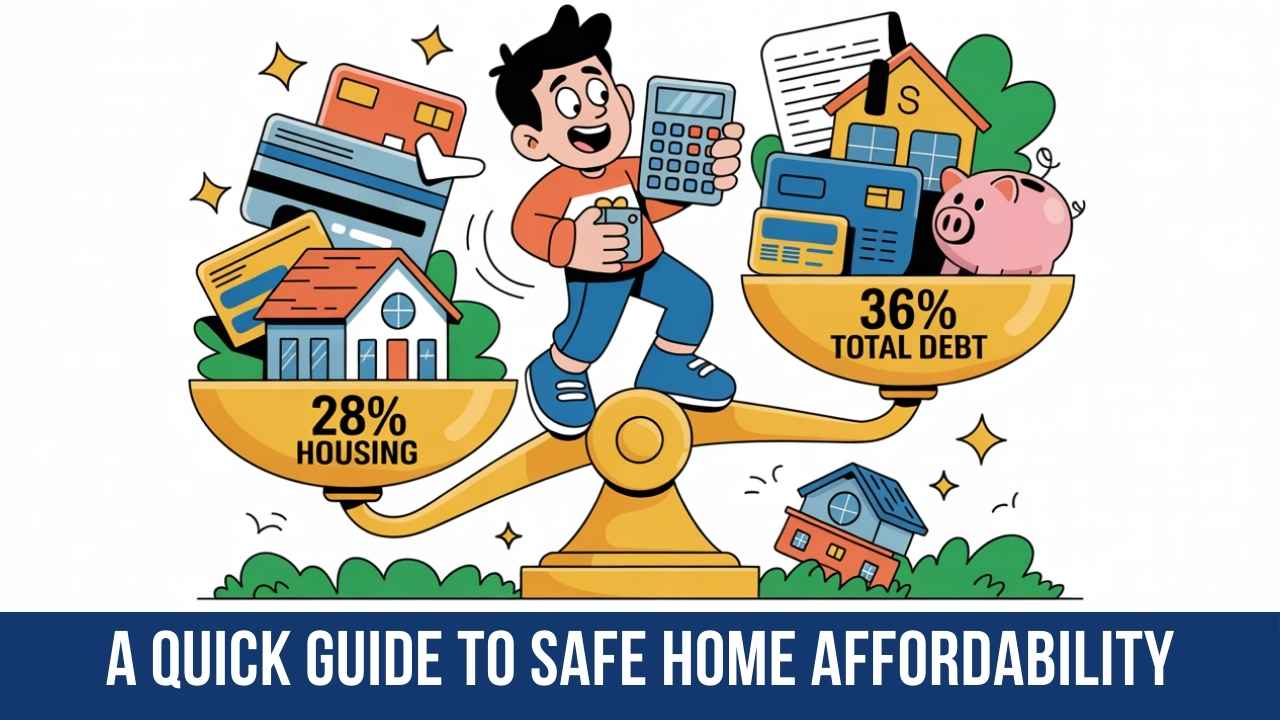

Buying a home is exciting — but figuring out how much house you can safely afford can feel overwhelming. One of the simplest guidelines many lenders and financial advisors use is called the 28/36 Rule.
It’s not a strict law, but it’s a widely accepted affordability guideline that helps buyers avoid becoming “house poor.”
Let’s break it down in a simple and practical way.
What Is the 28/36 Rule?
The 28/36 Rule is a budgeting guideline used in mortgage underwriting that suggests:
-
No more than 28% of your gross monthly income should go toward housing costs.
-
No more than 36% of your gross monthly income should go toward total debt obligations.
This rule helps lenders determine whether your mortgage payment is financially sustainable.
Many lenders, including those following underwriting standards from organizations such as the Federal Housing Administration, Fannie Mae, and Freddie Mac, use similar debt-to-income principles when evaluating mortgage applications.
28% Rule 🏠
Housing Costs Should Not Exceed 28% of Your Income
The 28% rule focuses only on housing expenses.
This includes:
-
Mortgage principal and interest
-
Property taxes
-
Homeowners insurance
-
HOA fees (if applicable)
This combination is often called PITI (Principal, Interest, Taxes, Insurance).
Example
If your gross monthly income is $6,000
28% of $6,000 = $1,680
This means your recommended maximum housing payment is about: $1,680 per month
Quick Visual Breakdown
[Housing 28% 🏠] ███████████
[Remaining Income 72%] ██████████████████████████████
Housing Portion (28%) Includes:
-
Mortgage payment
-
Property taxes
-
Insurance
-
HOA dues
Why the 28% Rule Matters
Staying within this range helps ensure that you still have money available for:
-
groceries
-
transportation
-
savings
-
emergencies
-
lifestyle expenses
In simple terms: your home supports your life, not controls it.
Total Debt Ratio Pie Chart
[Total Debt 36% 💳] █████████████
[Remaining Income 64%] █████████████████████████
Example Debt Allocation
If your mortgage payment is $1,680, that leaves about:
$480 for other debts
Example:
-
Car payment: $250
-
Student loan: $150
-
Credit card minimum: $80
Total = $480
You’re still within the 36% guideline.
Why Lenders Use the 28/36 Rule
Mortgage lenders use this guideline to measure Debt-to-Income Ratio (DTI) — one of the most important factors in mortgage approval.
DTI helps lenders evaluate:
-
ability to repay a loan
-
financial stability
-
risk of default
According to mortgage guidelines used by Consumer Financial Protection Bureau, maintaining a manageable debt-to-income ratio significantly improves a borrower’s chances of loan approval.
When Buyers Can Exceed the Rule
The 28/36 rule is a guideline — not a hard limit.
Some loan programs allow higher ratios.
Examples:
-
FHA loans sometimes allow DTI up to ~43%
-
Some conventional loans allow 45%–50% depending on credit strength
However, just because a lender approves it doesn’t always mean it’s comfortable financially.
Tips to Stay Within Safe Affordability
Here are a few simple ways buyers keep their finances healthy:
• Pay down credit card balances before applying
• Avoid new debt during the mortgage process
• Increase your down payment if possible
• Maintain an emergency savings fund
• Shop around for mortgage rates
These steps can improve affordability and loan approval chances.
A Simple Way to Think About It
28% Housing 🏠
8% Other Debt 💳
64% Everything Else (life, savings, food, fun)
Final Thoughts
The 28/36 Rule remains one of the most practical starting points for buyers evaluating affordability.
It helps you:
-
avoid financial stress
-
stay within a manageable budget
-
make smarter homebuying decisions
And remember: buying the right home isn’t just about approval — it’s about long-term comfort.
Sources
-
Consumer Financial Protection Bureau
-
Federal Housing Administration
-
Fannie Mae
-
Freddie Mac
-
National Association of Realtors Homebuyer Resources
Disclaimer
This article is provided for educational and informational purposes only and should not be considered financial, legal, or mortgage advice. Mortgage qualification standards, interest rates, and debt-to-income requirements may vary by lender, loan program, and borrower profile. Readers should consult with a licensed mortgage professional, financial advisor, or housing counselor before making any financial or homebuying decisions.
Download these helpful checklists to guide you through your buying and selling journey.

Home Buyer’s Checklist

Home Seller’s Checklist

Mistakes To Avoid

10 Body Changes After 60 Worth Discussing With Your Doctor
Download these helpful checklists to guide you through your buying and selling journey.Home Buyer's ChecklistHome Seller's ChecklistMistakes To Avoid

Morning Headaches in Seniors: 9 Causes, Warning Signs and What to Do
Download these helpful checklists to guide you through your buying and selling journey.Home Buyer's ChecklistHome Seller's ChecklistMistakes To Avoid

Sudden Weight Gain From Fluid Retention: Causes, Warning Signs & What to Do
Download these helpful checklists to guide you through your buying and selling journey.Home Buyer's ChecklistHome Seller's ChecklistMistakes To Avoid