
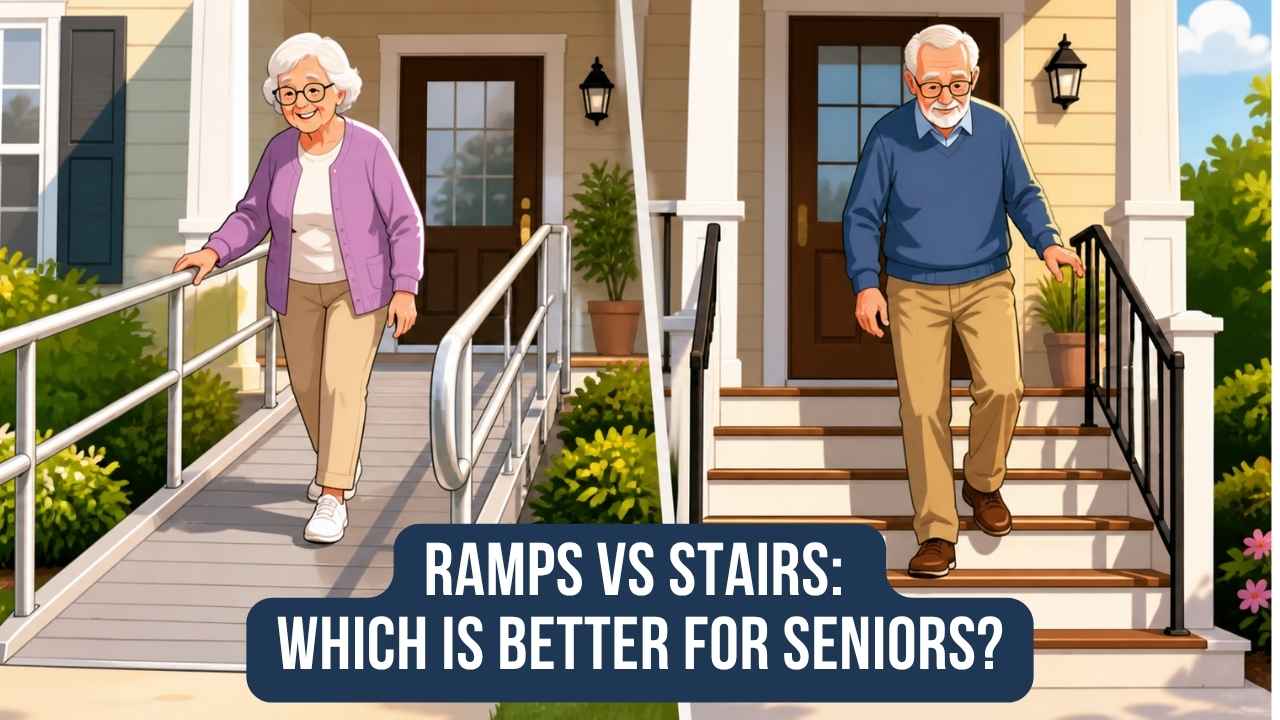

When planning a safer home for aging in place, one of the biggest decisions homeowners face is whether to keep stairs or install ramps. The answer depends on mobility, health conditions, home design, and long-term lifestyle goals.
Falls remain one of the leading causes of injury among older adults, and stairways are one of the most common locations where those falls occur. Understanding the pros and limitations of both options can help families make smarter, safer decisions.
1. Accessibility: Who Benefits Most?
Stairs require balance, leg strength, and coordination. For active seniors with minimal mobility issues, stairs may still be manageable.
Ramps provide smoother access for those using walkers, wheelchairs, canes, or recovering from surgery.
Best use case:
- Stairs: Mobile, independent seniors
- Ramps: Limited mobility, wheelchair users, joint pain sufferers
2. Safety Risks: Fall Prevention Matters
Stairs increase fall risk due to uneven footing, poor lighting, slippery surfaces, and depth perception changes.
Ramps reduce vertical stepping but introduce slope-related risks if poorly designed.
Key ramp safety requirements:
- Non-slip surface
- Handrails on both sides
- Proper slope (typically 1:12 ratio)
- Level landing platforms
Solution: Add anti-slip strips, handrails, and motion-sensor lighting.
3. Space Requirements: What Fits Your Home?
Stairs are compact and efficient.
Ramps need significantly more horizontal space. For every inch of rise, you generally need about 12 inches of ramp length.
Example: A 24-inch rise requires approximately 24 feet of ramp.
Solution: Consider switchback ramps for smaller properties.
4. Cost Comparison: Initial vs Long-Term Value
Stairs are usually less expensive to build or maintain.
Ramps can cost more upfront depending on materials (wood, aluminum, concrete), but may save money long-term by preventing injuries or delaying assisted living.
Average considerations:
- Basic stair upgrades: handrails, tread strips
- Ramp installation: material, labor, permits
Solution: Start with temporary modular ramps if budget is limited.
5. Long-Term Planning: Think Ahead
Mobility often changes faster than expected.
A home that works today may become unsafe later.
Installing ramps proactively can extend independent living and reduce emergency modifications later.
Questions to ask:
- Will mobility likely decline?
- Is surgery or rehabilitation expected?
- Will caregiving equipment be needed?
Solution: Get a home safety assessment from an aging-in-place specialist.
Final Recommendation
Choose stairs if mobility is strong and stable.
Choose ramps if accessibility, safety, and long-term independence are priorities.
In many cases, the best solution is not ramps or stairs—but safer stairs now and ramps when needed.
Smart planning today creates safer living tomorrow.
Disclaimer
This article is for informational purposes only and does not constitute medical, construction, or legal advice. Always consult with a licensed contractor, occupational therapist, or healthcare professional before making modifications to a home. Individual needs and local building codes may vary.
Download these helpful checklists to guide you through your buying and selling journey.

Home Buyer’s Checklist

Home Seller’s Checklist

Mistakes To Avoid

10 Body Changes After 60 Worth Discussing With Your Doctor
Download these helpful checklists to guide you through your buying and selling journey.Home Buyer's ChecklistHome Seller's ChecklistMistakes To Avoid

Morning Headaches in Seniors: 9 Causes, Warning Signs and What to Do
Download these helpful checklists to guide you through your buying and selling journey.Home Buyer's ChecklistHome Seller's ChecklistMistakes To Avoid

Sudden Weight Gain From Fluid Retention: Causes, Warning Signs & What to Do
Download these helpful checklists to guide you through your buying and selling journey.Home Buyer's ChecklistHome Seller's ChecklistMistakes To Avoid