

Your Body, Your Sixties
Turning 60 is a milestone worth celebrating, not something to dread. But let's be honest: your body is quietly rewriting its own rulebook, and some of those changes can catch you off guard if nobody warns you about them first.
The good news? Most of these body changes after 60 are completely normal, and even better, most of them are manageable once you know what to look for. Think of this list as a friendly heads-up, not a reason to panic. Knowing what's typical for this stage of life means you'll recognize the difference between "just getting older" and "something my doctor should actually hear about."
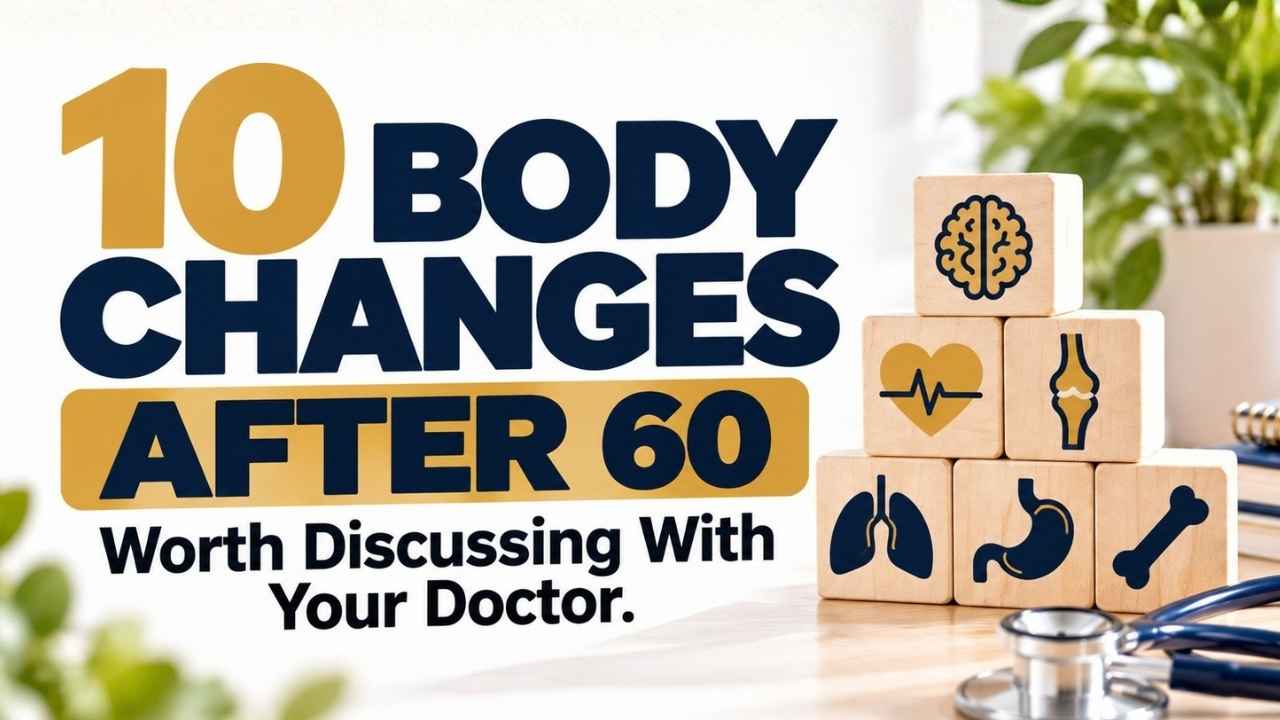
Here are 10 changes your body may go through after 60, and why each one deserves a few minutes on your next doctor's visit agenda.
Bone Density Loss and Osteoporosis Risk
Your bones have been quietly losing density since your 30s, but the pace tends to pick up after 60, especially for women in the years following menopause. Lower estrogen and testosterone levels speed up bone breakdown, which raises the risk of osteoporosis and fractures from even minor falls.
You likely won't feel this happening, which is exactly why it is worth bringing up. A bone density scan (DEXA scan) can catch thinning bones early, long before a fracture forces the issue.
Talk to your doctor about: how often you need a bone density test, whether you need more calcium and vitamin D, and whether weight-bearing exercise fits into your routine.
Muscle Mass Decline (Sarcopenia)
Starting around age 30, we gradually lose muscle mass, a process called sarcopenia, and it can accelerate after 60. Less muscle means less strength, slower movement, and a higher risk of falls and injuries.
The upside is that muscle loss responds well to action. Regular resistance and strength training, paired with enough protein in your diet, can meaningfully slow or even partially reverse the trend.
Talk to your doctor about: your current strength and balance, whether a referral to physical therapy makes sense, and how much protein is right for your age and activity level.
A Slower Metabolism and Changing Weight
If the scale is creeping up without any change in your habits, your metabolism is likely the culprit. Resting metabolic rate, the rate at which your body burns calories at rest, naturally slows with age, partly because of the muscle loss described above.
Weight gain after 60 is not just a cosmetic concern. It is linked to higher risks of heart disease, type 2 diabetes, and joint strain.
Talk to your doctor about: your target weight range, whether your thyroid or blood sugar levels should be checked, and realistic adjustments to diet and activity for your age.
Heart and Cardiovascular Changes
Blood vessels naturally stiffen with age, which can raise blood pressure, and the heart muscle itself may work a little less efficiently than it used to. Combined with decades of lifestyle factors, this makes 60 and beyond a key window for cardiovascular risk.
Heart disease often develops silently, so routine monitoring matters more than symptoms alone.
Talk to your doctor about: regular blood pressure and cholesterol checks, your personal and family cardiac history, and whether an EKG or stress test is appropriate for you.
Thinner, Drier Skin
After 60, skin produces less collagen and elastin, the proteins that keep it firm and elastic. The epidermis and dermis gradually thin, which means skin bruises more easily, heals more slowly, and tends to feel drier than before.
Most of this is cosmetic, but thinning skin combined with slower healing is worth mentioning, especially if you notice wounds that take an unusually long time to close, or new spots and moles that change shape or color.
Talk to your doctor about: a yearly skin check, any slow-healing cuts or sores, and moisturizing routines that support an aging skin barrier.
Free Download
A Senior's Guide to a Safe and Relaxing Home
A clear, doctor-informed guide to help older adults and their families make any home safer, calmer, and easier to enjoy. No renovation required.
PDF · 24 pages. No sign-up, no cost.
A Senior's Guide to a Safe & Relaxing Home
Doctor-informed · 2026Hearing and Vision Changes
About 40% of people in their 60s experience some degree of hearing loss, and vision changes like difficulty focusing on close objects, increased sensitivity to glare, or early signs of cataracts become more common too.
These shifts tend to happen so gradually that many people adjust without realizing how much they have lost, which is exactly why a baseline screening matters.
Talk to your doctor about: scheduling a hearing test, getting a comprehensive eye exam, and whether it is time to screen for cataracts, glaucoma, or age-related macular degeneration.
Disrupted Sleep Patterns
Here is a surprising fact: people over 60 need roughly the same amount of sleep as younger adults, but they often get less of it. Lower melatonin production, more frequent nighttime waking, and a higher likelihood of sleep apnea (sometimes linked to weight gain) can all chip away at quality rest.
Poor sleep does not just leave you tired. Over time it is tied to memory problems, mood changes, and a weaker immune response.
Talk to your doctor about: ongoing trouble falling or staying asleep, loud snoring or gasping during sleep, and whether a sleep study could identify an underlying issue like sleep apnea.
Digestive and Bladder Changes
Digestion can slow down after 60, which may bring more frequent constipation, bloating, or sensitivity to certain foods. At the same time, pelvic floor muscles weaken, which is a common reason bladder control, or incontinence, becomes an issue for many people, not just women.
These topics can feel awkward to bring up, but they are some of the most common concerns doctors hear from patients in this age group, so there is no need for embarrassment.
Talk to your doctor about: changes in bathroom habits, any unexplained blood in stool or urine, and pelvic floor exercises or treatment options for bladder control.
A Less Responsive Immune System
By 60, your body produces fewer new T-cells, the immune cells responsible for finding and fighting off infections. That means your immune system responds more slowly to illness, and recovery can take longer than it used to.
This is one of the clearest, most practical reasons to stay current on vaccines as you age.
Talk to your doctor about: updated vaccine recommendations for flu, pneumonia, and shingles, a higher-dose flu vaccine option if you are over 65, and any recurring infections that seem to linger longer than expected.
Memory and Cognitive Shifts
It is normal to occasionally misplace your keys or blank on a name after 60. Mild changes in processing speed and short-term recall are a typical part of aging, not a sign of something serious on their own.
The distinction that matters is between normal forgetfulness and changes that disrupt daily life, like getting lost in familiar places, repeating the same questions, or struggling to follow a conversation. Reduced vitamin B12 absorption, which becomes more common with age, can also contribute to brain fog and is worth ruling out.
Talk to your doctor about: any memory changes that worry you or your family, a vitamin B12 check, and a baseline cognitive screening if you have concerns.
The Bottom Line
Turning 60 is an evolution, not an endpoint.
Every change on this list is common, well understood, and manageable, especially when you catch it early. The simplest thing you can do for your long-term health is also the easiest: write these changes down as you notice them, bring the list to your next appointment, and talk them through with your doctor. A short, sometimes uncomfortable conversation today can save you a much harder one later.
Disclaimer
This article is for general informational and educational purposes only and is not intended as, and should not be taken as, medical advice, diagnosis, or treatment. It is not a substitute for professional medical consultation. Always consult a qualified healthcare provider regarding any questions you may have about a medical condition, symptom, or treatment, and before making any changes to your diet, exercise routine, medication, or healthcare plan. Never disregard professional medical advice or delay seeking it because of something you have read here. Reliance on any information in this article is solely at your own risk.
References
- UPMC: Health Concerns for Women in Their 60s
- Keck Medicine of USC: Your Body at 40, 50, 60 and 70
- WebMD: Guide to Sex After 60
- Vinmec: How Have You and Your Body Changed in Your 60s?
Ready for Your Next Move?
Whether you're planning to buy, sell, or simply exploring your options, fill out the form below. Tell us a little about what you're looking for, and we'll help connect you with the right real estate professional.
David Reis, MD
New York, New York 10036
Tell Us About Your Move
Complete the short form and we'll be in touch.

David Reis MD
eXp Realty
Commercial and Residential Referral Division
Planning Your Next Chapter?
Thinking about moving closer to family, downsizing, or finding a home that better fits your lifestyle? Let’s have a simple, no-pressure conversation.
Download these helpful checklists to guide you through your buying and selling journey.

Home Buyer’s Checklist

Home Seller’s Checklist

Mistakes To Avoid