
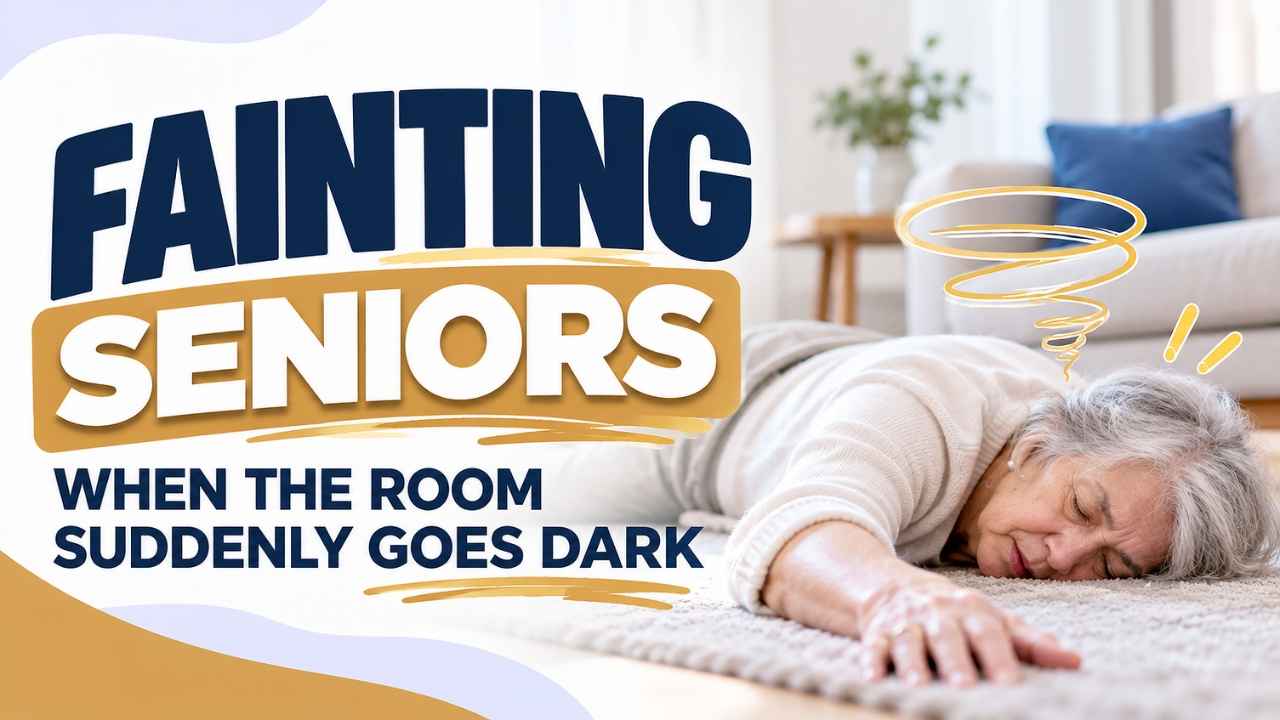

When the Room Suddenly Goes Dark
It happens fast. One moment Mom is standing at the kitchen counter, and the next she's on the floor, pale and confused about what just occurred.
If this sounds familiar, you're far from alone. Fainting, known medically as syncope, becomes noticeably more common after age 70, and it's one of the most frequent reasons older adults end up in the emergency room.
Here's the good news: most fainting episodes are not random. They have identifiable triggers, warning signs and, in many cases, ways to prevent them. This guide walks through why fainting in seniors happens, what to watch for, how to respond in the moment and when it's time to call a doctor. Think of it as a practical, no-jargon resource you can return to whenever you need it.
The Science, SimplifiedWhy Do Seniors Faint More Often?
Fainting happens when the brain briefly loses the steady blood flow it needs, even for a few seconds. Aging bodies are simply more vulnerable to that interruption, because of changes in the heart, blood vessels and nervous system.
According to geriatric research, roughly 75 percent of syncope in older adults traces back to noncardiac causes, while about 15 percent is linked to the heart, and the remainder is never fully explained source.
The most common causes include:
- Orthostatic hypotension. A sudden drop in blood pressure after standing up too quickly. This is one of the leading causes of fainting in older adults and is often worsened by blood pressure medications source.
- Reflex (vasovagal) syncope. Triggered by pain, emotional stress, prolonged standing or a sensitive carotid sinus in the neck, sometimes set off by a tight collar or turning the head quickly.
- Postprandial hypotension. A drop in blood pressure after eating, caused by blood pooling in the digestive system. This is a surprisingly common and under-recognized trigger in older adults.
- Heart-related causes. Irregular heart rhythms, a slow heart rate (bradycardia), or narrowing of the aortic valve can all restrict blood flow to the brain. These causes carry the most serious prognosis and need prompt medical evaluation.
- Medication side effects. Blood pressure drugs, diuretics and sedatives are frequently involved, making a regular medication review an important part of prevention.
- Dehydration or poor nutrition, which reduce blood volume and make the blood pressure drop more easily.
Catch It EarlyWarning Signs Before a Fainting Spell
Syncope rarely strikes without any hint beforehand. Doctors call these early clues "premonitory symptoms," and recognizing them can give a senior time to sit or lie down before they fall source.
Common warning signs
- Sudden lightheadedness or dizziness
- Nausea or a wave of warmth
- Blurred or tunnel vision
- Cold, clammy or pale skin
- A racing or irregular heartbeat
- Ringing in the ears
- Brief confusion or difficulty focusing
After the episode, it's also common to feel disoriented for a few minutes. If a loved one faints, pay attention to what led up to it, how long it lasted and how they felt afterward. These details are genuinely useful for a doctor trying to pinpoint the cause.
In The MomentWhat to Do if a Senior Faints
Knowing how to respond in the moment can prevent a second, more serious injury from a fall. If you notice the warning signs above, or witness an episode, try the following:
- Help them sit or lie down immediately. If lying down, raise the legs slightly above heart level to encourage blood flow back to the brain.
- Loosen tight clothing, especially around the neck and collar.
- Check for breathing and responsiveness. If the person does not wake within a minute, or you cannot find a pulse, call emergency services right away.
- Don't rush the recovery. Let them rest for several minutes before standing, and help them rise slowly.
- Look for injuries from the fall, particularly to the head or hip, since fractures are a common and serious complication of fainting in older adults.
- Call for medical help if the fainting was accompanied by chest pain, a fall from standing with injury, confusion that doesn't clear, or if it's the person's first-ever fainting episode.
Don't Wait It OutWhen to See a Doctor: Red Flags You Shouldn't Ignore
Syncope is a symptom, not a diagnosis, and it should never be brushed off as just a part of getting older source. Schedule a prompt medical evaluation, or seek emergency care, if any of these apply:
- The fainting spell is the person's first one, or the pattern of episodes has changed
- It happened during exercise or physical exertion
- There was chest pain, shortness of breath or heart palpitations beforehand
- The person has a known history of heart disease, arrhythmia or heart failure
- An injury occurred during the fall
- Recovery took longer than a few minutes, or confusion lingered
- Fainting is becoming more frequent
Because 20 to 30 percent of fainting episodes in older adults have a cardiac cause, and these carry a higher risk of serious outcomes, a doctor will often recommend blood pressure checks, an EKG, blood work or a medication review to rule out dangerous causes. source
Small Habits, Big DifferenceSimple Ways to Help Prevent Fainting
Many fainting episodes in seniors are preventable with a few consistent habits source:
Stand up slowly
Sit on the edge of the bed for a moment before standing, and pause after rising before walking.
Stay hydrated
Keep fluids up and maintain adequate salt intake, as advised by a doctor.
Review medications
Check in regularly with a physician or pharmacist, especially about blood pressure drugs, diuretics and sedatives.
Eat smaller meals
More frequent, lighter meals reduce blood pressure drops after eating.
Skip tight collars
Avoid tight neckwear that could trigger carotid sinus sensitivity.
Keep moving
Stay physically active within safe limits, since regular movement supports healthy circulation and muscle tone.
Try compression stockings
If recommended, they help blood return from the legs.
Fall-proof the home
Clear walkways, grab bars and good lighting, in case a fainting spell does occur.
In ShortThe Bottom Line
Fainting in seniors isn't something to shrug off, but it also isn't something to panic over. With the right awareness, most causes can be identified and managed, and many episodes can be prevented altogether.
If you or someone you love has experienced a fainting spell, the most important next step is simple: talk to a doctor. A little proactive care today can prevent a serious fall or hidden heart issue tomorrow.

Keep This Guide Close By
Download A Senior's Guide to a Safe and Relaxing Home — a free, print-friendly companion to everything above, from fall-proofing walkways to setting up a calmer, safer space.
Get the Free DownloadDisclaimer
This article is for general informational purposes only and is not a substitute for professional medical advice, diagnosis or treatment. Always seek the guidance of a qualified physician or other health provider with any questions regarding a medical condition, including fainting or syncope. If you or someone near you experiences a fainting episode with chest pain, difficulty breathing, prolonged unconsciousness or injury, seek emergency medical attention immediately.
Sources
The Independence Issue
Senior Tools
Small devices that keep everyday life in your own hands.
None of these need a tech-savvy grandchild on standby. Each one solves a specific, ordinary problem — reaching help after a fall, remembering the Tuesday pill, hearing the person across the table — and each is widely available without a prescription or a contract.
Medical alert pendants
One button reaches a 24/7 response center. Models with fall detection place the call on their own when no one presses anything, which is the whole point after a bad landing.
SafetyPill trays and dose reminders
A seven-day tray makes a missed dose visible at a glance. Pair it with a phone alarm or a talking dispenser and the guesswork disappears entirely.
HealthBig-button phones
Oversized keys, an amplified handset, and photo speed-dial buttons. Press the picture of your daughter, the phone rings her. No menus, no scrolling.
ConnectionGrab bars and shower seats
The bathroom is where most household falls happen. A bar bolted into a stud, plus a seat and a non-slip mat, removes the two riskiest moments of the day.
MobilityOver-the-counter hearing aids
For mild to moderate loss you can now buy and self-fit a pair without an audiologist's appointment. Try them in a noisy room before committing — that's the real test.
HearingOne-tap video tablets
Simplified tablets answer a family video call automatically, or with a single large button. Grandchildren show up on the kitchen counter without anyone fighting a password.
ConnectionIf you only do one thing this month, do the bathroom.
A grab bar costs less than a single co-pay and takes an afternoon to install. Nothing else on this list prevents as much trouble for as little money.
Four questions before you buy anything
- Can it be used with one hand? Arthritis and a walker both rule out two-handed devices.
- What happens when the power goes out? Battery backup matters most for alert systems.
- Is there a monthly fee? Monitoring subscriptions often cost more than the device itself.
- Will it actually get worn or used? The best device is the unglamorous one that stays on.
Independence is rarely lost all at once. It goes in small, fixable increments — and most of them have a fifty-dollar answer sitting on a shelf.
Read the full guideReady for Your Next Move?
Whether you're planning to buy, sell, or simply exploring your options, fill out the form below. Tell us a little about what you're looking for, and we'll help connect you with the right real estate professional.
David Reis, MD
New York, New York 10036
Tell Us About Your Move
Complete the short form and we'll be in touch.

David Reis MD
eXp Realty
Commercial and Residential Referral Division
Planning Your Next Chapter?
Thinking about moving closer to family, downsizing, or finding a home that better fits your lifestyle? Let’s have a simple, no-pressure conversation.
Download these helpful checklists to guide you through your buying and selling journey.

Home Buyer’s Checklist

Home Seller’s Checklist
Mistakes To Avoid