
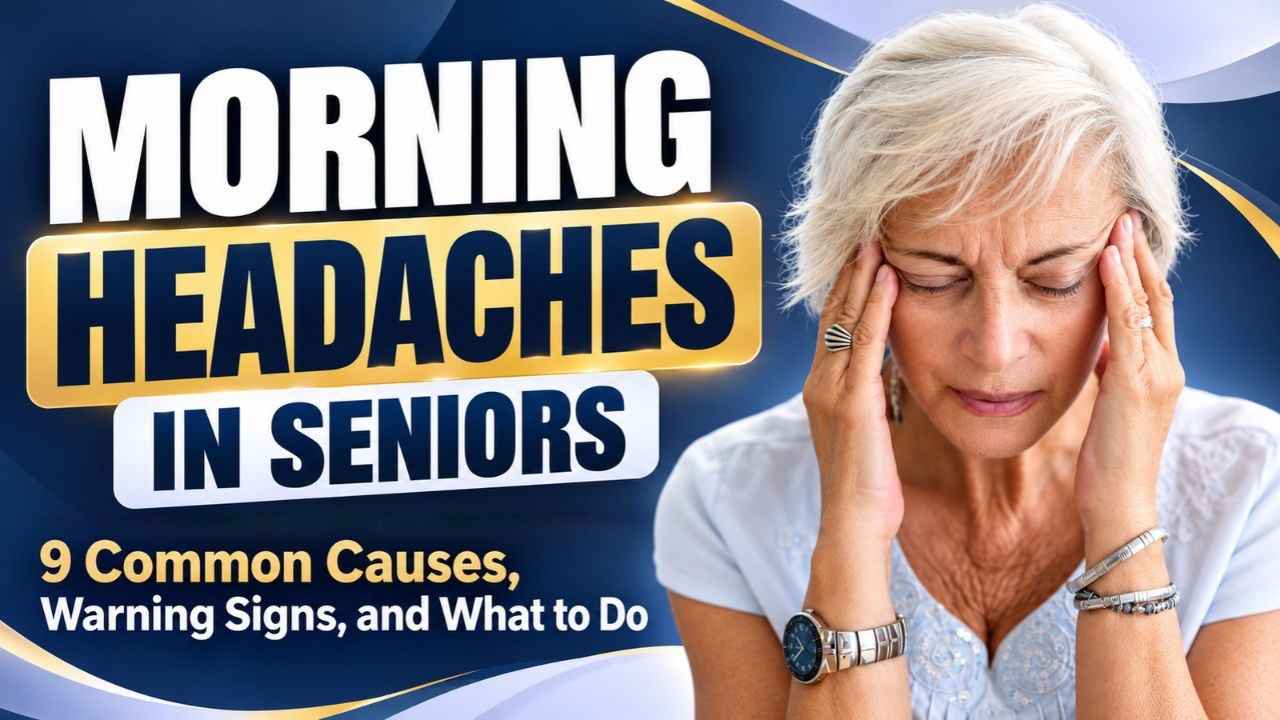

You open your eyes, reach for the alarm clock, and before your feet even touch the floor, you notice it.
Your head hurts.
Maybe it feels like pressure around your forehead. Maybe the back of your head and neck ache. Maybe it is a dull headache that fades after breakfast and coffee. Or perhaps it is strong enough to make you want to crawl back under the covers.
An occasional morning headache can happen to almost anyone. But frequent morning headaches in seniors deserve a little more attention, particularly when the headache is new or different from headaches you have experienced before.
Headaches in older adults can still come from everyday problems such as dehydration, poor sleep, caffeine withdrawal, neck tension, or teeth grinding. However, doctors also pay closer attention to secondary causes of headaches as people get older. Research reviews have found that secondary headaches caused by another medical condition become more important to consider in adults over 65.
“Why do I wake up with a headache every morning?”
Here are some possibilities worth discussing with your healthcare provider.
Sleep Apnea May Be Disturbing More Than Your Sleep
One of the first things worth considering with recurring morning headaches is how well you are actually breathing while you sleep.
Obstructive sleep apnea causes breathing to repeatedly slow or stop during the night. People with sleep apnea may snore loudly, gasp, choke during sleep, wake feeling unrefreshed, experience daytime sleepiness, and develop headaches, particularly in the morning.
The tricky part is that you may not know it is happening. A spouse or partner may be the first person to notice loud snoring or pauses in breathing.
Signs your morning headache may be linked to sleep apnea
- Loud snoring
- Gasping or choking during sleep
- Waking with a dry mouth
- Feeling tired despite spending enough time in bed
- Daytime sleepiness
- Difficulty concentrating
- Hard-to-control blood pressure
- Headaches that are strongest when you wake up
If several of these sound familiar, ask your healthcare provider whether a sleep evaluation would be appropriate.
Treating an underlying sleep disorder may improve more than just your headaches. Good sleep affects energy, attention, mood, cardiovascular health, and overall quality of life.
You May Simply Be Dehydrated
Sometimes the explanation is much simpler. You go several hours overnight without drinking anything. Add a warm bedroom, medications that increase urination, alcohol, mouth breathing, illness, or simply not drinking enough during the previous day, and you may wake mildly dehydrated.
Dehydration is one of the commonly recognized contributors to morning headaches. Older adults may also be more vulnerable to dehydration because the sensation of thirst can become less noticeable with age.
Try looking at the bigger picture
- Are you drinking regularly throughout the day?
- Do you wake with a dry mouth?
- Has your urine become noticeably darker?
- Have you recently had vomiting, diarrhea, fever, or increased sweating?
Increasing fluids may help some people, but seniors with heart failure, kidney disease, or fluid restrictions should follow the fluid recommendations given by their healthcare professional rather than simply drinking large amounts of water.
Your Morning Coffee Habit Could Be Part of the Problem
For many people, coffee is practically part of the morning routine. But caffeine can have a complicated relationship with headaches.
Someone who drinks caffeine regularly may develop a caffeine withdrawal headache when the caffeine level in their body drops overnight. The headache may appear before the first morning cup and then improve after consuming caffeine. Sudden reductions in regular caffeine intake can also trigger headaches.
That does not mean the answer is necessarily to drink more coffee. Large amounts of caffeine, caffeine late in the day, or inconsistent caffeine consumption may disrupt sleep and potentially create another headache trigger.
If headaches frequently disappear shortly after your morning coffee, mention that pattern to your healthcare provider.
You Could Be Grinding or Clenching Your Teeth at Night
You may be doing a full jaw workout while you sleep without realizing it. Sleep bruxism involves grinding or clenching the teeth during sleep. That tension can affect the jaw, face, temples, head, and neck.
TMJ problems and jaw clenching may cause
- Jaw tenderness
- Facial aching
- Headaches
- Neck discomfort
- Tooth pain
- Pain while chewing
- Clicking or grinding sensations in the jaw
A dentist may notice worn teeth or other evidence of nighttime grinding even before you realize you are doing it.
If your morning headache comes with a tired or sore jaw, ask your dentist or healthcare provider whether bruxism or a TMJ disorder could be contributing.
Your Neck and Sleeping Position May Be Complaining
Sometimes the problem is not inside your head at all. It may start in your neck.
Arthritis, muscle stiffness, an uncomfortable pillow, sleeping in an awkward position, or poor neck support can contribute to headache symptoms.
This becomes especially relevant when the headache
- Starts near the back of the skull
- Comes with neck stiffness
- Changes when you move your neck
- Feels worse after sleeping in certain positions
- Improves once you get up and begin moving
Before buying an expensive “miracle” pillow, pay attention to your sleeping position and whether your pillow keeps your neck in a comfortable, neutral position.
Persistent neck-related headaches should still be evaluated rather than automatically blamed on arthritis or aging.

Rest better, breathe easier, wake up gentler — your free guide to a calmer, safer home.
Download NowYour Medications Could Be Playing a Role
This is particularly important for seniors because many older adults take several prescription and over-the-counter medications.
Sometimes a medication can contribute to headaches. In other situations, taking headache medicine too frequently can actually create additional headaches. This is known as a medication overuse headache, sometimes called a rebound headache.
These headaches can occur daily or almost daily and may improve temporarily after taking pain medication before returning when the medication wears off.
Pain medicines are not the only thing worth discussing. Changes in medication schedules, doses, caffeine-containing products, and other prescriptions may affect sleep or headache patterns.
Do not suddenly stop prescription medication because you suspect it is causing a headache.
Bring your complete medication list, including
- Prescription medications
- Over-the-counter pain relievers
- Sleep aids
- Vitamins
- Herbal products
- Supplements
A medication review can sometimes reveal patterns that are easy to miss when every medication is considered separately.
Could It Be High Blood Pressure?
This is one of the most common questions people ask about morning headaches. High blood pressure deserves attention, but a headache by itself does not automatically mean your blood pressure is dangerously high.
A very high blood pressure reading can become an emergency, particularly when it occurs with neurological, cardiac, or breathing symptoms.
Know the emergency threshold
According to the American Heart Association, a blood pressure higher than 180/120 mm Hg accompanied by concerning symptoms such as chest pain, shortness of breath, weakness, numbness, vision changes, or difficulty speaking requires emergency medical attention.
If you have high blood pressure and regularly wake with headaches, keep track of your readings and discuss the pattern with your healthcare provider. Do not assume every headache is “just my blood pressure,” especially if the headache is new.
Frequent Pain Medicine Can Sometimes Cause More Headaches
It sounds backwards. You take medicine because your head hurts, yet the medicine can eventually become part of the headache cycle.
People with recurring migraine or other headache disorders who use certain pain medicines frequently may develop medication overuse headaches. These headaches often become increasingly frequent and may occur almost every day.
This is one reason keeping track of how often you reach for acetaminophen, ibuprofen, combination headache products, migraine medications, or prescription pain medicines can be useful.
If you are taking headache medicine several times a week, bring it up at your next medical appointment. Do not abruptly stop certain prescription medications without professional guidance.
A New Headache After 50 Deserves More Attention
Most morning headaches are not medical emergencies. But age changes how doctors approach a new headache.
In older adults, a new or significantly different headache may occasionally be caused by an underlying condition rather than a typical primary headache such as migraine or tension headache.
One condition that is especially important after age 50 is giant cell arteritis, previously called temporal arteritis. Giant cell arteritis involves inflammation of certain arteries and most often affects adults over 50, particularly people in their 70s and 80s.
Symptoms can include
- A new persistent headache
- Pain around the temples
- Scalp tenderness
- Jaw pain while chewing
- Fatigue
- Fever
- Unexplained weight loss
- Double vision
- Temporary or permanent vision changes
Untreated giant cell arteritis can cause permanent vision loss, which is why rapid medical evaluation is important when these symptoms occur.
A new headache plus jaw pain, scalp tenderness, or vision changes should not simply be treated at home and watched for several weeks.
One Morning Headache Clue Hiding Inside Your House
Does anyone else in your home wake up with a headache too?
If several people suddenly develop morning headaches, dizziness, nausea, weakness, or confusion, consider the possibility of carbon monoxide exposure.
Carbon monoxide is an odorless, colorless gas that can accumulate from malfunctioning furnaces, generators, fireplaces, fuel-burning appliances, and other sources.
Headache is one of the most common symptoms of carbon monoxide poisoning, and older adults may be more vulnerable to becoming seriously ill.
Make sure your home has working carbon monoxide detectors. If carbon monoxide exposure is suspected, get outside into fresh air and seek emergency assistance rather than remaining in the building trying to determine the source yourself.
When Should a Senior See a Doctor About Morning Headaches?
It is worth making a medical appointment if you:
- Regularly wake up with headaches
- Suddenly begin experiencing headaches after age 50
- Notice that an existing headache pattern has changed
- Experience headaches several times per week
- Need pain medicine frequently
- Snore loudly or stop breathing during sleep
- Have persistent morning headaches with daytime fatigue
- Develop headaches with unexplained weight loss or fever
- Have headaches that continue getting worse
A new persistent headache in someone older than 50 deserves medical evaluation, particularly if it is different from previous headaches.
Seek Emergency Care for These Warning Signs
Get urgent medical help for a headache that:
- Appears suddenly and is extremely severe
- Comes with weakness or numbness
- Causes difficulty speaking
- Comes with confusion or loss of consciousness
- Occurs with a seizure
- Comes with sudden vision loss or major vision changes
- Follows a significant head injury
- Occurs with fever and a stiff neck
- Comes with severe chest pain or shortness of breath
- Occurs with blood pressure above 180/120 mm Hg and concerning symptoms
- Is accompanied by jaw pain and new vision problems in an older adult
What Can You Do Before Your Appointment?
A little detective work can make your doctor's job much easier. For one or two weeks, keep a simple morning headache diary. Write down:
Patterns often tell a better story than one isolated headache.
What May Help Prevent Morning Headaches?
The right solution depends on the cause, but some basic habits may help:
Keep a consistent sleep schedule
Going to sleep and waking at roughly the same times may improve sleep quality.
Stay appropriately hydrated
Drink fluids regularly throughout the day unless your healthcare provider has placed you on a fluid restriction.
Pay attention to caffeine
Try to keep your intake consistent rather than switching dramatically between large amounts and none at all.
Look after your neck
Use a comfortable sleeping position and pillow that supports your neck.
Get snoring evaluated
Loud chronic snoring accompanied by gasping, choking, daytime sleepiness, or morning headaches deserves attention.
Ask about teeth grinding
A dentist can help determine whether nighttime clenching or grinding may be contributing.
Review your medications
Bring all medications and supplements to your healthcare professional or pharmacist periodically.
Maintain working CO detectors
Every home with fuel-burning appliances should have appropriate working detectors.
Your Headache May Be Telling You What Happened Last Night
Waking up with a headache once in a while does not necessarily mean something serious is happening.
Maybe you slept badly. Maybe you need some water. Maybe your jaw spent the night pretending it was a vise.
But morning headaches in seniors should not automatically be dismissed as part of getting older, particularly when they are frequent, persistent, worsening, or completely new.
The timing of the headache can provide useful clues. Morning headaches may be associated with poor sleep, sleep apnea, dehydration, caffeine withdrawal, teeth grinding, neck problems, migraines, medication use, or other medical conditions. In older adults, healthcare professionals also pay particular attention to secondary causes such as giant cell arteritis.
Instead of repeatedly treating the pain and forgetting about it when it disappears, look for the pattern.
Your headache may be trying to tell you what happened while you were sleeping.
References and Further Reading
- Cleveland Clinic: Waking Up With a Headache: Common Causes — Read the Cleveland Clinic article
- MedlinePlus: Obstructive Sleep Apnea in Adults — Read the MedlinePlus overview
- Mayo Clinic: Giant Cell Arteritis — Read about giant cell arteritis
- Mayo Clinic: Medication Overuse Headaches — Read about medication overuse headaches
- American Heart Association: When to Seek Help for Very High Blood Pressure — Read the American Heart Association guidance
- CDC: Carbon Monoxide Poisoning Basics — Read the CDC carbon monoxide guidance
- NIAMS: Giant Cell Arteritis and Polymyalgia Rheumatica — Read the NIAMS overview
Medical Disclaimer
This article is provided for general educational and informational purposes only and is not intended to diagnose, treat, cure, or prevent any medical condition. It should not be used as a substitute for professional medical advice, diagnosis, or treatment. Morning headaches can have many possible causes, and new, persistent, severe, or changing headaches in older adults should be discussed with a qualified healthcare professional. Seek emergency medical care for sudden severe headache, neurological symptoms, significant vision changes, loss of consciousness, chest pain, difficulty breathing, or other concerning symptoms.
Ready for Your Next Move?
Whether you're planning to buy, sell, or simply exploring your options, fill out the form below. Tell us a little about what you're looking for, and we'll help connect you with the right real estate professional.
David Reis, MD
New York, New York 10036
Tell Us About Your Move
Complete the short form and we'll be in touch.

David Reis MD
eXp Realty
Commercial and Residential Referral Division
Planning Your Next Chapter?
Thinking about moving closer to family, downsizing, or finding a home that better fits your lifestyle? Let’s have a simple, no-pressure conversation.
Download these helpful checklists to guide you through your buying and selling journey.

Home Buyer’s Checklist

Home Seller’s Checklist

Mistakes To Avoid