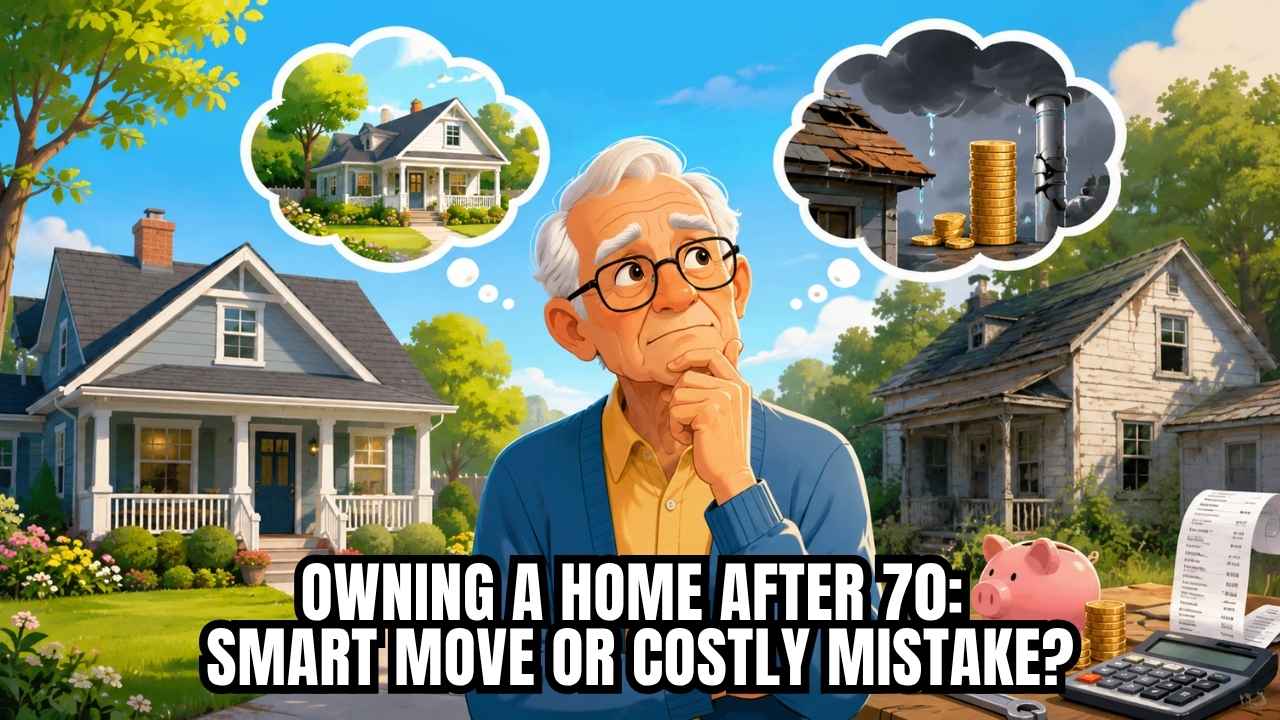

For many older adults, homeownership represents stability, independence, and a lifetime of achievement. But after age 70, the question becomes more complicated: Does owning a home still make financial sense, or can it become an expensive burden?
The answer depends on health, finances, lifestyle, and future plans. Here are some key factors every senior should consider.
1. The Advantage: Housing Stability
Many seniors own their homes outright, eliminating monthly mortgage payments. This can significantly reduce living expenses compared to renting.
According to national housing studies, homeowners who have paid off their mortgage often spend less on monthly housing costs than renters facing annual rent increases.

Smart Solution
If your mortgage is paid off and the home meets your current needs, staying put may provide financial stability and peace of mind.
2. The Hidden Cost: Maintenance Never Stops
A roof replacement can cost $8,000–$20,000. HVAC systems may cost $5,000–$12,000. Plumbing, landscaping, and repairs continue regardless of age.
Many retirees underestimate annual maintenance expenses.

Smart Solution
Set aside 1%–3% of your home’s value annually for maintenance and emergency repairs.
3. Property Taxes and Insurance Can Rise
Even without a mortgage, property taxes and homeowners insurance continue. In some areas, these costs rise faster than retirement income.
A senior living on a fixed income may face increasing financial pressure.

Smart Solution
Research senior tax exemptions, homestead programs, and insurance discounts available in your state.
4. Accessibility Challenges
The home that worked at age 50 may not work at age 80.
Stairs, narrow bathrooms, and difficult layouts can increase fall risks and reduce independence.

Smart Solution
Consider aging-in-place modifications such as grab bars, walk-in showers, improved lighting, and stair lifts.
5. The Emotional Value of Staying Home
Many seniors value memories, neighbors, and community connections more than financial considerations.
Research consistently shows that social connections contribute significantly to quality of life and overall well-being.

Smart Solution
If the home supports your health and budget, aging in place may provide emotional benefits that are difficult to measure financially.
6. Downsizing Can Unlock Equity
For some homeowners, a large house becomes more work than it’s worth.
Selling and moving to a smaller home, condo, or senior-friendly community can free up substantial equity while reducing maintenance responsibilities.

Smart Solution
Compare total ownership costs with alternative housing options before making a decision.
7. Estate Planning Considerations
A home is often the largest asset seniors own.
Keeping, selling, or transferring the property can significantly affect heirs, taxes, and long-term financial planning.

Smart Solution
Consult qualified legal and financial professionals to ensure your housing decisions align with your estate goals.
Final Thoughts
Owning a home after 70 can be either a smart move or a costly mistake—depending on your situation.
It may be a smart move if:
- The mortgage is paid off.
- Maintenance costs are manageable.
- The home is safe and accessible.
- You have strong community connections.
It may become a costly mistake if:
- Repairs are overwhelming.
- Property taxes strain your budget.
- Health challenges make the home difficult to navigate.
- Most of your wealth is tied up in the property.
The best decision is not based solely on age. It is based on whether your home continues to support your financial security, health, and quality of life.
Disclaimer
This article is intended for educational and informational purposes only and should not be considered financial, legal, tax, medical, or investment advice. Housing costs, taxes, insurance premiums, and property values vary by location and individual circumstances. Readers should consult licensed financial advisors, tax professionals, attorneys, real estate professionals, and healthcare providers before making housing or retirement decisions.

10 Body Changes After 60 Worth Discussing With Your Doctor
Download these helpful checklists to guide you through your buying and selling journey.Home Buyer's ChecklistHome Seller's ChecklistMistakes To Avoid

Morning Headaches in Seniors: 9 Causes, Warning Signs and What to Do
Download these helpful checklists to guide you through your buying and selling journey.Home Buyer's ChecklistHome Seller's ChecklistMistakes To Avoid

Sudden Weight Gain From Fluid Retention: Causes, Warning Signs & What to Do
Download these helpful checklists to guide you through your buying and selling journey.Home Buyer's ChecklistHome Seller's ChecklistMistakes To Avoid
Download these helpful checklists to guide you through your buying and selling journey.

Home Buyer’s Checklist

Home Seller’s Checklist

Mistakes To Avoid