
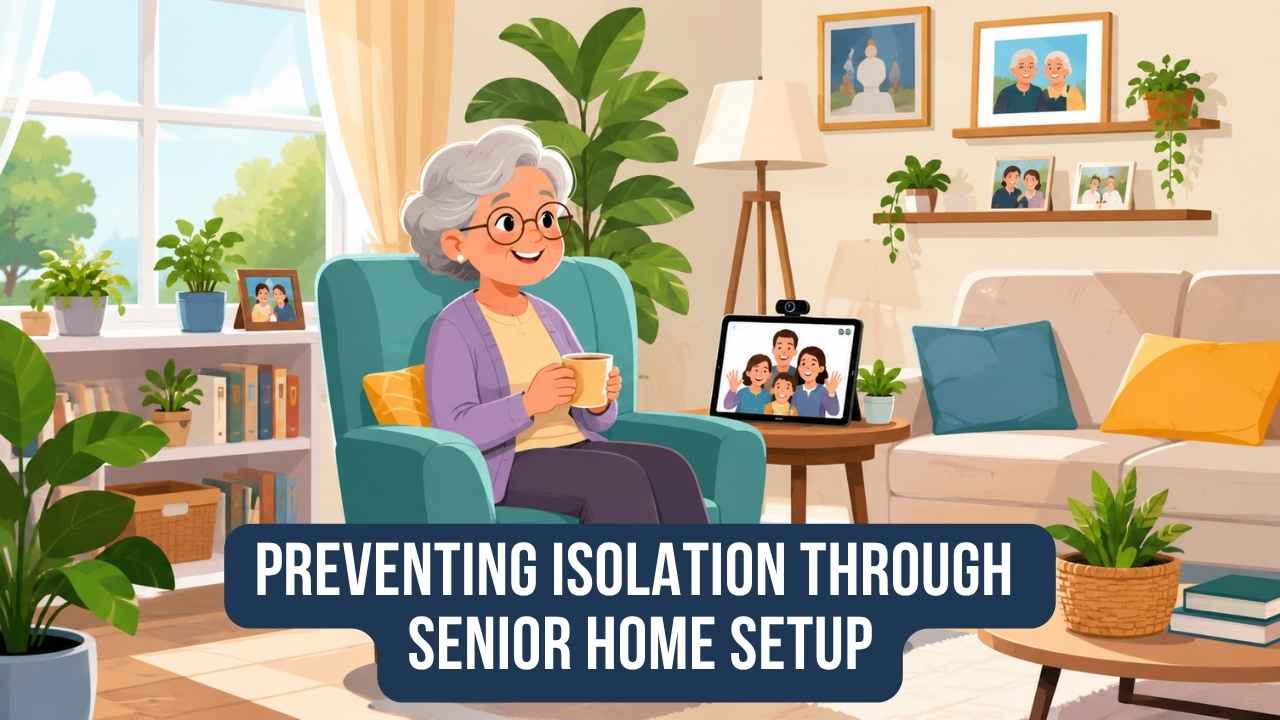

As people age, social isolation can quietly become one of the biggest threats to overall health and quality of life. According to the Centers for Disease Control and Prevention, prolonged loneliness in older adults may increase risks for depression, anxiety, cognitive decline, heart disease, and reduced mobility.
While many families focus on medications, doctor visits, and physical safety, the home environment itself also plays a major role in emotional wellness. A thoughtfully designed living space can encourage movement, communication, confidence, and social interaction.
Here are practical ways to reduce isolation through smart home setup strategies.
1. Create Comfortable Social Seating Areas


A welcoming seating arrangement encourages conversation and makes visits more comfortable for family and friends. Seniors are more likely to socialize when the environment feels inviting and easy to navigate.
Example Solution:
- Arrange chairs face-to-face instead of toward the television
- Use firm seating with armrests for easier standing
- Keep pathways open for walkers or wheelchairs
2. Improve Lighting to Encourage Activity


Poor lighting may increase fall risks and discourage seniors from moving around the home, especially during evenings. Brighter environments also support mood and mental stimulation.
Example Solution:
- Install brighter LED lighting
- Add motion-sensor night lights
- Open curtains during daytime for natural sunlight
3. Design Spaces That Encourage Hobbies


Isolation often increases when seniors stop engaging in meaningful activities. Dedicated hobby spaces can encourage creativity, purpose, and routine.
Example Solution:
- Create a reading corner
- Set up crafting or gardening stations
- Keep hobby materials within easy reach
4. Use Technology to Stay Connected


Simple technology tools can help older adults maintain social relationships, especially when family members live far away.
Example Solution:
- Install easy-to-use video calling devices
- Use voice assistants for reminders and communication
- Add large-button phones or tablets
5. Encourage Safe Outdoor Access


Fresh air and outdoor exposure can improve emotional well-being and reduce feelings of confinement.
Example Solution:
- Add handrails near patios
- Install slip-resistant walkways
- Create shaded outdoor sitting areas
6. Reduce Clutter and Mobility Barriers


A cluttered environment may increase stress, confusion, and fall risks. Simplified spaces help seniors feel more confident moving independently.
Example Solution:
- Remove unnecessary furniture
- Organize frequently used items at waist level
- Eliminate loose rugs and cords
7. Personalize the Home Environment


Familiar surroundings and meaningful personal items can improve emotional comfort and reduce loneliness.
Example Solution:
- Display family photos
- Incorporate favorite colors and décor
- Create memory walls or keepsake shelves
Final Thoughts
Preventing isolation is not only about increasing social visits. The physical setup of a home can strongly influence a senior’s motivation, confidence, independence, and emotional health.
Small changes — better lighting, safer layouts, hobby spaces, and communication tools — can make daily living feel more connected and meaningful. Families who proactively create supportive environments may help older adults maintain both safety and quality of life longer.
Disclaimer
This article is for informational and educational purposes only and should not be considered medical, legal, mental health, or professional caregiving advice. Every senior has unique health, mobility, and emotional needs. Always consult qualified healthcare providers, occupational therapists, certified aging-in-place specialists, or licensed professionals before making major home modifications or care decisions.
Download these helpful checklists to guide you through your buying and selling journey.

Home Buyer’s Checklist

Home Seller’s Checklist
Mistakes To Avoid

10 Body Changes After 60 Worth Discussing With Your Doctor
Download these helpful checklists to guide you through your buying and selling journey.Home Buyer's ChecklistHome Seller's ChecklistMistakes To Avoid

Morning Headaches in Seniors: 9 Causes, Warning Signs and What to Do
Download these helpful checklists to guide you through your buying and selling journey.Home Buyer's ChecklistHome Seller's ChecklistMistakes To Avoid

Sudden Weight Gain From Fluid Retention: Causes, Warning Signs & What to Do
Download these helpful checklists to guide you through your buying and selling journey.Home Buyer's ChecklistHome Seller's ChecklistMistakes To Avoid