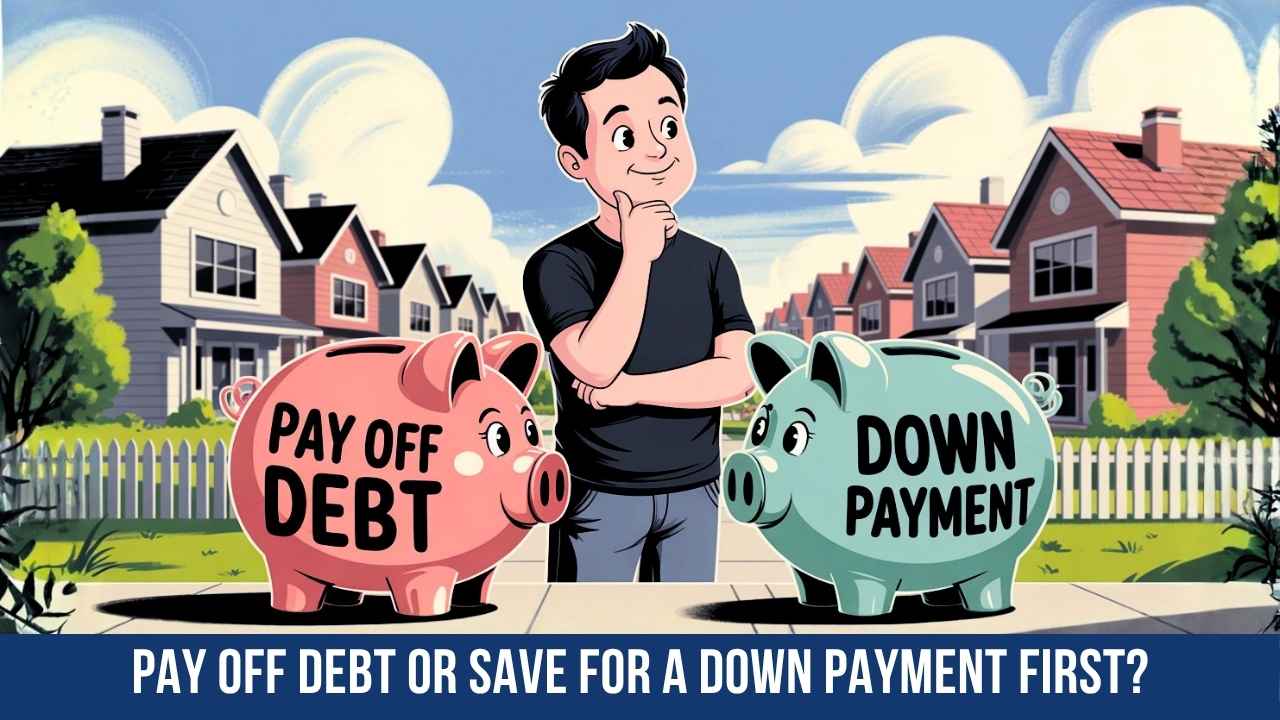

Buying a home is exciting — but one of the biggest financial questions buyers face is:
Should I pay off debt first, or start saving for a down payment?
The answer depends on how your debt affects your mortgage approval, affordability, and financial stability. Let’s break it down.
Why This Decision Matters
When you apply for a mortgage, lenders evaluate your Debt-to-Income Ratio (DTI) — the percentage of your monthly income used to pay debts.
Most lenders prefer:
- 36% or lower DTI (ideal)
- Up to 43% DTI (common approval range)
- Higher than 43% may reduce approval chances
This means your debt directly affects how much home you can afford.
When Paying Off Debt First Makes More Sense
Paying off debt first is usually better if you have:
- High-interest credit card debt
- Large monthly car payments
- High student loan payments
- A high debt-to-income ratio
- A lower credit score
Why?
Reducing debt can:
- Increase your loan approval chances
- Improve your credit score
- Lower your monthly obligations
- Increase your home buying power
Example:
Paying off a $400/month car payment could increase your buying power by $60,000 or more, depending on interest rates.
When Saving for a Down Payment First Makes More Sense
Saving first may be better if:
- Your debt is low-interest (like student loans)
- Your credit score is already strong
- You qualify for low down payment programs
- Home prices in your area are rising
Why?
Waiting too long to save could mean:
- Higher home prices
- Higher interest rates
- Reduced affordability
Sometimes, buying sooner can actually save you money long-term.
The Smart Strategy: Do Both
Many financial experts recommend a balanced approach:
- Pay down high-interest debt first
- Continue saving consistently for your down payment
- Avoid taking on new debt
- Improve your credit score
This approach helps you stay financially strong while preparing for homeownership.
Bonus Tip: Talk to a Lender Early
You don’t have to guess. A mortgage professional can:
- Analyze your finances
- Calculate your ideal strategy
- Show you your best timeline to buy
Many buyers are surprised to learn they are closer to buying than they think.
Final Thoughts
There’s no one-size-fits-all answer.
But generally:
- High-interest debt? Pay it down first
- Low debt and strong credit? Start saving now
- Not sure? Do both strategically
The goal is simple:
Buy a home comfortably — not stressfully.
Disclaimer
This article is for informational and educational purposes only and should not be considered financial, legal, or mortgage advice. Individual financial situations vary. Always consult with a licensed mortgage professional, financial advisor, or qualified professional before making financial decisions related to home buying.
Download these helpful checklists to guide you through your buying and selling journey.

Home Buyer’s Checklist

Home Seller’s Checklist

Mistakes To Avoid

10 Body Changes After 60 Worth Discussing With Your Doctor
Download these helpful checklists to guide you through your buying and selling journey.Home Buyer's ChecklistHome Seller's ChecklistMistakes To Avoid

Morning Headaches in Seniors: 9 Causes, Warning Signs and What to Do
Download these helpful checklists to guide you through your buying and selling journey.Home Buyer's ChecklistHome Seller's ChecklistMistakes To Avoid

Sudden Weight Gain From Fluid Retention: Causes, Warning Signs & What to Do
Download these helpful checklists to guide you through your buying and selling journey.Home Buyer's ChecklistHome Seller's ChecklistMistakes To Avoid