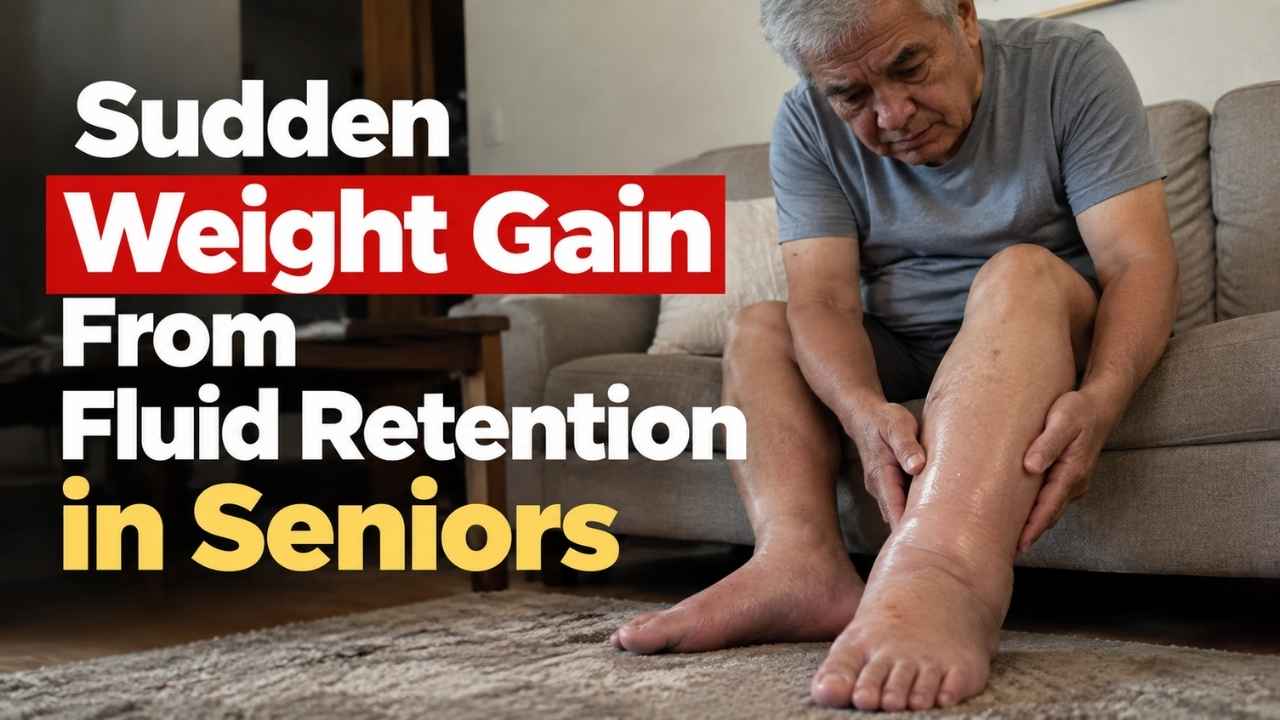

If you've noticed a parent, spouse, or older loved one put on several pounds in just a day or two, your first thought might be "they must be eating more." But in seniors, sudden weight gain is rarely about food. Far more often, it's fluid retention, also called edema, and it can be an early signal that something inside the body needs attention.
This isn't the slow, gradual weight gain that comes from lifestyle changes. This is weight that shows up fast, sometimes overnight, and it deserves a closer look.
What Fluid Retention Actually Is
Fluid retention happens when the body holds onto extra water and sodium instead of flushing them out normally. That fluid doesn't stay in the bloodstream, it leaks into surrounding tissue, most commonly in the legs, ankles, feet, and abdomen. The result is swelling, puffiness, and a scale number that climbs faster than diet or activity could explain.
Doctors sometimes describe it simply: weight gain from food happens over weeks and months, while weight gain from fluid retention can happen in days, occasionally as much as several pounds in 24 to 48 hours.
Why This Happens More in Older Adults
Aging bodies are simply more prone to fluid imbalance, for a few practical reasons:
The heart works harder
When the heart isn't pumping efficiently, common in congestive heart failure, fluid backs up in the legs, ankles, and sometimes the lungs.
Kidneys slow down
The kidneys are responsible for balancing water and salt. As kidney function declines with age, that regulation becomes less reliable.
The liver plays a role too
Liver conditions like cirrhosis can lower a protein called albumin, which normally keeps fluid inside blood vessels where it belongs.
Medications add up
Many drugs commonly prescribed to seniors, including certain blood pressure medications, steroids, NSAIDs like ibuprofen, and some diabetes medications, list fluid retention as a side effect.
Less movement, more pooling
Sitting for long periods or limited mobility makes it easier for fluid to collect in the lower legs.
Thyroid and hormone shifts
Hypothyroidism, more common in older adults, can also contribute to unexplained weight gain and swelling.

The Warning Signs to Watch For
Not all swelling is an emergency, but certain combinations of symptoms are worth paying close attention to:
- Swelling in the legs, ankles, feet, or abdomen
- Skin that looks stretched, shiny, or stays indented when pressed
- Rapid weight gain, especially 2 to 3 pounds or more in a single day
- Shortness of breath, particularly when lying down
- Fatigue or a feeling of heaviness in the limbs
- Reduced urination
If swelling appears in only one leg, or shows up alongside chest discomfort, breathing trouble, or sudden confusion, that's a signal to seek medical care promptly rather than waiting it out.
Why Daily Weight Tracking Matters
One of the simplest tools for catching fluid retention early is also one of the most overlooked: a daily weigh-in. For seniors managing heart failure or kidney issues, doctors often recommend stepping on the scale at the same time each morning, after using the bathroom and before eating, wearing similar clothing each time. A sudden jump of a few pounds is often the earliest visible clue that fluid is building up, sometimes before swelling is even noticeable.
Keeping a simple log (paper or an app) makes patterns easy to spot and gives your doctor useful information rather than a vague "I think I've gained weight."
What Can Help
Management depends entirely on the underlying cause, which is why a proper diagnosis matters more than home remedies. That said, a few general habits are commonly recommended alongside medical treatment:
- Lower sodium intake. Salt encourages the body to hold onto water, so reducing processed and high-sodium foods can ease mild fluid buildup.
- Elevate the legs. Raising the feet above heart level for periods during the day can reduce pooling in the lower limbs.
- Stay appropriately active. Gentle movement, even short walks, helps circulation and discourages fluid from settling in one place.
- Review medications regularly. A doctor or pharmacist can check whether a current prescription might be contributing to swelling.
- Follow prescribed treatment. If a doctor identifies heart, kidney, or liver involvement, treatments like diuretics ("water pills") or fluid restriction may be recommended, and these should only be used under medical guidance.
When to Call a Doctor
Because fluid retention can point to something as manageable as a medication side effect or as serious as heart failure, it's never something to self-diagnose. Reach out to a healthcare provider if:
- Weight increases suddenly (2+ pounds overnight, or more over a few days)
- Swelling is new, worsening, or only on one side
- There's shortness of breath, chest tightness, or unusual fatigue
- Skin over the swollen area is discolored, painful, or breaks down
Getting it checked early often means a simpler fix, whether that's adjusting a medication or catching a heart or kidney issue before it progresses.
The Bottom Line
Sudden weight gain in an older adult is rarely about calories. It's the body's way of showing that fluid balance has shifted, and behind that shift can be anything from a medication side effect to a heart, kidney, or liver condition that needs attention. Watching for the signs, tracking weight consistently, and looping in a doctor early can make a real difference in catching the cause before it becomes something bigger.
Disclaimer: This article is for general informational purposes only and is not intended as medical advice, diagnosis, or treatment. It should not replace consultation with a qualified healthcare provider. Always seek the advice of a physician or other qualified health professional with any questions regarding a medical condition, sudden weight gain, swelling, or fluid retention. If you or a loved one experiences severe swelling, difficulty breathing, chest pain, or sudden confusion, seek emergency medical care immediately.
References & Further Reading
Ready for Your Next Move?
Whether you're planning to buy, sell, or simply exploring your options, fill out the form below. Tell us a little about what you're looking for, and we'll help connect you with the right real estate professional.
David Reis, MD
New York, New York 10036
Tell Us About Your Move
Complete the short form and we'll be in touch.
Download these helpful checklists to guide you through your buying and selling journey.

Home Buyer’s Checklist

Home Seller’s Checklist

Mistakes To Avoid