
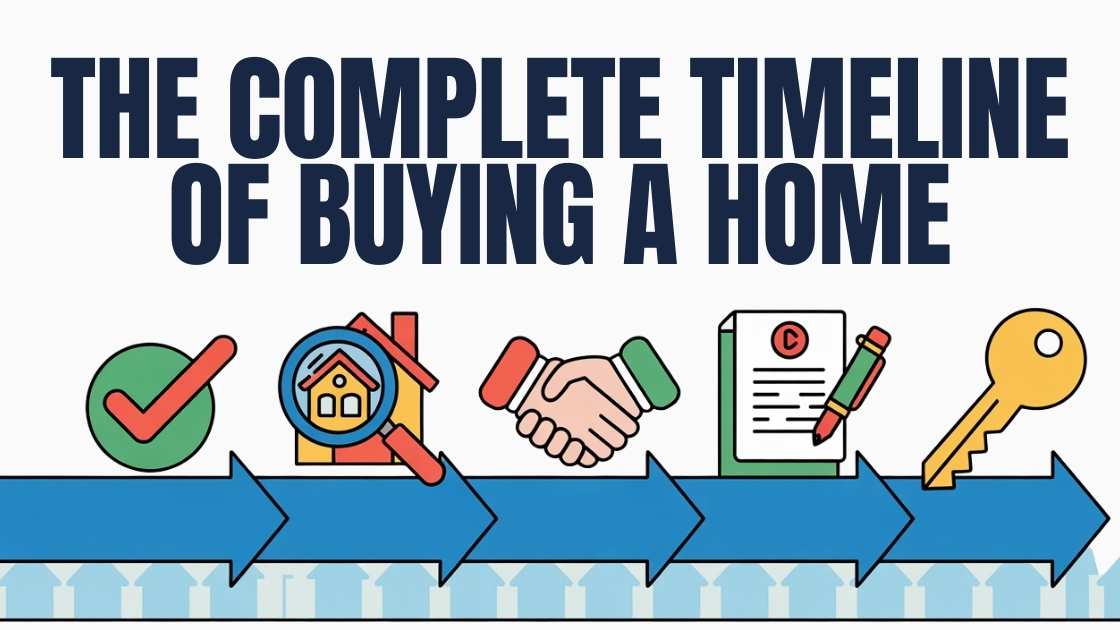

Buying a home in the United States can feel overwhelming, especially if you’re not sure what happens next or how long each step takes. From getting pre-approved for a mortgage to finally receiving the keys on closing day, the process involves multiple stages, deadlines, and decisions that can impact both your finances and peace of mind.
This complete home-buying timeline breaks down each phase in clear, easy-to-understand steps, so you know exactly what to expect and when. Whether you’re a first-time buyer or purchasing again, this guide will help you stay organized, avoid common surprises, and move through the process with confidence—from pre-approval all the way to closing day.
🏡 1. Mortgage Pre-Approval — 1–3 days
Before you start serious home searching, get pre-approved by a lender. This confirms how much you can borrow and strengthens offers you make to sellers.
Tasks:
- Submit income documentation, tax returns, bank statements.
- Receive a pre-approval letter to show sellers.
Estimated time: ~1–3 days.
🔍 2. Home Search / House Hunting — 2 weeks to 3+ months
The time this takes varies widely based on market conditions, your criteria, and how quickly you identify the right property.
Tasks:
-
Work with a real estate agent or search independently.
-
Attend open houses and private showings.
-
Narrow down target neighborhoods and features.
Estimated time: ~2 weeks to several months.
📝 3. Make an Offer & Negotiation — 1–7 days
Once you find a home you want:
Tasks:
-
Submit an offer with terms and earnest money deposit.
-
Seller either accepts, rejects, or counters.
-
Negotiate price and contingencies.
Estimated time: 1–7 days.
🔎 4. Home Inspection — 1–2 weeks
After your offer is accepted and the contract is signed, schedule a professional inspection.
Tasks:
-
Arrange an inspector to assess the home’s condition.
-
Review the inspection report and negotiate repairs or credits.
Estimated time: 1–2 weeks (inspection and follow-ups).
💰 5. Appraisal & Loan Processing — 2–4+ weeks
Your lender will formally process your loan and verify the property’s value.
Tasks:
-
Order appraisal to confirm home value.
-
Underwriting reviews finances and documentation.
-
Final loan approval (clear-to-close).
Estimated time: ~2–4+ weeks.
📑 6. Title Search, Insurance & Contingencies — 1–2 weeks
During this phase, title companies check for liens or disputes and prepare closing documents.
Tasks:
-
Conduct a title search and secure title insurance.
-
Verify no legal issues on property records.
Estimated time: ~1–2 weeks (often overlapping with underwriting).
🧾 7. Closing Disclosure & Final Walk-Through — 1–3 days
Before closing, you’ll receive your Closing Disclosure and inspect the home one more time.
Tasks:
-
Review Closing Disclosure at least 3 days before closing.
-
Do a final walk-through to confirm the property’s condition and repairs.
Estimated time: 1–3 days.
✍️ 8. Closing Day — 1 day
This is the official transfer of ownership.
Tasks:
-
Sign mortgage and settlement paperwork.
-
Pay closing costs and any remaining down payment.
-
Receive the keys to your new home.
Estimated time: ~1 day.
| Phase | Typical Duration |
|---|---|
| Pre-Approval | 1–3 days |
| Home Search | 2 weeks–3+ months |
| Offer & Negotiation | 1–7 days |
| Inspection | 1–2 weeks |
| Appraisal & Processing | 2–4+ weeks |
| Title & Insurance | 1–2 weeks |
| Final Walk-Through & Closing Disclosure | 1–3 days |
| Closing Day | 1 day |
Overall: On average, from accepted offer to closing takes 30–60 days, but total journey from pre-approval through moving in can range from 2 to 6+ months depending on market conditions and buyer readiness.
Disclaimer:
This content is provided for general informational purposes only and is not intended as legal, financial, or real estate advice. The home-buying process, timelines, requirements, and costs may vary based on location, lender, market conditions, and individual circumstances. Buyers should consult with a licensed real estate professional, mortgage lender, attorney, or other qualified advisors to obtain guidance specific to their situation. No guarantees are made regarding timelines, outcomes, or transaction results.

Is 70 the New 50? Why Today’s Seniors Are Living Longer, Healthier, and More Active Lives Than Ever
For generations, turning 70 was often viewed as entering old age. Today, many people reaching their 70s are traveling, exercising, starting businesses, dating, volunteering, and living independently. This has led many experts and retirees to ask: "Is 70 the new 50?"...

Moving Abroad for Retirement: Pros, Cons, Costs and Countries
For many Americans, retirement is no longer about staying put. Rising healthcare costs, housing expenses, and a desire for adventure have led thousands of retirees to consider living abroad. Retiring overseas can offer a lower cost of living, affordable healthcare,...

The Biggest Retirement Myth: More Money Doesn’t Mean More Happiness
Many people spend decades saving for retirement believing that more money automatically leads to greater happiness. While financial security is important, research consistently shows that money alone is not the biggest predictor of a happy retirement. In fact, many...