
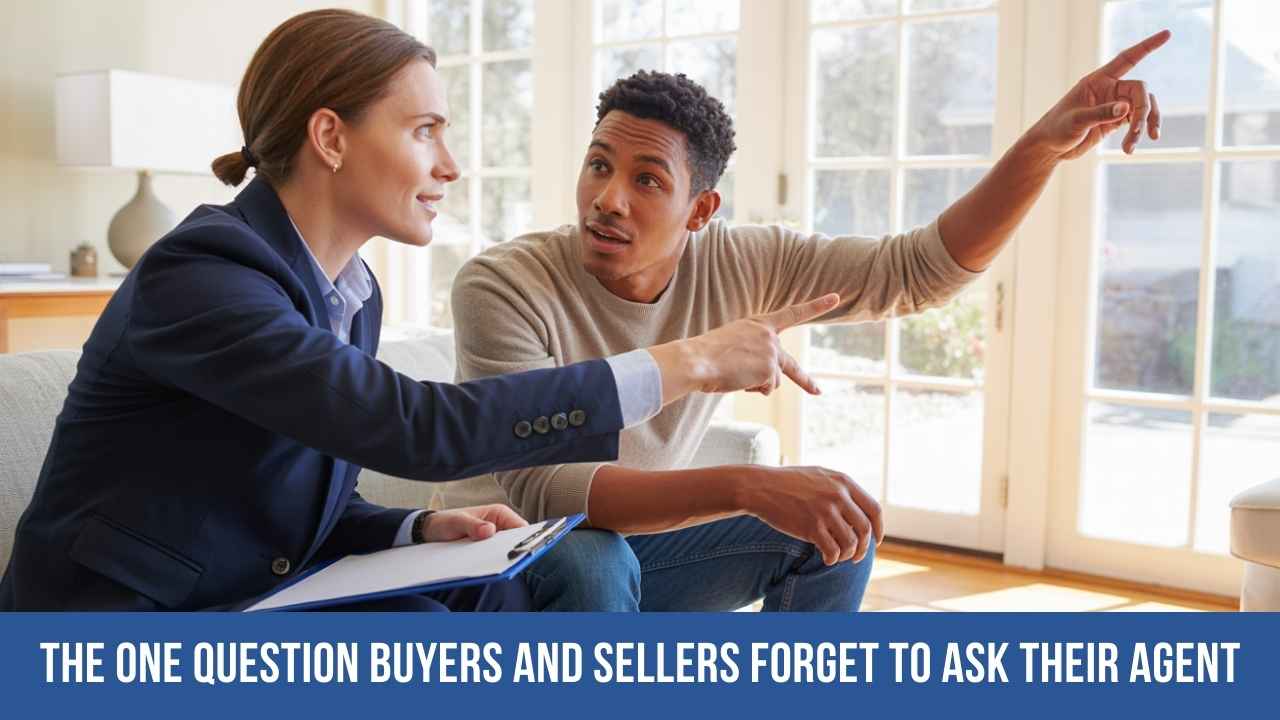

Most buyers and sellers spend their first conversation with an agent asking the same questions: How long have you been in real estate? How many homes have you sold? What’s your marketing plan?
Those questions matter—but they miss something critical.
The one question buyers and sellers often forget to ask is:
“What happens after we go under contract?”
Why does this matter? Because the real work—and the real risk—starts after the agreement is signed.
Many problems in real estate don’t come from pricing or marketing. They come from poor follow-through. Missed deadlines. Unclear communication. Lack of guidance when inspections, negotiations, or emotions escalate.
A strong agent should be able to clearly explain:
-
How they manage timelines and deadlines
-
Who communicates with lenders, inspectors, and attorneys
-
How they handle unexpected issues
-
How often you’ll hear from them once the deal is in motion
If an agent struggles to answer this, it’s a red flag.
Buying or selling a home is not just about getting an offer—it’s about navigating a complex process under pressure. The right agent doesn’t disappear once the paperwork is signed. They take ownership of the process until the keys change hands.
As a referral-only real estate professional, my role is to connect buyers and sellers with agents who are strong not just at starting transactions, but at finishing them well.
Because in real estate, how the process is managed matters just as much as the result.
Download these helpful checklists to guide you through your buying and selling journey.
Home Buyer’s Checklist
Home Seller’s Checklist
Mistakes To Avoid

Should Seniors Stop Driving After a Certain Age?
Driving represents freedom, independence, and confidence for many older adults. But as people age, physical and cognitive changes can affect driving ability. This raises a difficult but important question: should seniors stop driving after a certain age? The answer is...

Easy Changes That Reduce Isolation and Stress
Loneliness and social isolation can affect many older adults, especially those living alone or spending long periods indoors. Studies from organizations like the National Institute on Aging show that isolation may impact emotional health, memory, sleep, and even...

Senior-Friendly Cozy Home Ideas for Better Comfort, Peace, and Safety
As people grow older, the home becomes more than just a place to live — it becomes a place for peace, comfort, safety, and emotional well-being. Small changes inside a home can make a big difference in reducing stress, improving relaxation, and helping seniors feel...