
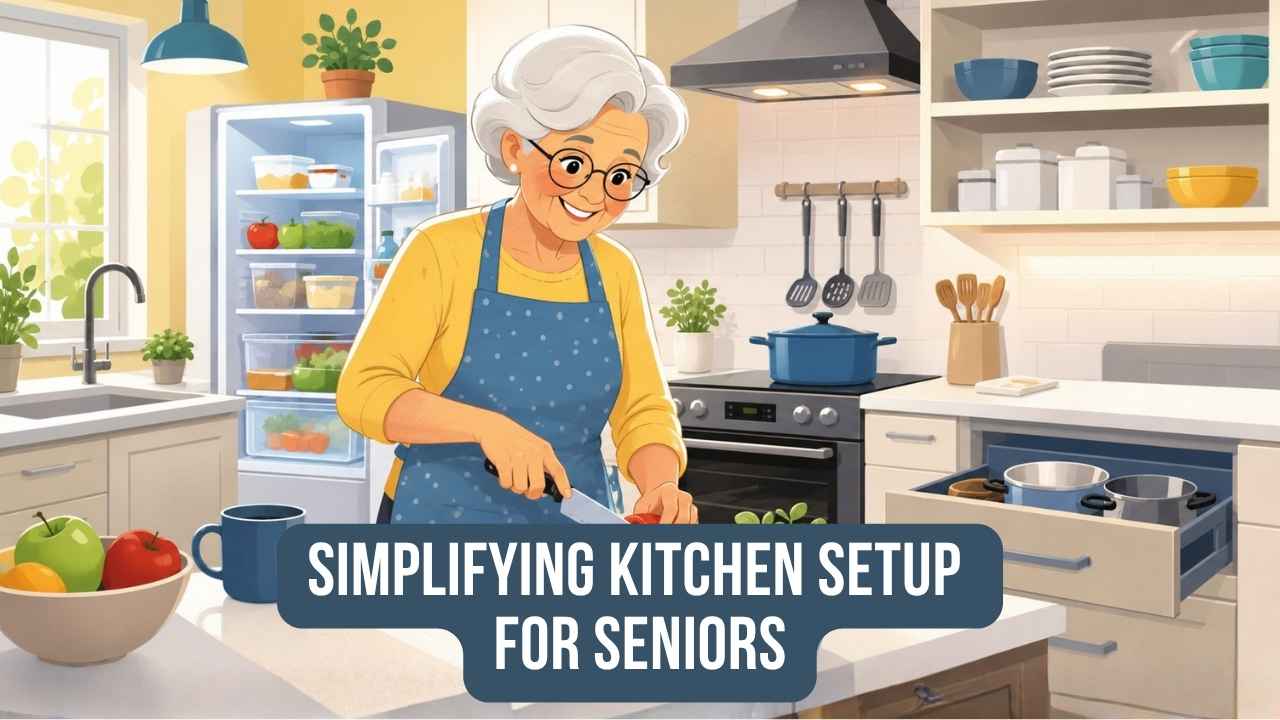

As we age, everyday kitchen tasks can become more physically demanding. Reaching high shelves, bending down for cookware, navigating cluttered walkways, or lifting heavy appliances may increase the risk of falls, burns, and injuries.
A simplified kitchen setup can help seniors maintain independence, improve safety, reduce stress, and make daily meal preparation more enjoyable. Small adjustments often make a significant difference in quality of life.
Here are 10 practical ways to simplify a kitchen for seniors.
1. Keep Frequently Used Items Within Easy Reach
Store plates, cups, medications, snacks, and cooking utensils between waist and shoulder height. This minimizes bending, stretching, or climbing on stools.


A good rule is simple: if an item is used daily, it should be easy to access safely.
2. Reduce Kitchen Clutter
Too many appliances, decorations, or loose items can create unnecessary hazards and confusion. Keeping countertops clean improves visibility and movement throughout the kitchen.


Simplified spaces also reduce mental stress and improve focus while cooking.
3. Improve Kitchen Lighting
Poor lighting can make it difficult to read labels, see spills, or safely handle knives and appliances. Bright, evenly distributed lighting helps reduce accidents.


Consider under-cabinet lighting and motion-sensor night lights for additional visibility.
4. Use Non-Slip Flooring and Mats
Slippery floors are one of the biggest safety risks in the kitchen. Non-slip mats and slip-resistant flooring can help prevent dangerous falls.


Avoid loose rugs that may curl or slide.
5. Choose Lightweight and Easy-to-Handle Cookware
Heavy pots, pans, and dishes can strain joints and increase the risk of dropping hot items. Lightweight cookware with ergonomic handles is easier and safer to use.


Comfortable tools can make cooking feel less physically exhausting.
6. Organize the Refrigerator Strategically
Place commonly used foods and beverages at eye level to avoid excessive bending or reaching.


Transparent containers and labels can also help seniors quickly identify food items.
7. Install Easy-to-Use Hardware
Traditional cabinet knobs may become difficult for seniors with arthritis or limited hand strength. Lever handles and pull-style hardware are often easier to use.


Small hardware upgrades can significantly improve comfort.
8. Create Clear Walking Paths
The kitchen should allow easy movement, especially for seniors using walkers or canes. Avoid placing furniture, storage bins, or appliances in walkways.


A clear layout helps reduce tripping hazards and improves confidence while moving around.
9. Use Simple and Safe Appliances
Modern appliances with large buttons, automatic shutoff features, and clear displays are often safer for aging adults.


Induction cooktops may also reduce burn risks compared to traditional stoves.
10. Add a Comfortable Seating Area
Standing for long periods may become tiring. A sturdy chair or small seating area allows seniors to rest while preparing meals.


Comfort contributes greatly to maintaining independence and enjoying daily routines.
Final Thoughts
Simplifying the kitchen is not about limiting independence — it is about supporting safer, easier, and more enjoyable daily living. Even small modifications can help seniors remain confident and comfortable in their homes for many years.
Creating a safer kitchen environment may also reduce caregiver stress and improve overall quality of life for the entire household.
Disclaimer
This article is for general informational and educational purposes only and should not be considered medical, occupational therapy, legal, or professional safety advice. Individual needs and health conditions vary. Always consult qualified healthcare professionals, occupational therapists, licensed contractors, or certified aging-in-place specialists before making significant home modifications or safety decisions.
Download these helpful checklists to guide you through your buying and selling journey.

Home Buyer’s Checklist

Home Seller’s Checklist

Mistakes To Avoid

10 Body Changes After 60 Worth Discussing With Your Doctor
Download these helpful checklists to guide you through your buying and selling journey.Home Buyer's ChecklistHome Seller's ChecklistMistakes To Avoid

Morning Headaches in Seniors: 9 Causes, Warning Signs and What to Do
Download these helpful checklists to guide you through your buying and selling journey.Home Buyer's ChecklistHome Seller's ChecklistMistakes To Avoid

Sudden Weight Gain From Fluid Retention: Causes, Warning Signs & What to Do
Download these helpful checklists to guide you through your buying and selling journey.Home Buyer's ChecklistHome Seller's ChecklistMistakes To Avoid