
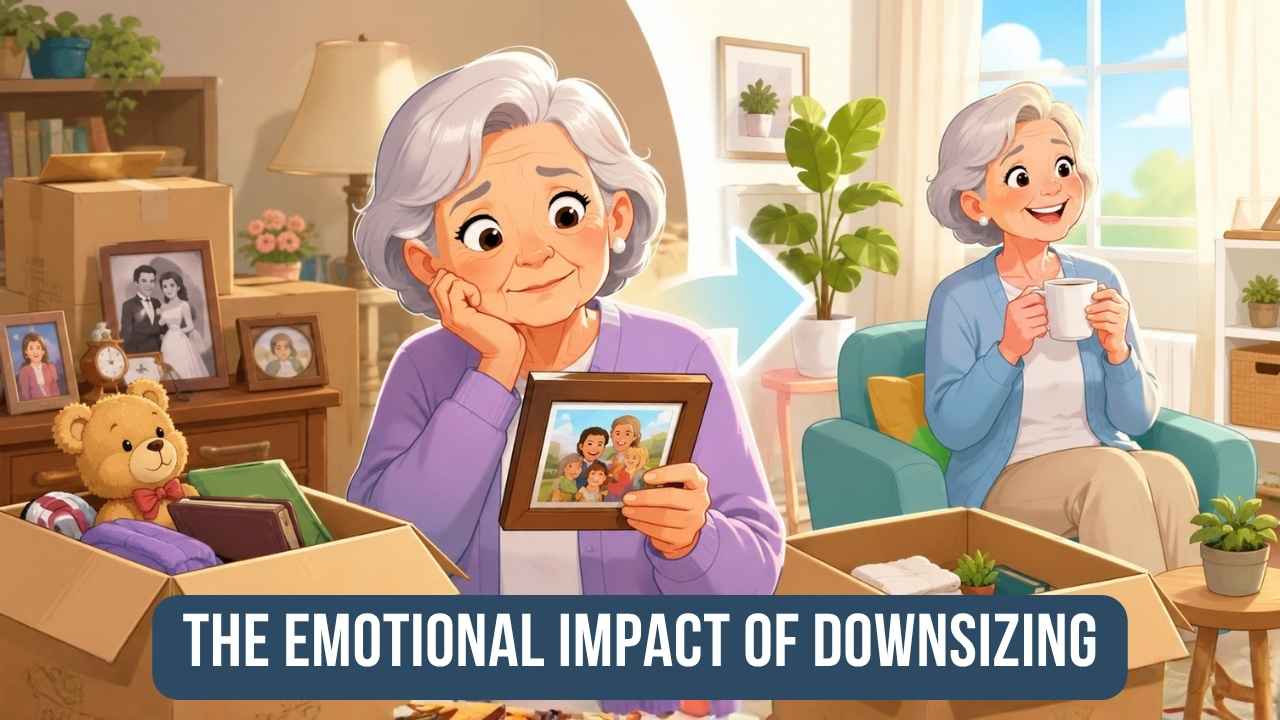

For many older adults, downsizing is more than simply moving into a smaller home. It often represents a major life transition tied to aging, independence, memories, finances, and identity. While downsizing can improve safety, reduce maintenance, and simplify daily living, it can also trigger emotional stress that families sometimes underestimate.
Understanding the emotional side of downsizing can help seniors and loved ones make healthier, more compassionate decisions during the process.
1. Letting Go of a Lifetime of Memories
A home often holds decades of emotional attachment — raising children, celebrating holidays, and building routines. Packing up treasured belongings can feel like losing a part of one’s identity.
Many seniors experience sadness or grief when parting with sentimental items, even if the move makes practical sense.


Helpful Solution
Instead of rushing decisions, create a “memory box” with meaningful items, scan old photos digitally, and involve family members in storytelling sessions to preserve emotional connections.
2. Anxiety About Losing Independence
Some seniors associate downsizing with losing control or becoming dependent on others. Moving from a longtime family home into a condo, apartment, or assisted living space may create fear about aging or future health concerns.
This anxiety can lead to resistance, frustration, or emotional withdrawal.


Helpful Solution
Focus conversations on safety, convenience, and freedom rather than limitation. Emphasize benefits such as less maintenance, reduced fall risks, easier mobility, and more time for hobbies or social activities.
3. Stress and Decision Fatigue
Downsizing often involves hundreds of decisions in a short amount of time — what to keep, donate, sell, or discard. This process can become mentally exhausting, especially for older adults already managing health concerns or emotional stress.


Helpful Solution
Break the process into smaller steps. Focus on one room at a time and allow extra time for emotional adjustment. Hiring a senior move manager or asking family members for support can significantly reduce stress.
4. Downsizing Can Also Bring Relief
While the emotional challenges are real, many seniors eventually experience positive emotional changes after downsizing. Reduced home maintenance, lower expenses, fewer safety hazards, and simpler routines can improve overall quality of life and mental wellness.
Many older adults report feeling lighter, safer, and less overwhelmed once the transition is complete.


Helpful Solution
Celebrate the transition as a new chapter instead of focusing only on what was left behind. Creating new routines and personalizing the new space can help seniors emotionally settle into their next stage of life.
Final Thoughts
Downsizing is not simply about square footage — it is deeply emotional. Seniors may experience grief, fear, stress, and uncertainty during the process, but with patience, support, and thoughtful planning, downsizing can also create opportunities for safety, freedom, peace of mind, and healthier living.
Families who approach the process with empathy rather than pressure often create smoother and more emotionally positive transitions for everyone involved.
Disclaimer
This article is intended for informational and educational purposes only and should not be considered medical, legal, financial, mental health, or real estate advice. Individual situations vary greatly, and readers should consult qualified healthcare professionals, licensed therapists, financial advisors, elder care specialists, or real estate professionals before making major lifestyle or housing decisions.
Download these helpful checklists to guide you through your buying and selling journey.

Home Buyer’s Checklist

Home Seller’s Checklist

Mistakes To Avoid

10 Body Changes After 60 Worth Discussing With Your Doctor
Download these helpful checklists to guide you through your buying and selling journey.Home Buyer's ChecklistHome Seller's ChecklistMistakes To Avoid

Morning Headaches in Seniors: 9 Causes, Warning Signs and What to Do
Download these helpful checklists to guide you through your buying and selling journey.Home Buyer's ChecklistHome Seller's ChecklistMistakes To Avoid

Sudden Weight Gain From Fluid Retention: Causes, Warning Signs & What to Do
Download these helpful checklists to guide you through your buying and selling journey.Home Buyer's ChecklistHome Seller's ChecklistMistakes To Avoid