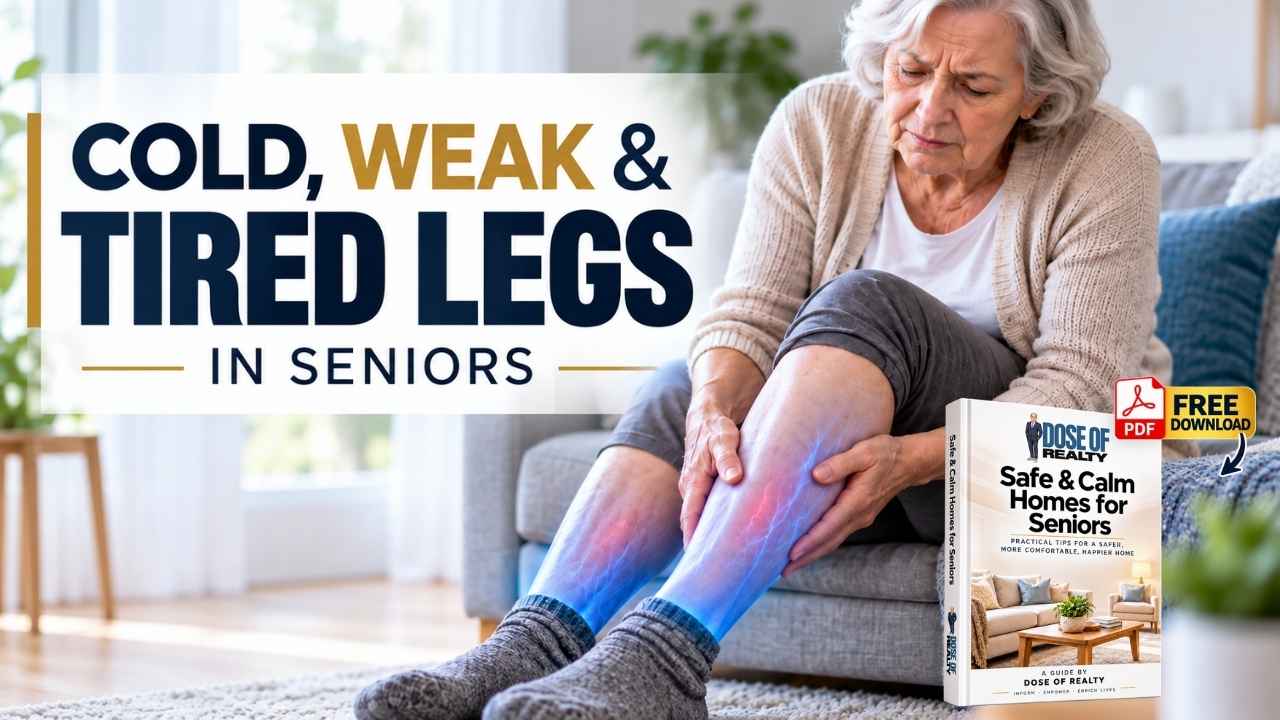

If your legs feel cold no matter how many socks you put on, weak when you try to stand up from a chair, or just plain tired by mid-afternoon, you're not imagining things, and you're definitely not alone. These are some of the most common complaints among older adults, and they almost always trace back to one thing: how well blood is moving through your legs.
Poor circulation in seniors is common, but it isn't something you just have to live with. Once you understand what's actually happening inside those blood vessels, most of it is manageable, and some of it is even preventable.
Let's walk through it together, in plain English, no medical degree required.
Why Circulation Gets Worse With Age
Think of your blood vessels like garden hoses. When you're young, they're flexible and the water (blood) flows through easily. Over the decades, those "hoses" can get a little stiffer and narrower, especially if there's been years of high blood pressure, high cholesterol, smoking, or sitting more than moving.
On top of that, the valves inside the veins in your legs, tiny one-way doors that keep blood moving up toward the heart, can weaken with age. When they don't close properly, blood can pool in the lower legs instead of heading back up. That pooling is what causes a lot of the swelling and heaviness people notice.
Common Warning Signs of Poor Leg Circulation
Some of these might sound familiar. If you notice more than one at the same time, it's worth paying closer attention.
- Swollen ankles or feet, especially after sitting or standing for a while
- Cold feet or legs, even in a warm room
- Numbness or tingling, like a "pins and needles" feeling
- Leg cramps, particularly at night or after walking
- Aching or heaviness in the legs that gets worse throughout the day
- Skin changes, such as a bluish or pale tone, shiny skin, or slow-healing sores
- Leg pain when walking that eases with rest (doctors call this claudication)
None of these on their own means something is seriously wrong, but they're your body's way of flagging that blood flow isn't quite what it should be.
The Illnesses Behind the Symptoms
A lot of medical terms get thrown around when circulation comes up. Here's what they actually mean.
Peripheral Artery Disease (PAD)
This happens when the arteries that carry blood to the legs get narrowed by fatty buildup, kind of like a clogged pipe. Less blood gets to the muscles, which is why walking can cause cramping or aching that goes away with rest. PAD is closely linked to smoking, diabetes, and heart disease, so it's more than a "leg problem," it's often a sign the heart and blood vessels need attention too.
Chronic Venous Insufficiency
This is the opposite direction problem: the veins carrying blood back up from the legs have weak valves, so blood pools instead of returning to the heart. This is usually behind the swelling, heaviness, and visible varicose veins many older adults deal with.
Deep Vein Thrombosis (DVT)
This is a blood clot that forms in a deep vein, usually in the leg. It's more serious because the clot can potentially travel to the lungs. Warning signs include sudden swelling, warmth, and pain in one leg, usually just one side, and it needs prompt medical attention, not a "wait and see" approach.
Varicose Veins
These are the twisted, bulging veins you can often see just under the skin. They're caused by the same weak valve problem as venous insufficiency. They're usually more of a cosmetic and comfort issue, but they can sometimes lead to aching, swelling, or skin irritation.
Restless Leg Syndrome (RLS)
An uncomfortable, hard-to-describe urge to move the legs, usually worse in the evening or at night. It isn't always caused by circulation problems, but poor blood flow is one of several possible triggers, alongside low iron or certain medications.
Peripheral Neuropathy
Sometimes what feels like a circulation issue, numbness or tingling, is actually nerve damage rather than blood flow, especially common in people with diabetes. It's worth mentioning to a doctor since the treatment approach is different.
What Actually Helps
You don't need anything fancy to start supporting healthy circulation. Small, consistent habits go a long way.
- Move often, even a little. Short walks, ankle circles while seated, or standing up every hour keeps the calf muscles pumping blood back up toward the heart.
- Elevate the legs. Propping the feet up above heart level for 15 to 20 minutes a few times a day helps reduce pooling and swelling.
- Try compression socks. These gently squeeze the lower leg to help push blood upward. They're inexpensive and available at most pharmacies, though it's worth asking a doctor about the right pressure level.
- Stay hydrated. Dehydration makes blood thicker and harder to pump efficiently.
- Watch sodium intake. Too much salt can worsen fluid retention and swelling in the legs.
- Don't smoke, and if you do, ask about quitting support. Smoking is one of the biggest accelerators of artery damage.
- Manage underlying conditions. Keeping diabetes, blood pressure, and cholesterol in check protects the blood vessels directly.
When It's Time to Call a Doctor
Most day-to-day leg heaviness or mild swelling can be managed at home. But certain signs deserve a same-day call, not a "let's see how it goes":
- Sudden swelling, redness, or warmth in one leg only
- Skin sores or wounds on the leg or foot that aren't healing
- Leg pain that happens even at rest
- Skin that turns pale, blue, or unusually cool suddenly
- Chest pain, shortness of breath, or confusion alongside leg swelling
When in doubt, it's always better to get it checked. Circulation problems caught early are far easier to treat than ones that have been quietly progressing for years.
The Bottom Line
Aging legs aren't just an inconvenience, they're often giving you useful information about what's happening inside your body. Swelling, coldness, cramping, and aching are common, but "common" doesn't mean they should be ignored.
With a bit of movement, a few smart daily habits, and regular check-ins with a healthcare provider, most seniors can keep their circulation, and their independence, in much better shape for years to come.
A quick note: This article was written using general medical information available from reputable healthcare sources. It's meant to give a clear, easy-to-understand overview, always verify specific medical details with a licensed healthcare provider.
Disclaimer: This article is for general informational and educational purposes only and is not intended as, and should not be substituted for, professional medical advice, diagnosis, or treatment. Always seek the advice of a physician or other qualified health provider with any questions you may have regarding a medical condition. Never disregard professional medical advice or delay seeking it because of something you have read in this article. If you think you may have a medical emergency, call your doctor or emergency services immediately. Reliance on any information provided in this article is solely at your own risk.
Ready for Your Next Move?
Whether you're planning to buy, sell, or simply exploring your options, fill out the form below. Tell us a little about what you're looking for, and we'll help connect you with the right real estate professional.
David Reis, MD
New York, New York 10036
Tell Us About Your Move
Complete the short form and we'll be in touch.

Retiring in the City or the Country? How to Choose the Right Place for Your Golden Years
Download these helpful checklists to guide you through your buying and selling journey.Home Buyer's ChecklistHome Seller's ChecklistMistakes To AvoidlinkedininstagramfacebookyoutubeCommercial and ResidentialReferral Division Download Fair Housing Notice ...

10 Common Superstitions About Aging Doctors Say Are False | Myths vs. Facts
Download these helpful checklists to guide you through your buying and selling journey.Home Buyer's ChecklistHome Seller's ChecklistMistakes To AvoidlinkedininstagramfacebookyoutubeCommercial and ResidentialReferral Division Download Fair Housing Notice ...

12 Senior Discounts Most People Over 60 Never Use in the United States
$ $ $ Money & Everyday Savings If you're over 60, chances are you already know about the easy stuff: a cup of coffee for a dollar less at the diner, maybe 10% off at the movies on a Tuesday afternoon. But here's the thing nobody tells you: the real money is almost...
Download these helpful checklists to guide you through your buying and selling journey.

Home Buyer’s Checklist

Home Seller’s Checklist

Mistakes To Avoid