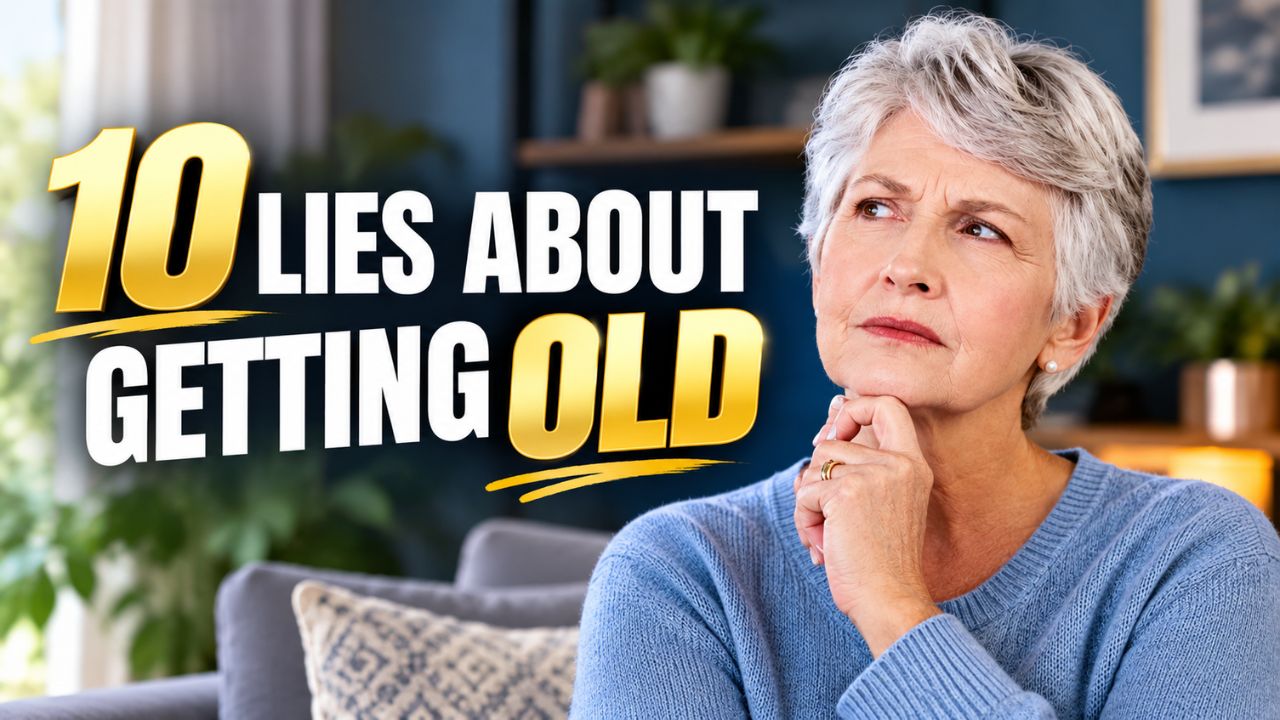

Let's be honest: growing older comes with a lot of baggage we didn't ask for. Not the wrinkles or the gray hair, those are just cosmetic. I'm talking about the baggage of bad information. The stuff your aunt swears is true, the stuff you half-believe because "everyone knows it," the stuff that quietly convinces you to stop trying new things, stop moving your body, or stop expecting good years ahead of you.
Here's the good news: most of it is nonsense.

Doctors, geriatricians, and researchers at places like the National Institute on Aging (NIA) have spent decades studying what actually happens to our bodies and minds as we age, and the findings consistently push back against the doom-and-gloom folklore. Aging is real. Decline is not destiny. Below are ten of the most persistent superstitions about aging, along with what medical experts actually say about each one, and why believing the myth can be more harmful than the aging process itself.
Why These Aging Myths Matter More Than You Think
Before we get into the list, it's worth pausing on why this topic deserves your attention. Research shows that people who hold a more positive view of their own aging tend to live measurably longer, in some studies more than seven years longer, than people who see aging as an inevitable decline. Beliefs shape behavior. If you believe exercise is pointless after 60, you stop exercising. If you believe memory loss is guaranteed, you stop challenging your brain. The myths don't just misinform us; they can actively work against our health.
People with a positive view of their own aging have been shown to live more than seven years longer than those who see aging as inevitable decline.
With that in mind, let's separate the folklore from the facts.
"Memory Loss and Dementia Are Just Part of Getting Old"
Once you hit a certain age, forgetfulness turns into dementia, and there's nothing you can do about it.
Occasional forgetfulness, like misplacing your keys, is normal at any age. But dementia is not a normal or guaranteed stage of aging. Geriatric experts point out that most people who live into their 80s and 90s never develop dementia, and only around 1 in 10 U.S. adults 65 and older actually have it. Alzheimer's and other dementias are diseases with identifiable risk factors, not an automatic life stage. Doctors consistently note that heart health, physical activity, sleep quality, and staying socially and mentally engaged all lower the risk.
The takeaway: A little forgetfulness isn't a diagnosis. Keep learning, keep moving, and don't let the myth talk you out of a Sudoku puzzle or a new hobby.

"The Older You Get, The Less Sleep You Need"
Seniors just don't need as much sleep as younger adults.
This one gets repeated so often it almost sounds medical, but it isn't. Older adults need roughly the same amount of sleep as other adults, about 7 to 9 hours a night. What changes with age isn't the need for sleep, it's the ability to get quality, uninterrupted sleep. Sleep patterns shift, with more fragmented rest and lighter sleep stages, but the underlying requirement stays the same.
The takeaway: If you're sleeping less as you age, that's a sleep quality issue worth discussing with a doctor, not a sign your body simply "needs less."
"It's Too Late to Start Exercising"
If you didn't build the habit young, there's no point starting a fitness routine later in life.
Cleveland Clinic geriatrician Dr. Ronan Factora calls this one of the most damaging myths he encounters, precisely because it becomes self-fulfilling. There is no age at which physical activity stops being beneficial. Regular movement helps maintain bone density, balance, cardiovascular health, and independence, and studies on adults starting exercise programs well into their 70s and 80s show measurable improvements in strength and mobility.
The takeaway: You don't need to run a marathon. Walking, resistance bands, swimming, and stretching all count, and it's genuinely never too late to start.

"Depression and Loneliness Are a Normal Part of Aging"
Feeling down or isolated is just something that comes with getting older.
According to the National Institute on Aging, depression is not a normal or expected part of growing older, and research actually shows older adults report lower rates of depression than younger adults in many studies. When depression does appear later in life, it's a treatable medical condition, not an inevitable mood. Doctors caution that because symptoms in older adults can look different, less sadness, more fatigue or physical complaints, it's sometimes overlooked or dismissed as "just old age," which delays treatment.
The takeaway: Persistent sadness or withdrawal at any age is worth mentioning to a healthcare provider. It's not something to just accept.
"You Can't Teach an Old Dog New Tricks"
The brain loses its ability to learn new skills, languages, or information after a certain age.
This is one of the more thoroughly disproven superstitions about aging. Neuroplasticity, the brain's ability to form new connections, continues throughout the entire lifespan. It's true that learning may take a bit more time and repetition than it did in your twenties, but the capacity itself doesn't disappear. Older adults regularly learn new languages, instruments, and technical skills; they just may need a bit more patience with the process.
The takeaway: Learning something new later in life isn't just possible, it's one of the better things you can do for long-term brain health.

"Older Adults Aren't Interested in Sex or Intimacy"
Sexual activity and intimacy fade away once you retire or reach a certain age.
Surveys of older adults consistently contradict this superstition. In one widely cited survey, about 40% of respondents in their later years reported being sexually active, and roughly 73% said they were satisfied with their sex lives. Intimacy, connection, and physical closeness remain a normal part of life for many older adults, and doctors note that mobility or cognitive changes don't automatically eliminate desire or capability.
The takeaway: This is a deeply personal topic, but medically speaking, there's no age cutoff for intimacy.
"Wrinkles and Gray Hair Mean Your Health Is Declining"
Visible signs of aging, like wrinkles, thinning hair, or age spots, are proof that your overall health is going downhill.
Skin aging is driven by two separate tracks: intrinsic aging (genetics, cellular turnover) and extrinsic aging (sun exposure, smoking, lifestyle). Visible skin changes reflect years of UV exposure and cell turnover, not necessarily internal organ health or life expectancy. In other words, your skin's appearance and your cardiovascular or cognitive health are not the same measurement. No cream can stop the biological aging process entirely, but that doesn't mean wrinkles are a report card on your overall wellbeing.
The takeaway: Sunscreen, hydration, and healthy habits support skin health, but a few new lines on your face say very little about what's happening inside your body.
"Chronic Pain Is Just Something You Have to Live With"
Aches, joint pain, and stiffness are unavoidable once you're older, so there's no point seeking treatment.
Pain is common with age, but it is not "normal" in the sense of being untreatable or expected to be endured silently. Doctors specifically push back on this superstition because it leads people to under-report pain, assuming a physician can't help anyway. In reality, chronic pain in older adults is often manageable through physical therapy, targeted exercise, medication adjustments, or treating an underlying condition like arthritis or osteoporosis.
The takeaway: Persistent pain deserves a conversation with your doctor, not quiet acceptance.

"Getting Older Means Losing Independence and Ending Up in a Nursing Home"
Old age inevitably leads to institutional care and a loss of autonomy.
This fear is far more common than the reality. Historical data on U.S. seniors has shown that only a small percentage of older adults live in nursing homes at any given time, and even fewer stay there long term versus using them for short-term rehabilitation. The vast majority of older adults remain in their own homes, living independently or with modest support, well into advanced age.
The takeaway: Planning for the future is wise, but assuming institutionalization is a given ignores how most people actually age.
"How You Age Is Basically Determined by Your Genes"
Your genetic code decides how long you'll live and how well you'll age, so lifestyle choices don't matter much.
This might be the most consequential superstition on the list because it discourages effort. Long-term twin studies, including research following thousands of twin pairs over decades, estimate that genetics account for only about 25% of how long a person lives, with the remaining roughly 75% shaped by lifestyle and environment: diet, physical activity, sleep, stress management, and social connection. Your chronological age and your biological age are not the same thing, and biological aging is influenced heavily by daily habits.
The takeaway: Good genes help, but they're not the deciding factor. What you do today still matters, a lot.
Genetics account for only about 25% of how long a person lives. The other 75% is shaped by how you live.
The Bottom Line on Aging Myths and Misconceptions
Almost every superstition on this list shares the same flaw: it treats aging as a single, predictable decline instead of what it actually is, a highly individual process shaped by genetics, environment, and daily choices. Doctors and researchers keep circling back to the same message: assumptions about what a person can or can't do based on age alone are usually wrong, and often harmful, because they discourage the very habits (movement, learning, social connection, medical care) that support healthy aging in the first place.
If there's one thing to take from this list, it's this: don't let a myth talk you out of a healthier, fuller life. Question the folklore, ask your doctor the specific questions, and keep doing the things that keep you well.

This article is for general educational purposes only and is not a substitute for professional medical advice, diagnosis, or treatment. Aging affects everyone differently, and individual health conditions vary widely. Always consult a qualified physician or healthcare provider regarding any concerns about memory, sleep, pain, mental health, or other symptoms related to aging before making changes to your health routine. The publisher and author of this article are not liable for any actions taken based on the information provided here.
References
- National Institute on Aging, National Institutes of Health: 10 Myths About Aging
- Cleveland Clinic Newsroom: Doctor Debunks Top Three Aging Myths
- University of Florida, College of Public Health and Health Professions: Debunking 7 Common Aging Myths
- AARP: 10 Myths About Aging That Need to Retire
- Where You Live Matters: Debunking 12 Common Myths About Aging
- Federal Highway Administration data on older drivers, cited via Where You Live Matters
- Yale School of Public Health research on self-perception of aging and longevity, cited via CNHI "Ask Joan" column

Senior-Friendly Sports Activities That Are Low-Impact
Download these helpful checklists to guide you through your buying and selling journey.Home Buyer's ChecklistHome Seller's ChecklistMistakes To Avoid
Fainting in Seniors: Causes, Warning Signs and How to Stay Safe
Download these helpful checklists to guide you through your buying and selling journey.Home Buyer's ChecklistHome Seller's ChecklistMistakes To Avoid
10 Body Changes After 60 Worth Discussing With Your Doctor
Download these helpful checklists to guide you through your buying and selling journey.Home Buyer's ChecklistHome Seller's ChecklistMistakes To Avoid
Download these helpful checklists to guide you through your buying and selling journey.

Home Buyer’s Checklist

Home Seller’s Checklist

Mistakes To Avoid