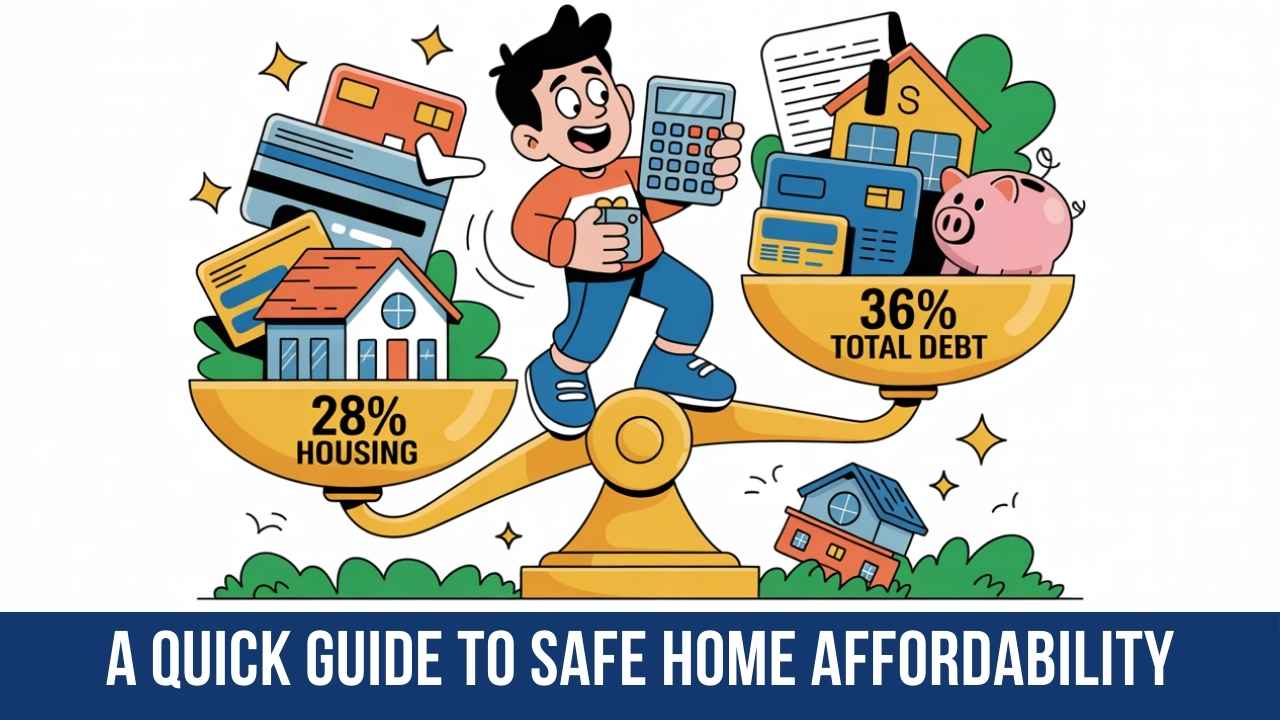

Buying a home is exciting — but figuring out how much house you can safely afford can feel overwhelming. One of the simplest guidelines many lenders and financial advisors use is called the 28/36 Rule.
It’s not a strict law, but it’s a widely accepted affordability guideline that helps buyers avoid becoming “house poor.”
Let’s break it down in a simple and practical way.
What Is the 28/36 Rule?
The 28/36 Rule is a budgeting guideline used in mortgage underwriting that suggests:
-
No more than 28% of your gross monthly income should go toward housing costs.
-
No more than 36% of your gross monthly income should go toward total debt obligations.
This rule helps lenders determine whether your mortgage payment is financially sustainable.
Many lenders, including those following underwriting standards from organizations such as the Federal Housing Administration, Fannie Mae, and Freddie Mac, use similar debt-to-income principles when evaluating mortgage applications.
28% Rule 🏠
Housing Costs Should Not Exceed 28% of Your Income
The 28% rule focuses only on housing expenses.
This includes:
-
Mortgage principal and interest
-
Property taxes
-
Homeowners insurance
-
HOA fees (if applicable)
This combination is often called PITI (Principal, Interest, Taxes, Insurance).
Example
If your gross monthly income is $6,000
28% of $6,000 = $1,680
This means your recommended maximum housing payment is about: $1,680 per month
Quick Visual Breakdown
[Housing 28% 🏠] ███████████
[Remaining Income 72%] ██████████████████████████████
Housing Portion (28%) Includes:
-
Mortgage payment
-
Property taxes
-
Insurance
-
HOA dues
Why the 28% Rule Matters
Staying within this range helps ensure that you still have money available for:
-
groceries
-
transportation
-
savings
-
emergencies
-
lifestyle expenses
In simple terms: your home supports your life, not controls it.
Total Debt Ratio Pie Chart
[Total Debt 36% 💳] █████████████
[Remaining Income 64%] █████████████████████████
Example Debt Allocation
If your mortgage payment is $1,680, that leaves about:
$480 for other debts
Example:
-
Car payment: $250
-
Student loan: $150
-
Credit card minimum: $80
Total = $480
You’re still within the 36% guideline.
Why Lenders Use the 28/36 Rule
Mortgage lenders use this guideline to measure Debt-to-Income Ratio (DTI) — one of the most important factors in mortgage approval.
DTI helps lenders evaluate:
-
ability to repay a loan
-
financial stability
-
risk of default
According to mortgage guidelines used by Consumer Financial Protection Bureau, maintaining a manageable debt-to-income ratio significantly improves a borrower’s chances of loan approval.
When Buyers Can Exceed the Rule
The 28/36 rule is a guideline — not a hard limit.
Some loan programs allow higher ratios.
Examples:
-
FHA loans sometimes allow DTI up to ~43%
-
Some conventional loans allow 45%–50% depending on credit strength
However, just because a lender approves it doesn’t always mean it’s comfortable financially.
Tips to Stay Within Safe Affordability
Here are a few simple ways buyers keep their finances healthy:
• Pay down credit card balances before applying
• Avoid new debt during the mortgage process
• Increase your down payment if possible
• Maintain an emergency savings fund
• Shop around for mortgage rates
These steps can improve affordability and loan approval chances.
A Simple Way to Think About It
28% Housing 🏠
8% Other Debt 💳
64% Everything Else (life, savings, food, fun)
Final Thoughts
The 28/36 Rule remains one of the most practical starting points for buyers evaluating affordability.
It helps you:
-
avoid financial stress
-
stay within a manageable budget
-
make smarter homebuying decisions
And remember: buying the right home isn’t just about approval — it’s about long-term comfort.
Sources
-
Consumer Financial Protection Bureau
-
Federal Housing Administration
-
Fannie Mae
-
Freddie Mac
-
National Association of Realtors Homebuyer Resources
Disclaimer
This article is provided for educational and informational purposes only and should not be considered financial, legal, or mortgage advice. Mortgage qualification standards, interest rates, and debt-to-income requirements may vary by lender, loan program, and borrower profile. Readers should consult with a licensed mortgage professional, financial advisor, or housing counselor before making any financial or homebuying decisions.
Download these helpful checklists to guide you through your buying and selling journey.

Home Buyer’s Checklist

Home Seller’s Checklist

Mistakes To Avoid

Top 10 States With Affordable Housing in 2026
If you're house-hunting and trying to stretch your dollar further, location matters — a lot. Based on 2026 median home values, rent prices, cost of living data, and property tax rates, here are 10 states where affordability still exists. (Sources referenced include...

Should You Buy Now or Wait? A Practical (and Honest) Guide for Homebuyers
If you’re asking this question, you’re not alone. Almost every serious buyer eventually wonders: “Should I buy now… or should I wait for rates to drop and prices to cool?” Let’s break this down logically, using real data, economic fundamentals, and practical...

Down Payment Options: 3%, 5%, 10%, or 20%: What’s Best for You?
One of the biggest myths in real estate?“You need 20% down to buy a home.” That’s not always true. While a 20% down payment has advantages, many buyers — especially first-time homebuyers — purchase homes with far less. According to the National Association of Realtors...


Commercial and Residential
Referral Division
Download Fair Housing Notice

Master Disclaimer
The views, opinions, and summary statements expressed in the contents of this website are those only of the noted presenter(s) (herein referenced as “opinion”) and do not represent official policy or policy positions of eXp World Holdings, it’s subsidiaries or vendor partners or clients (herein reference as “eXp”).
The contents of the media presented on this website and any media cross referenced as related to David G. Reis carry such disclaimers as above.
Quantitative information regarding real estate listings or industry statistics has been derived from source documents with appropriate permissions.
The accuracy of such information is the responsibility of the authors/owners of such source documents.
The media in this website makes no representation of the operational and business models,
expenses or financial success of licensed real estate professionals at, joining, or considering joining eXp.