
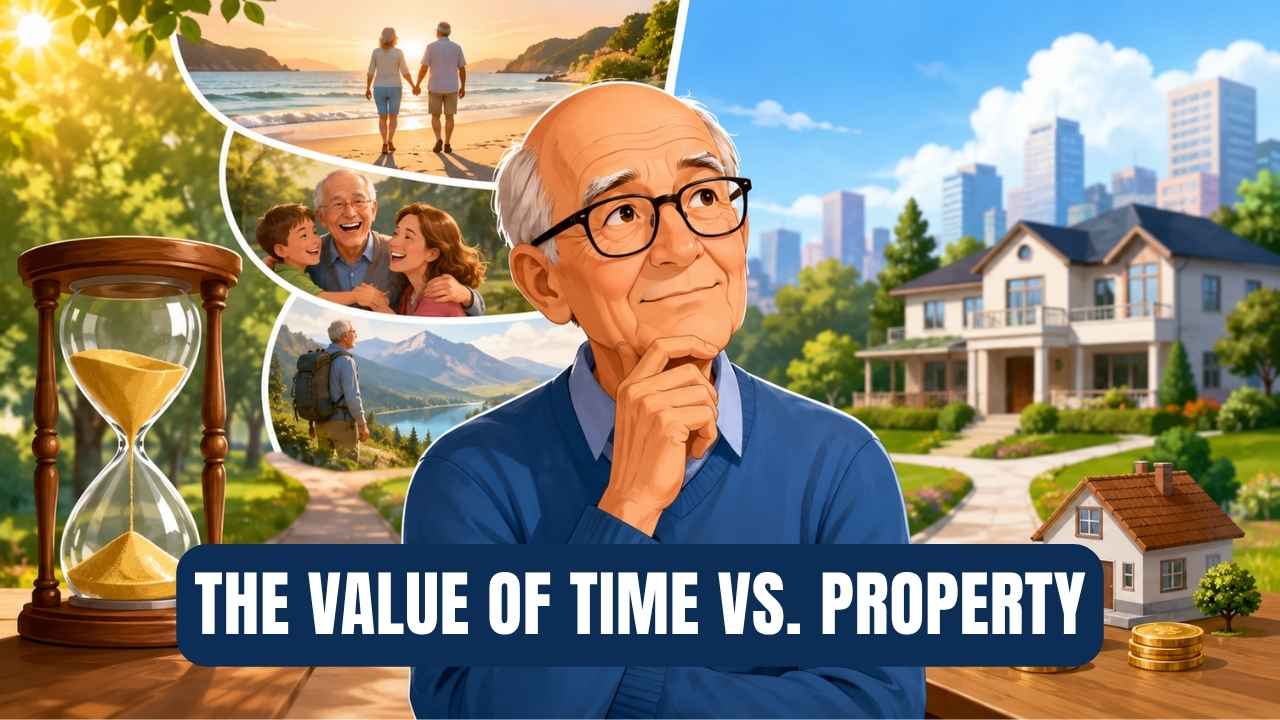

The Value of Time vs. The Value of Property: Which Matters More as You Grow Older?
Throughout life, people work hard to acquire assets such as homes, land, investments, and personal property. These possessions often represent years of effort, sacrifice, and financial planning. However, as people grow older, many begin to ask a deeper question: What is truly more valuable—time or property?
While property can be bought, sold, inherited, or replaced, time is a finite resource that cannot be recovered once it has passed.
1. Property Can Be Rebuilt, Time Cannot
A person who loses a house, vehicle, or investment may eventually recover financially. History shows that many individuals have rebuilt their wealth after economic downturns, natural disasters, or personal setbacks.
Time, however, operates differently. Every day spent is permanently gone.

Key Insight
Financial losses can often be recovered. Lost years cannot.
2. Property Provides Security, But Time Creates Experiences
Owning property can provide stability, shelter, and financial confidence. Homeownership, for example, remains one of the primary ways families build wealth.
Yet research consistently shows that meaningful experiences and strong relationships contribute significantly to long-term life satisfaction.

Key Insight
Property may support a comfortable life, but time allows people to create memories and relationships.
3. Property Can Be Inherited, Time Cannot
Many individuals spend years planning their estates to benefit future generations. Houses, investments, and savings can all be transferred to heirs.
Time, however, cannot be gifted or passed down. The moments missed with loved ones are often impossible to replace later.

Key Insight
Assets may remain in the family for generations, but personal time is a non-renewable asset.
4. As People Age, Time Often Becomes More Valuable
Studies on aging frequently show that older adults become increasingly selective about how they spend their time. Activities that once seemed important may lose significance, while family, friendships, health, and personal fulfillment become higher priorities.

Key Insight
The perception of value often shifts from accumulating possessions to maximizing meaningful moments.
5. The Best Approach Is Balance
This is not an argument against property ownership. Property remains important for financial stability, retirement security, and leaving a legacy.
However, focusing exclusively on wealth accumulation may come at the expense of relationships, experiences, health, and personal fulfillment.

Practical Solutions
- Maintain a healthy balance between saving and living.
- Prioritize experiences alongside financial goals.
- Invest in relationships as intentionally as investments.
- Avoid sacrificing all of today’s happiness for future wealth.
- Create an estate plan while still enjoying the life you have built..
Final Thoughts
Property can provide comfort, security, and opportunities. It is an important part of financial well-being. Yet time remains the one asset every person spends at the same rate and can never replenish.
For many older adults, the greatest realization is not how much property they own, but how they chose to spend the years they were given.
The challenge is not choosing between time and property—it is learning how to use property wisely so that it supports a meaningful use of time.
Disclaimer
This article is intended for educational and informational purposes only and should not be considered financial, legal, tax, estate-planning, investment, or professional advice. Individual circumstances vary significantly. Readers should consult qualified financial advisors, attorneys, tax professionals, or estate-planning experts before making decisions regarding property ownership, inheritance, retirement planning, or asset management. Any examples provided are illustrative and do not guarantee future outcomes.

10 Body Changes After 60 Worth Discussing With Your Doctor
Download these helpful checklists to guide you through your buying and selling journey.Home Buyer's ChecklistHome Seller's ChecklistMistakes To Avoid

Morning Headaches in Seniors: 9 Causes, Warning Signs and What to Do
Download these helpful checklists to guide you through your buying and selling journey.Home Buyer's ChecklistHome Seller's ChecklistMistakes To Avoid

Sudden Weight Gain From Fluid Retention: Causes, Warning Signs & What to Do
Download these helpful checklists to guide you through your buying and selling journey.Home Buyer's ChecklistHome Seller's ChecklistMistakes To Avoid
Download these helpful checklists to guide you through your buying and selling journey.

Home Buyer’s Checklist

Home Seller’s Checklist

Mistakes To Avoid