
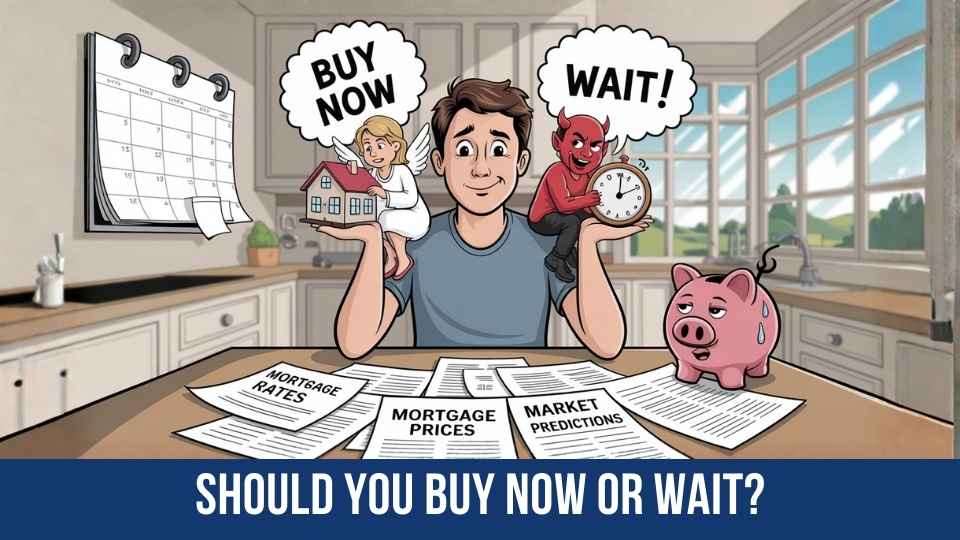

If you’re asking this question, you’re not alone. Almost every serious buyer eventually wonders:
“Should I buy now… or should I wait for rates to drop and prices to cool?”
Let’s break this down logically, using real data, economic fundamentals, and practical decision-making — without hype.
1. The Interest Rate Question
Mortgage rates fluctuate based on inflation, Federal Reserve policy, and bond market activity. According to the Federal Reserve, rate decisions are primarily driven by inflation control, not housing affordability.
When inflation rises:
-
The Fed tightens monetary policy.
-
Mortgage rates typically increase.
-
Borrowing becomes more expensive.
When inflation cools:
-
Rates may stabilize or decline.
-
Buying power improves.
However, here’s the key:
If rates drop significantly, demand usually increases — and home prices may rise due to competition.
This pattern has been observed repeatedly in housing cycles, including the post-2020 market surge reported by the National Association of Realtors.
So waiting for lower rates can sometimes mean:
-
Paying less interest
-
But paying more for the house itself
2. The Home Price Reality
According to long-term data from the U.S. Census Bureau and Federal Housing Finance Agency:
-
Home values historically trend upward over time.
-
Short-term corrections happen.
-
Long-term appreciation has averaged roughly 3–5% annually nationwide (varies by market).
This means timing the market perfectly is extremely difficult — even for economists.
3. The “Wait” Argument — When It Makes Sense
Waiting can be smart if:
-
Your credit score needs improvement
-
You have high-interest debt to pay down
-
You don’t have a stable emergency fund
-
Your job situation is uncertain
-
You plan to move again within 1–2 years
Buying too early can create financial strain. A house should build stability, not stress.
4. The “Buy Now” Argument — When It Makes Sense
Buying now may be logical if:
-
You plan to stay 5+ years
-
You have stable income
-
You have sufficient savings beyond your down payment
-
You’re comfortable with current monthly payments
-
Rent in your area is high and rising
Remember: you can refinance if rates fall. You cannot refinance the purchase price.
5. The Math Most Buyers Miss
Here’s what many overlook:
If prices rise 4% while you wait one year, but rates drop 0.5%…
You may still pay more overall due to:
-
Higher purchase price
-
Increased competition
-
Reduced negotiating power
Housing markets are driven by supply and demand — not just rates.
6. A Better Question to Ask
Instead of asking:
“Is this the perfect time to buy?”
Ask:
“Am I personally financially ready?”
The right time is less about national headlines and more about:
-
Your debt-to-income ratio
-
Your job security
-
Your savings cushion
-
Your long-term plans
Real estate is a long-term asset class — not a short-term trade.
Final Thought (Friendly Reality Check)
Trying to “time the market” perfectly is like trying to predict the exact day gas prices will be lowest before a road trip.
Possible? Maybe.
Reliable? Not really.
A well-prepared buyer in a stable financial position usually wins in the long run — regardless of minor market shifts.
Disclaimer
This article is for informational and educational purposes only and does not constitute financial, legal, mortgage, or investment advice. Housing markets vary by location and individual financial circumstances. Please consult with a licensed mortgage professional, financial advisor, or real estate professional before making any home purchasing decisions. Past performance of real estate markets does not guarantee future results.
Download these helpful checklists to guide you through your buying and selling journey.

Home Buyer’s Checklist

Home Seller’s Checklist

Mistakes To Avoid

10 Body Changes After 60 Worth Discussing With Your Doctor
Download these helpful checklists to guide you through your buying and selling journey.Home Buyer's ChecklistHome Seller's ChecklistMistakes To Avoid

Morning Headaches in Seniors: 9 Causes, Warning Signs and What to Do
Download these helpful checklists to guide you through your buying and selling journey.Home Buyer's ChecklistHome Seller's ChecklistMistakes To Avoid

Sudden Weight Gain From Fluid Retention: Causes, Warning Signs & What to Do
Download these helpful checklists to guide you through your buying and selling journey.Home Buyer's ChecklistHome Seller's ChecklistMistakes To Avoid