
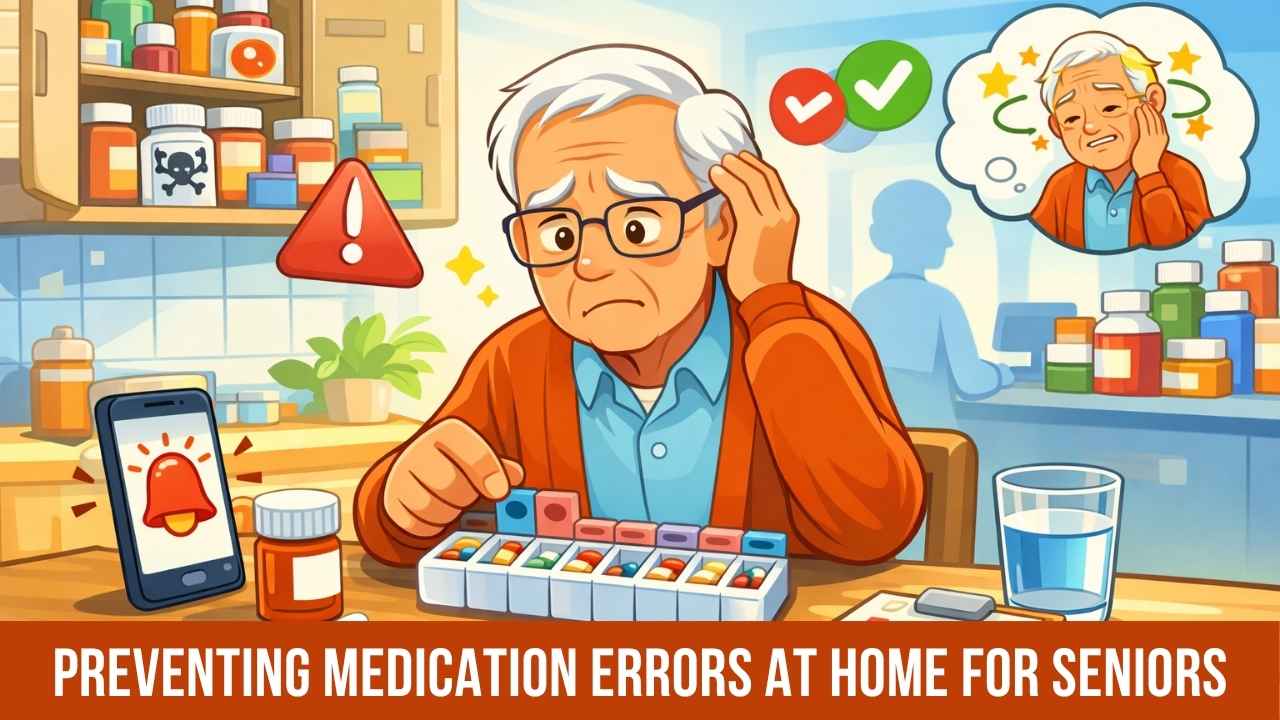

Medication errors are one of the most common—and preventable—health risks for seniors living at home. As we age, managing multiple prescriptions becomes more complex due to memory changes, vision issues, and overlapping medications. A small mistake—like a missed dose or double intake—can lead to serious complications.
Here’s a clear, practical guide to reducing those risks and keeping seniors safe at home.
1. Use a Weekly Pill Organizer


A pill organizer simplifies daily medication routines by clearly separating doses by day and time. This reduces confusion and helps seniors instantly see whether they’ve taken their medication.
2. Maintain an Updated Medication List


Keep a detailed list of all prescriptions, over-the-counter drugs, and supplements. Include dosage, timing, and purpose. This is essential for doctor visits and emergencies.
3. Set Alarms or Reminders


Use smartphone alarms or dedicated medication reminder devices to alert seniors when it’s time to take their medicine. Consistency reduces missed or duplicated doses.
4. Store Medications Properly


Heat, humidity, and light can degrade medications. Store them in a cool, dry place—not in the bathroom. Proper storage ensures effectiveness and safety.
5. Use One Pharmacy When Possible


Filling prescriptions at one pharmacy allows the pharmacist to track potential drug interactions and duplications—an added layer of protection.
6. Double-Check Labels and Instructions


Encourage seniors to read labels carefully before taking medication. If vision is an issue, use magnifiers or request large-print labels.
7. Avoid Mixing Old and New Medications


Outdated medications can cause confusion and may no longer be safe. Dispose of expired or discontinued prescriptions properly.
8. Schedule Regular Medication Reviews


Periodic reviews with a doctor or pharmacist help ensure medications are still necessary and correctly dosed, especially after hospital visits.
9. Watch for Side Effects and Interactions


Symptoms like dizziness, confusion, or nausea may signal adverse reactions. Report these immediately to a healthcare provider.
10. Involve a Trusted Family Member or Caregiver


A second set of eyes can catch mistakes early. Caregivers can help organize medications, monitor adherence, and communicate with healthcare providers.
Final Thoughts
Medication safety isn’t just about following instructions—it’s about creating a system that minimizes risk. With the right tools, habits, and support, seniors can maintain independence while staying safe and healthy at home.
Disclaimer
This article is for informational purposes only and does not constitute medical advice, diagnosis, or treatment. Always consult a qualified healthcare provider, such as a licensed physician or pharmacist, regarding any questions about medications or health conditions. Never alter or stop medications without professional guidance.
Download these helpful checklists to guide you through your buying and selling journey.

Home Buyer’s Checklist

Home Seller’s Checklist

Mistakes To Avoid

10 Body Changes After 60 Worth Discussing With Your Doctor
Download these helpful checklists to guide you through your buying and selling journey.Home Buyer's ChecklistHome Seller's ChecklistMistakes To Avoid
Morning Headaches in Seniors: 9 Causes, Warning Signs and What to Do
Download these helpful checklists to guide you through your buying and selling journey.Home Buyer's ChecklistHome Seller's ChecklistMistakes To Avoid

Sudden Weight Gain From Fluid Retention: Causes, Warning Signs & What to Do
Download these helpful checklists to guide you through your buying and selling journey.Home Buyer's ChecklistHome Seller's ChecklistMistakes To Avoid