
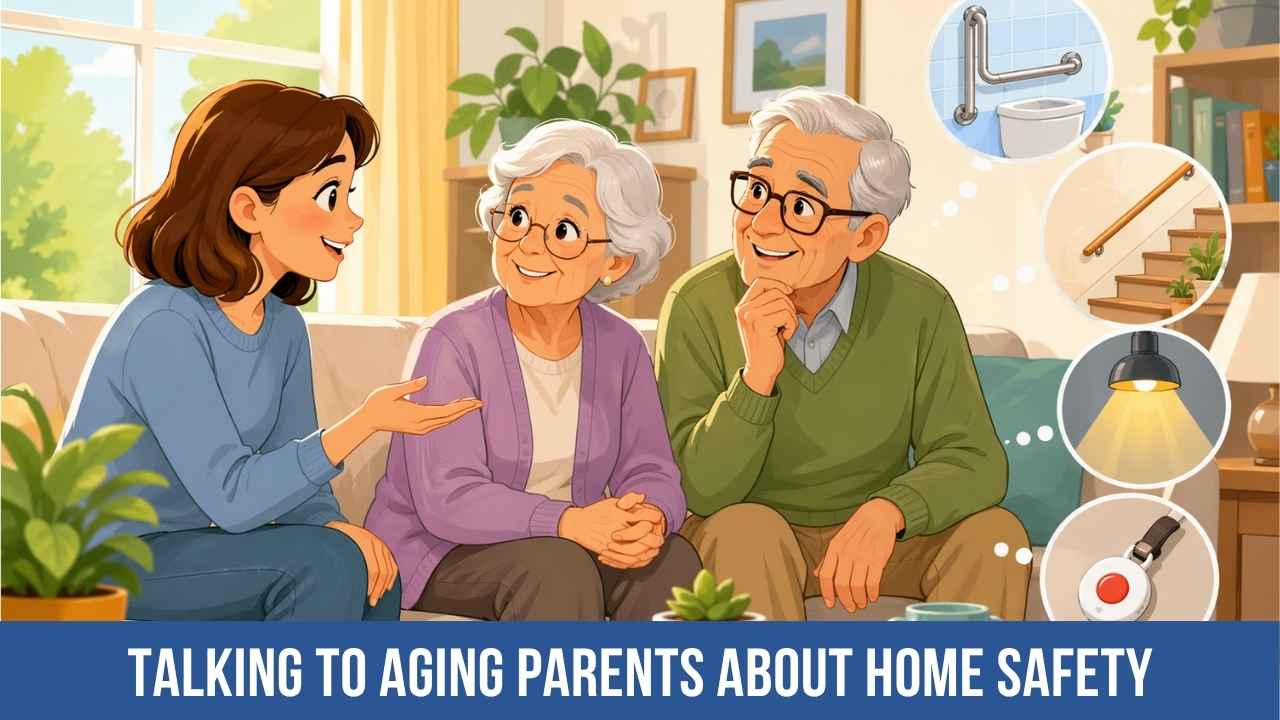

Talking to aging parents about home safety is one of the most important—and delicate—conversations you’ll have. Done poorly, it can feel like a loss of independence. Done well, it builds trust and prevents serious risks like falls, medication errors, or emergencies at home.
Here’s a structured, evidence-based approach to help you navigate it effectively.
1. Start With Observation, Not Accusation


Lead with specific observations instead of assumptions. For example:
“I noticed the stairs seem harder for you lately,” rather than “You can’t use the stairs anymore.”
This reduces defensiveness and keeps the discussion grounded in reality.
2. Choose the Right Timing and Environment


Avoid bringing this up during stressful or rushed moments. Choose a calm, private setting where your parent feels safe and respected. Emotional tone matters as much as the content.
3. Focus on Independence, Not Limitations


Frame safety changes as tools for maintaining independence—not taking it away.
Example: “These small changes can help you stay here longer and safely.”
This aligns with what most seniors want: control over their living situation.
4. Bring Solutions, Not Just Problems


Be ready with realistic, simple solutions:
- Grab bars in bathrooms
- Better lighting
- Removing tripping hazards
- Emergency alert systems
When solutions are practical and affordable, resistance decreases.
5. Involve Them in Decision-Making


Autonomy is critical. Ask questions like:
“What would make you feel safer at home?”
When seniors feel ownership over decisions, they are more likely to accept changes.
6. Use Third-Party Support When Needed


Sometimes advice is better received from professionals. Consider:
- Occupational therapists
- Primary care physicians
- Senior home safety specialists
This adds credibility and removes family tension from the equation.
7. Keep It an Ongoing Conversation


This is not a one-time talk. Needs evolve with time. Revisit the conversation regularly as health, mobility, and environment change.
Final Thought
Approaching this conversation with empathy, clarity, and respect can significantly reduce risks while preserving dignity. The goal is not control—it’s collaboration for safer, longer independent living.
Disclaimer
This article is for informational purposes only and does not constitute medical, legal, or professional advice. Every individual’s health condition, mobility level, and living situation are unique. Before making significant home modifications or care decisions, consult with qualified professionals such as licensed healthcare providers, occupational therapists, or certified home safety specialists.
Download these helpful checklists to guide you through your buying and selling journey.

Home Buyer’s Checklist

Home Seller’s Checklist
Mistakes To Avoid

10 Body Changes After 60 Worth Discussing With Your Doctor
Download these helpful checklists to guide you through your buying and selling journey.Home Buyer's ChecklistHome Seller's ChecklistMistakes To Avoid

Morning Headaches in Seniors: 9 Causes, Warning Signs and What to Do
Download these helpful checklists to guide you through your buying and selling journey.Home Buyer's ChecklistHome Seller's ChecklistMistakes To Avoid

Sudden Weight Gain From Fluid Retention: Causes, Warning Signs & What to Do
Download these helpful checklists to guide you through your buying and selling journey.Home Buyer's ChecklistHome Seller's ChecklistMistakes To Avoid