
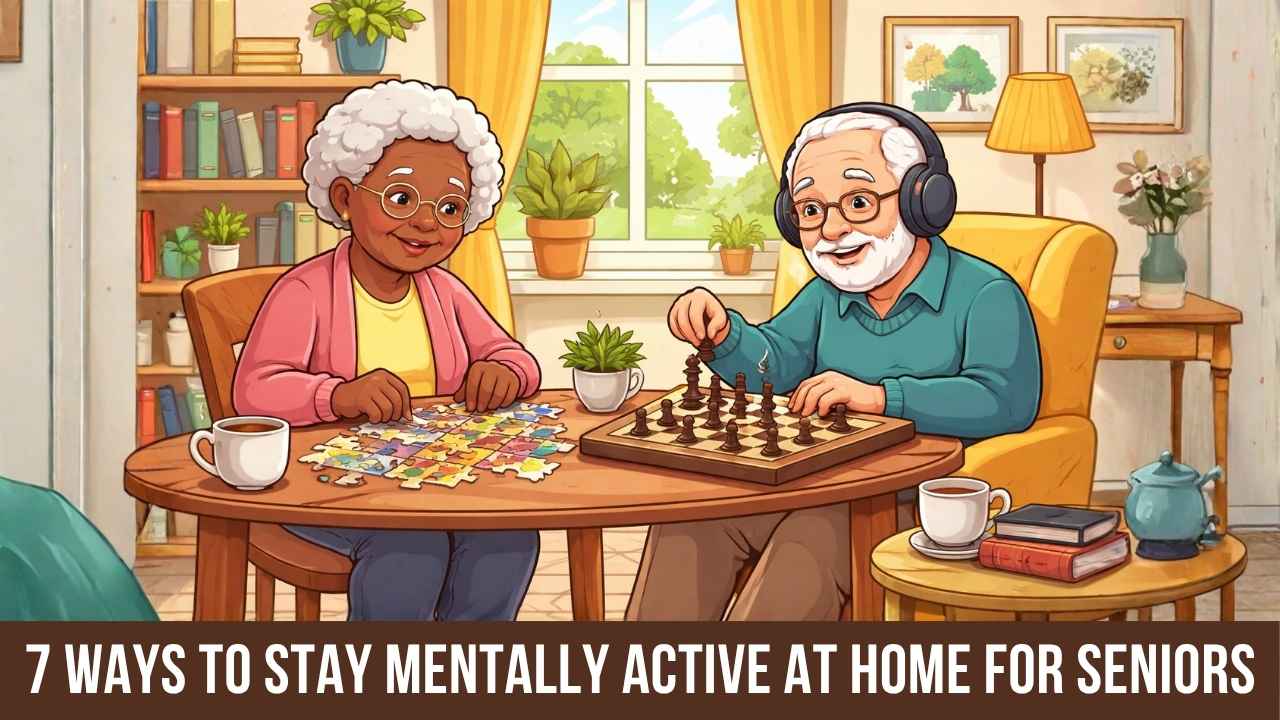

Staying mentally active is just as important as staying physically active—especially for seniors who spend more time at home. Research shows that regular mental stimulation may help improve memory, slow cognitive decline, and enhance overall quality of life.
Here are 7 simple, practical ways seniors can stay mentally active at home.
1. Read Daily to Stimulate the Brain


Reading engages multiple areas of the brain, including memory, comprehension, and focus. Whether it’s books, newspapers, or magazines, daily reading helps maintain cognitive function.
Try this:
- Read 15–30 minutes daily
- Join online book clubs
- Try audiobooks if vision is limited
2. Play Brain-Boosting Games


Games like crossword puzzles, Sudoku, and card games challenge memory, logic, and problem-solving skills.
Popular options:
- Crossword puzzles
- Sudoku
- Word searches
- Card games
3. Learn Something New


Learning new skills helps build new brain connections and supports long-term mental health.
Ideas to try:
- Learn a new language
- Try painting or crafts
- Take online classes
- Learn basic technology skills
4. Stay Social (Even From Home)


Social interaction plays a major role in preventing loneliness and supporting mental well-being.
Ways to stay connected:
- Video calls with family
- Phone conversations
- Virtual groups or clubs
- Online communities
5. Try Memory Exercises


Memory exercises help strengthen recall and cognitive skills.
Simple exercises:
- Write in a daily journal
- Memorize short lists
- Organize photo albums
- Use brain-training apps
6. Keep a Daily Routine


Routine helps maintain mental clarity and reduces confusion, especially for older adults.
Helpful habits:
- Set regular wake and sleep times
- Plan daily activities
- Schedule hobbies and breaks
7. Stay Physically Active for Brain Health


Physical activity improves blood flow to the brain, supporting cognitive function and memory.
Safe activities:
- Walking indoors
- Chair exercises
- Light stretching
- Gentle yoga
Staying mentally active at home doesn’t require complicated programs. Simple daily habits—like reading, socializing, and learning—can help seniors maintain independence, improve mood, and support long-term brain health.
Even small steps can make a meaningful difference in maintaining a safe, independent, and fulfilling lifestyle at home.
Disclaimer
This article is for informational and educational purposes only and does not constitute medical, legal, or professional advice. Always consult with a qualified healthcare professional, occupational therapist, or licensed specialist before making changes to routines, exercise programs, or home environments. Individual needs and health conditions may vary.
Download these helpful checklists to guide you through your buying and selling journey.

Home Buyer’s Checklist
Home Seller’s Checklist
Mistakes To Avoid

10 Body Changes After 60 Worth Discussing With Your Doctor
Download these helpful checklists to guide you through your buying and selling journey.Home Buyer's ChecklistHome Seller's ChecklistMistakes To Avoid

Morning Headaches in Seniors: 9 Causes, Warning Signs and What to Do
Download these helpful checklists to guide you through your buying and selling journey.Home Buyer's ChecklistHome Seller's ChecklistMistakes To Avoid

Sudden Weight Gain From Fluid Retention: Causes, Warning Signs & What to Do
Download these helpful checklists to guide you through your buying and selling journey.Home Buyer's ChecklistHome Seller's ChecklistMistakes To Avoid