
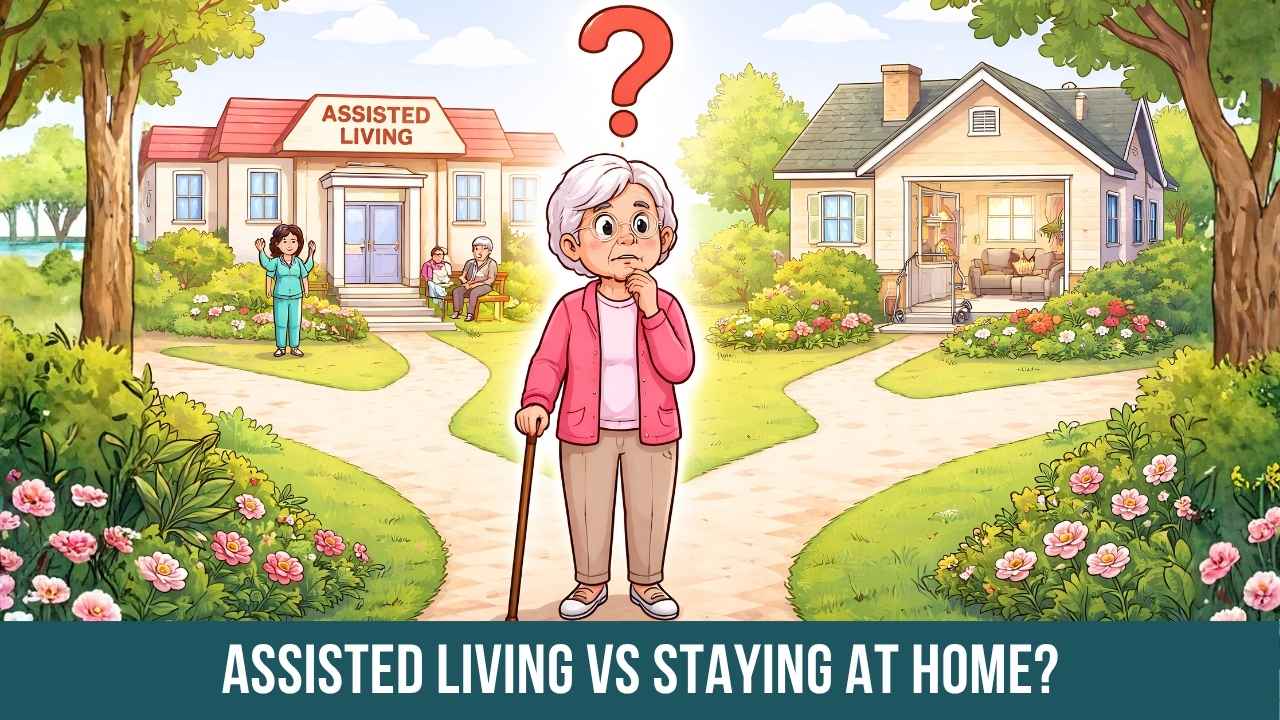

Choosing between assisted living and aging in place (staying at home) is one of the most important decisions families face. The right option depends on health status, safety needs, finances, and personal preferences—not a one-size-fits-all answer.
Below is a clear, factual comparison to help you evaluate both options.
🏡 Staying at Home (Aging in Place)


What it means:
The senior continues living in their own home, often with modifications or in-home care support.
Key Advantages
- Familiar environment: Reduces stress, especially for those with memory issues
- Greater independence: Control over daily routines and lifestyle
- Emotional comfort: Strong attachment to home and neighborhood
- Flexible care: Can scale from minimal help to full-time caregivers
Key Challenges
- Safety risks: Falls, poor lighting, or unsafe layouts
- Isolation: Limited social interaction if living alone
- Care coordination: Requires managing caregivers, medications, appointments
- Home modification costs: Grab bars, ramps, stairlifts, etc.
Best For:
- Seniors with mild to moderate health concerns
- Those with a strong support system (family or caregivers nearby)
- Individuals who value independence and familiarity
🏢 Assisted Living Communities


What it means:
A residential facility where seniors receive housing, meals, personal care, and social activities in a supervised environment.
Key Advantages
- 24/7 support: Immediate help for emergencies or daily needs
- Built-in social life: Activities, dining, and community engagement
- Safety-focused design: Handrails, emergency systems, accessible layouts
- Reduced burden on family: Professional staff handle care
Key Challenges
- Cost: Monthly fees can be significant and ongoing
- Less independence: Structured schedules and shared spaces
- Emotional adjustment: Leaving home can be difficult
- Variable quality: Services differ by facility
Best For:
- Seniors with mobility limitations or ongoing medical needs
- Those who feel lonely or socially isolated
- Families unable to provide consistent in-home care
⚖️ Key Decision Factors
When deciding, evaluate these core areas:
1. Health & Mobility
- Frequent falls, memory decline, or chronic illness → Assisted living may be safer
- Stable health → Home may still be viable
2. Safety of the Home
- Can the home be modified affordably?
- Are there hazards (stairs, poor lighting, clutter)?
3. Social Needs
- Is the senior isolated?
- Would community living improve mental well-being?
4. Financial Considerations
- In-home care + modifications vs monthly assisted living fees
- Long-term sustainability matters more than short-term cost
5. Family Support
- Are caregivers available and reliable?
- Is caregiving becoming overwhelming?
- Staying at home works best when safety risks are manageable and support is available.
- Assisted living becomes the better choice when health, safety, or social needs exceed what the home environment can provide.
In many cases, families start with aging in place and transition to assisted living as needs increase.
Disclaimer
This article is for informational purposes only and does not constitute medical, legal, or financial advice. Individual needs vary widely. Always consult with qualified healthcare providers, licensed financial advisors, or elder care professionals before making decisions regarding senior living arrangements.

10 Body Changes After 60 Worth Discussing With Your Doctor
Download these helpful checklists to guide you through your buying and selling journey.Home Buyer's ChecklistHome Seller's ChecklistMistakes To Avoid

Morning Headaches in Seniors: 9 Causes, Warning Signs and What to Do
Download these helpful checklists to guide you through your buying and selling journey.Home Buyer's ChecklistHome Seller's ChecklistMistakes To Avoid

Sudden Weight Gain From Fluid Retention: Causes, Warning Signs & What to Do
Download these helpful checklists to guide you through your buying and selling journey.Home Buyer's ChecklistHome Seller's ChecklistMistakes To Avoid
Download these helpful checklists to guide you through your buying and selling journey.

Home Buyer’s Checklist

Home Seller’s Checklist

Mistakes To Avoid