
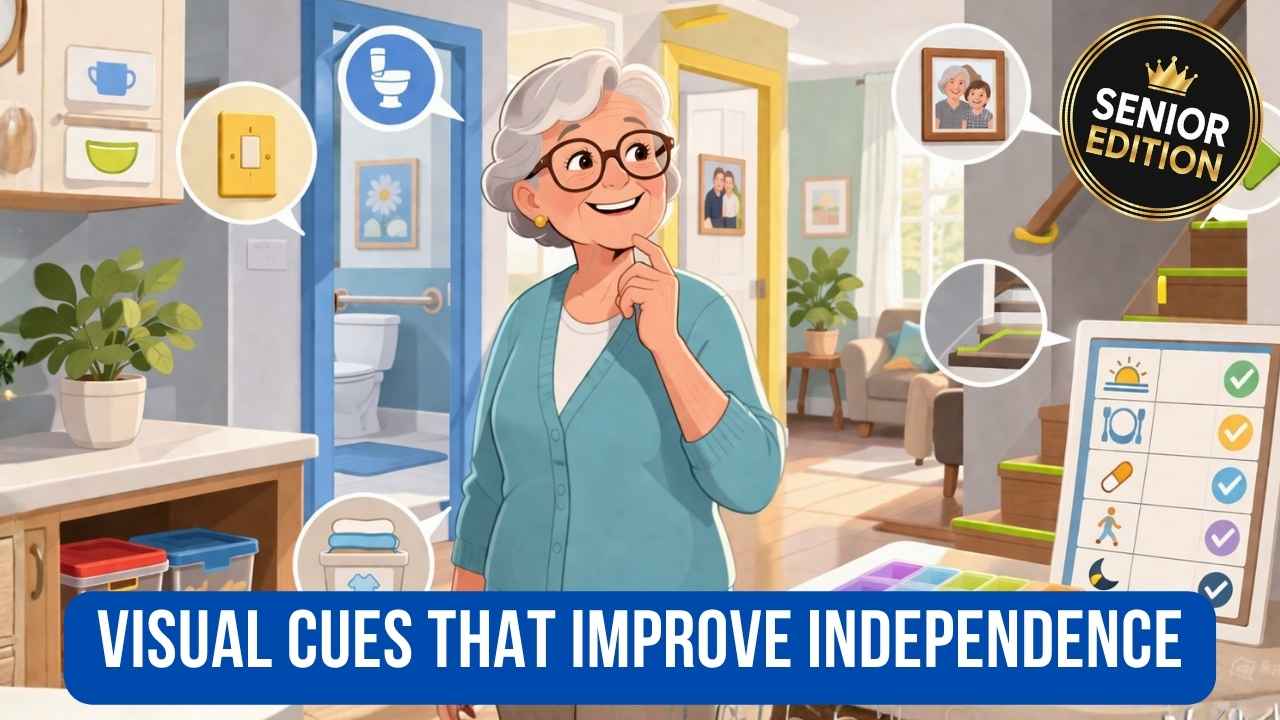

Maintaining independence is one of the most important aspects of aging with dignity. For many older adults—especially those experiencing mild cognitive decline or vision changes—visual cues can significantly improve daily functioning, safety, and confidence at home.
These cues act as subtle “environmental prompts,” reducing reliance on memory while reinforcing routine behaviors. Below are 10 practical, evidence-based visual cue strategies you can implement immediately.
1. Color-Coded Rooms and Zones


Assign distinct colors to different rooms (e.g., blue for bathroom, yellow for kitchen). This improves spatial orientation and helps seniors quickly identify where they need to go.
Solution: Use colored tape, paint accents, or signage on doors and walls.
2. Large, Clear Labeling on Everyday Items


Labels reduce confusion and eliminate guesswork, especially for frequently used items.
Solution: Use bold, high-contrast labels (black text on white background) for cabinets, drawers, and containers.
3. Picture-Based Labels for Better Recognition
Labels reduce confusion and eliminate guesswork, especially for frequently used items.
Solution: Use bold, high-contrast labels (black text on white background) for cabinets, drawers, and containers.
3. Picture-Based Labels for Better Recognition


For seniors with memory issues, images are often easier to process than text.
Solution: Add icons or photos (e.g., a spoon image on utensil drawers).
4. Contrasting Colors for Edges and Furniture


Contrast helps seniors distinguish objects and avoid falls.
Solution: Use contrasting tape on stairs, furniture edges, and countertops.
5. Directional Signs for Key Areas


Simple arrows or signs can guide seniors to essential spaces like the bathroom or bedroom.
Solution: Place clear directional signs at eye level in hallways.
6. Memory Boards and Daily Routine Charts


Visual schedules reinforce routines and reduce anxiety.
Solution: Use a whiteboard or printed chart showing meals, medications, and activities.
7. Highlighted Light Switches and Controls


Many seniors struggle to locate switches in low light.
Solution: Add glow-in-the-dark or brightly colored covers.
8. Open Storage for Frequently Used Items


“Out of sight, out of mind” is a real challenge.
Solution: Use open shelving or transparent containers to keep essentials visible.
9. Visual Medication Management Systems


Medication errors are a major risk for seniors.
Solution: Use color-coded pill organizers with large labels and time-of-day indicators.
10. Personalized Photo Cues

Familiar images trigger recognition and comfort.
Solution: Place family photos or personal items on doors to identify rooms.
Final Thoughts
Visual cues are low-cost, high-impact interventions that support independence, safety, and emotional well-being. Whether you’re a caregiver, family member, or real estate professional specializing in senior living, these strategies can dramatically improve daily life.
Disclaimer
This article is for informational purposes only and does not constitute medical, legal, or professional care advice. Always consult with a licensed healthcare provider, occupational therapist, or certified aging-in-place specialist before making significant home modifications or care decisions.
Download these helpful checklists to guide you through your buying and selling journey.

Home Buyer’s Checklist

Home Seller’s Checklist
Mistakes To Avoid

10 Body Changes After 60 Worth Discussing With Your Doctor
Download these helpful checklists to guide you through your buying and selling journey.Home Buyer's ChecklistHome Seller's ChecklistMistakes To Avoid

Morning Headaches in Seniors: 9 Causes, Warning Signs and What to Do
Download these helpful checklists to guide you through your buying and selling journey.Home Buyer's ChecklistHome Seller's ChecklistMistakes To Avoid

Sudden Weight Gain From Fluid Retention: Causes, Warning Signs & What to Do
Download these helpful checklists to guide you through your buying and selling journey.Home Buyer's ChecklistHome Seller's ChecklistMistakes To Avoid