
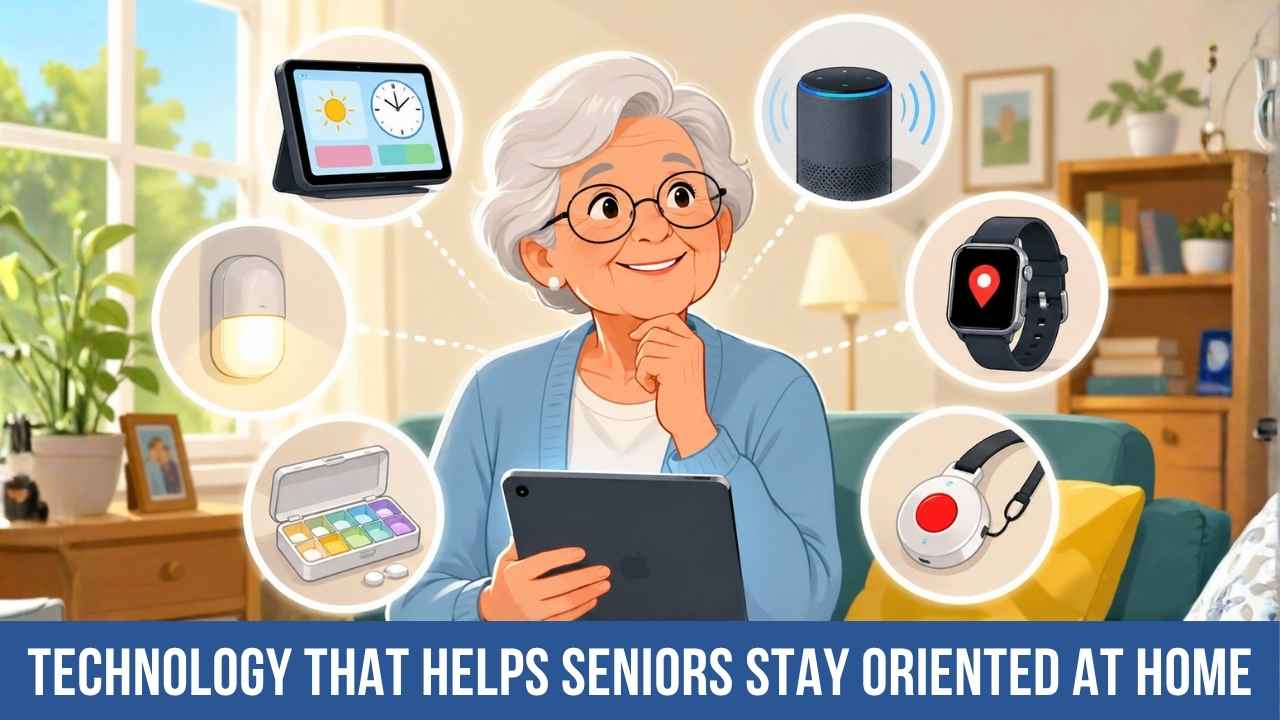

Staying oriented—knowing the time, place, and daily routine—is essential for a senior’s independence and safety. As cognitive changes occur with aging or conditions like Alzheimer’s disease and Dementia, simple tasks can become confusing.
Fortunately, modern technology provides practical, evidence-based tools that reinforce memory, reduce anxiety, and support safer living at home.
Below are key technologies that help seniors stay oriented, along with real-world use cases.
🕒 Digital Day Clocks (Time + Routine Awareness)

![Day 004] Insomnia. | I can't sleep, and I have a test tomor… | Flickr](https://live.staticflickr.com/4113/5181349586_86f14e5c94_b.jpg)
What it does:
Displays day, date, and time in large, clear text (e.g., “Tuesday Afternoon”), reducing confusion about time of day.
Why it works:
Research in geriatric care shows that consistent temporal cues improve orientation and reduce agitation in seniors with cognitive decline.
Best use case:
Place in bedrooms and living rooms to guide daily transitions (wake-up, meals, bedtime).
🗣️ Voice Assistants (Guided Daily Prompts)


Examples: Amazon Echo, Google Nest Hub
What it does:
Provides spoken reminders for medications, meals, appointments, and daily routines.
Why it works:
Auditory prompts reduce reliance on memory and provide real-time guidance, especially for seniors living alone.
Best use case:
Set recurring reminders like:
- “It’s time for your medication”
- “Lunch is ready”
📱 Medication Reminder Apps & Devices


What it does:
Uses alarms, notifications, or automated dispensers to ensure correct medication timing.
Why it works:
Medication mismanagement is a leading cause of hospitalizations among seniors. These tools provide structured, repeatable cues.
Best use case:
Ideal for seniors managing multiple prescriptions or chronic conditions.
🧭 GPS Tracking Devices (Location Awareness & Safety)


What it does:
Tracks location in real-time and alerts caregivers if a senior wanders or gets lost.
Why it works:
Wandering is common in dementia. GPS devices provide rapid response capability, reducing risk of injury.
Best use case:
Wearable devices (bracelets, watches) for seniors prone to disorientation outdoors.
📺 Smart Displays & Visual Reminder Boards


What it does:
Shows daily schedules, appointments, and visual prompts on a screen.
Why it works:
Combining visual + routine-based cues reinforces memory more effectively than verbal reminders alone.
Best use case:
Central location (kitchen or living room) where seniors naturally look throughout the day.
💡 Smart Lighting Systems (Environmental Orientation)


What it does:
Automatically adjusts lighting based on time of day (bright during day, dim at night).
Why it works:
Supports circadian rhythm regulation, helping seniors distinguish between day and night—critical for orientation.
Best use case:
Bedrooms, hallways, and bathrooms to reduce nighttime confusion and falls.
🧠 Putting It All Together
The most effective approach is layering multiple technologies:
- A day clock for time awareness
- A voice assistant for reminders
- Lighting + visual cues for environmental orientation
This creates a multi-sensory support system, which is clinically shown to improve independence and reduce caregiver burden.
Disclaimer
This article is for informational purposes only and does not constitute medical, legal, or professional advice. Technology solutions may not be suitable for all individuals, particularly those with advanced cognitive impairment or specific medical conditions. Always consult with a qualified healthcare provider, geriatric specialist, or licensed professional before implementing new safety or monitoring systems.
Download these helpful checklists to guide you through your buying and selling journey.

Home Buyer’s Checklist

Home Seller’s Checklist

Mistakes To Avoid

10 Body Changes After 60 Worth Discussing With Your Doctor
Download these helpful checklists to guide you through your buying and selling journey.Home Buyer's ChecklistHome Seller's ChecklistMistakes To Avoid
Morning Headaches in Seniors: 9 Causes, Warning Signs and What to Do
Download these helpful checklists to guide you through your buying and selling journey.Home Buyer's ChecklistHome Seller's ChecklistMistakes To Avoid

Sudden Weight Gain From Fluid Retention: Causes, Warning Signs & What to Do
Download these helpful checklists to guide you through your buying and selling journey.Home Buyer's ChecklistHome Seller's ChecklistMistakes To Avoid