
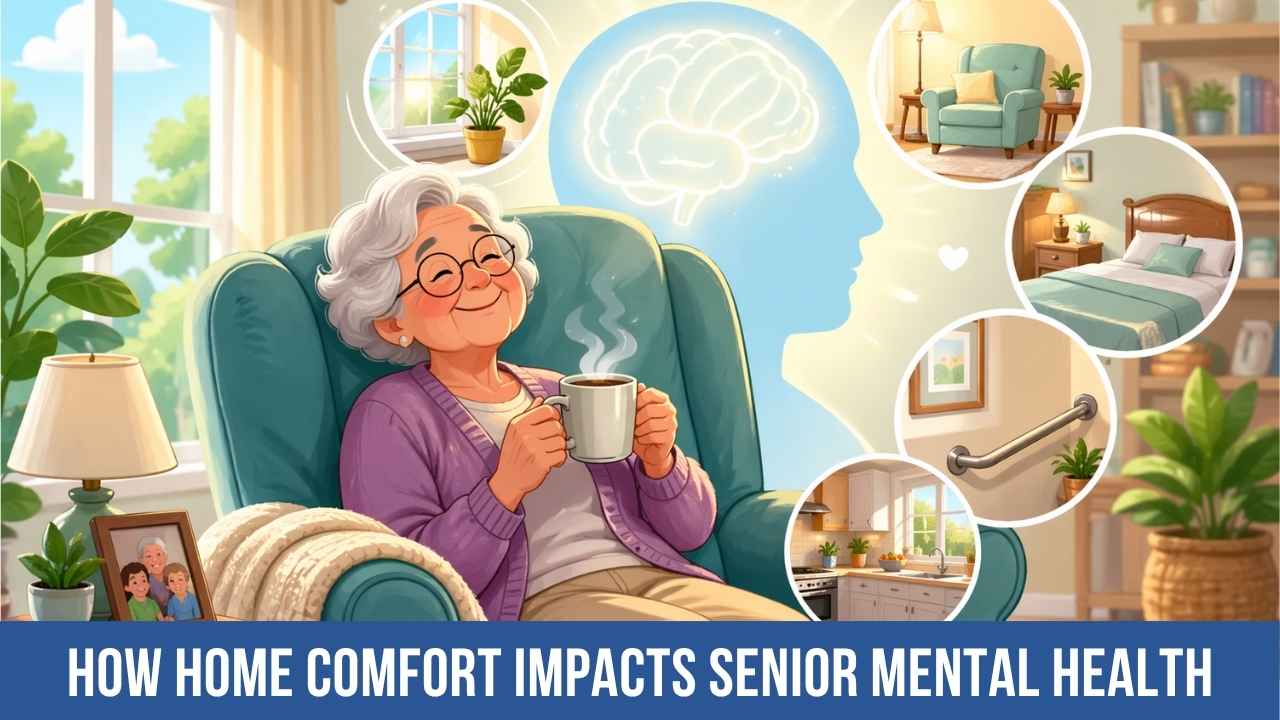

Aging at home isn’t just about safety—it’s about comfort, and comfort plays a measurable role in mental health outcomes for seniors. Research in environmental psychology shows that surroundings directly affect mood, cognition, stress levels, and even sleep quality.
For older adults—especially those aging in place—small discomforts can accumulate into chronic stress, anxiety, or even depression. Below are key areas where comfort translates into better mental health, along with practical, real-world applications.
1. Physical Comfort Reduces Stress and Irritability


When the body is uncomfortable, the brain stays in a low-level stress state. Seniors dealing with arthritis, back pain, or reduced mobility are especially sensitive to poor seating, hard beds, or awkward layouts.
Impact on mental health:
- Increased irritability
- Reduced patience and emotional tolerance
- Higher risk of anxiety
Practical upgrade:
Invest in ergonomic chairs, supportive mattresses, and furniture that promotes neutral posture. Comfort here is not luxury—it’s preventive care.
2. A Calm Environment Lowers Anxiety


Cluttered, noisy, or visually overwhelming environments can overstimulate the brain, particularly in seniors with cognitive decline.
Impact on mental health:
- Heightened anxiety
- Difficulty focusing
- Sensory overload
Practical upgrade:
Use neutral colors, soft lighting, and reduce unnecessary items. A calm space helps regulate emotional responses and promotes a sense of control.
3. Familiarity Supports Cognitive Stability


Familiar surroundings act as cognitive anchors. This is especially important for individuals experiencing early stages of conditions like Alzheimer’s disease.
Impact on mental health:
- Reduced confusion
- Lower agitation
- Increased emotional security
Practical upgrade:
Keep meaningful objects visible—family photos, heirlooms, and consistent furniture placement. Avoid frequent rearranging.
4. Temperature and Air Quality Affect Mood


Environmental discomfort—too hot, too cold, or poor air quality—can disrupt sleep and increase physiological stress.
Impact on mental health:
- Sleep disturbances
- Fatigue and low mood
- Increased agitation
Practical upgrade:
Maintain stable indoor temperatures and ensure good ventilation or air purification. Even minor improvements can significantly affect well-being.
5. Lighting Directly Influences Mood and Sleep


Lighting regulates circadian rhythms, which control sleep-wake cycles. Poor lighting can lead to insomnia and mood disorders.
Impact on mental health:
- Depression symptoms
- Disrupted sleep cycles
- Reduced daytime energy
Practical upgrade:
Maximize natural light during the day and use warm, softer lighting at night. Consistent lighting patterns reinforce healthy biological rhythms.
6. Comfort Encourages Independence and Confidence


When a home feels easy to navigate and physically comfortable, seniors are more likely to perform daily activities independently.
Impact on mental health:
- Increased self-esteem
- Reduced feelings of helplessness
- Lower risk of depression
Practical upgrade:
Design spaces that minimize strain—clear pathways, accessible storage, and supportive fixtures. Comfort reinforces autonomy.
Bottom Line
Comfort is not superficial—it’s foundational to mental health. For seniors, a well-designed home can reduce stress, preserve cognitive function, and promote emotional stability. In many cases, improving comfort is one of the most cost-effective interventions for enhancing quality of life.
Disclaimer
This article is for informational purposes only and does not constitute medical, psychological, or professional advice. Individual needs may vary, and readers should consult with qualified healthcare providers, licensed therapists, or home safety specialists before making significant changes related to health, safety, or living environments.
Download these helpful checklists to guide you through your buying and selling journey.

Home Buyer’s Checklist

Home Seller’s Checklist
Mistakes To Avoid

10 Body Changes After 60 Worth Discussing With Your Doctor
Download these helpful checklists to guide you through your buying and selling journey.Home Buyer's ChecklistHome Seller's ChecklistMistakes To Avoid

Morning Headaches in Seniors: 9 Causes, Warning Signs and What to Do
Download these helpful checklists to guide you through your buying and selling journey.Home Buyer's ChecklistHome Seller's ChecklistMistakes To Avoid

Sudden Weight Gain From Fluid Retention: Causes, Warning Signs & What to Do
Download these helpful checklists to guide you through your buying and selling journey.Home Buyer's ChecklistHome Seller's ChecklistMistakes To Avoid