
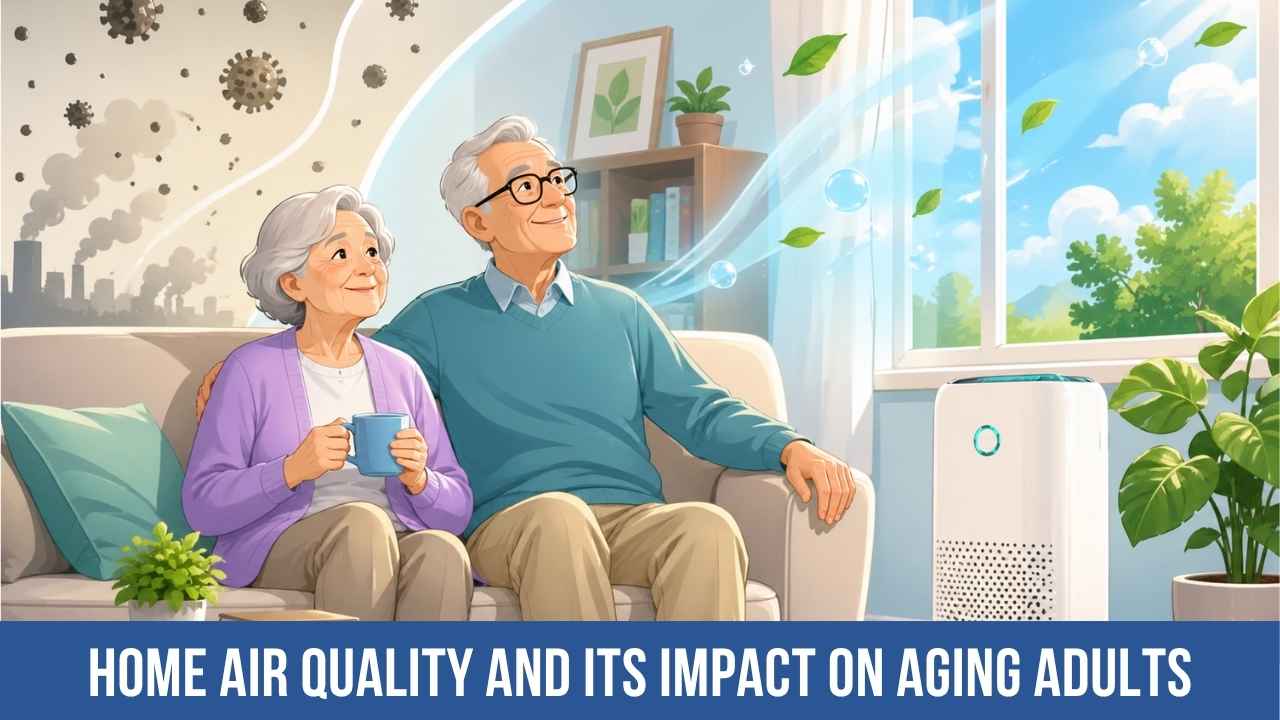

Why Air Quality Matters More as We Age
As people age, their respiratory and immune systems naturally weaken, making them more vulnerable to airborne pollutants. Poor indoor air quality can worsen conditions like Asthma, Chronic Obstructive Pulmonary Disease, and even cardiovascular issues. For seniors who spend a significant amount of time indoors, the home environment becomes a critical determinant of overall health and quality of life.
1. Dust and Allergens: The Silent Irritants


Dust, pet dander, and pollen accumulate quickly indoors and can trigger respiratory irritation, coughing, and fatigue. In aging adults, even mild exposure can lead to prolonged symptoms or complications.
Solution:
- Use HEPA-filter vacuums and air purifiers
- Wash bedding weekly in hot water
- Minimize carpets and heavy drapery
2. Mold and Mildew: A Hidden Health Threat


Mold thrives in damp environments like bathrooms, kitchens, and basements. Exposure can lead to breathing issues, skin irritation, and in severe cases, infections—especially in seniors with weakened immunity.
Solution:
- Fix leaks immediately
- Use dehumidifiers in damp areas
- Ensure proper bathroom ventilation
3. Poor Ventilation: Trapped Pollutants Indoors


Modern homes are often tightly sealed, which traps pollutants inside. Cooking fumes, cleaning chemicals, and even furniture emissions can build up over time, degrading indoor air quality.
Solution:
- Open windows regularly when weather permits
- Install exhaust fans in kitchens and bathrooms
- Use air exchange or filtration systems
4. Household Chemicals: Everyday Exposure Risks


Many common cleaning products release volatile organic compounds (VOCs), which can irritate the lungs and contribute to long-term health issues. Seniors may be more sensitive to these exposures.
Solution:
- Switch to low-VOC or natural cleaning products
- Avoid aerosol sprays
- Store chemicals safely and use in well-ventilated areas
5. Indoor Air Pollution and Heart Health


Fine particulate matter (PM2.5) can penetrate deep into the lungs and enter the bloodstream. Studies link poor air quality to increased risks of heart attacks and strokes—particularly in older adults.
Solution:
- Use air purifiers with HEPA filters
- Monitor air quality using indoor sensors
- Avoid indoor smoking or exposure to smoke
Creating a Healthier Home Environment
Improving indoor air quality doesn’t require a full home renovation. Small, consistent changes—like better ventilation, cleaner air systems, and reduced chemical exposure—can significantly enhance a senior’s comfort, safety, and longevity.
For homeowners, caregivers, and real estate professionals, prioritizing air quality is not just a health decision—it’s a quality-of-life investment.
Disclaimer
This article is for informational purposes only and does not constitute medical, environmental, or professional advice. Always consult with a qualified healthcare provider, environmental specialist, or licensed professional before making decisions regarding health conditions or home modifications.
Download these helpful checklists to guide you through your buying and selling journey.

Home Buyer’s Checklist

Home Seller’s Checklist

Mistakes To Avoid

10 Body Changes After 60 Worth Discussing With Your Doctor
Download these helpful checklists to guide you through your buying and selling journey.Home Buyer's ChecklistHome Seller's ChecklistMistakes To Avoid

Morning Headaches in Seniors: 9 Causes, Warning Signs and What to Do
Download these helpful checklists to guide you through your buying and selling journey.Home Buyer's ChecklistHome Seller's ChecklistMistakes To Avoid
Sudden Weight Gain From Fluid Retention: Causes, Warning Signs & What to Do
Download these helpful checklists to guide you through your buying and selling journey.Home Buyer's ChecklistHome Seller's ChecklistMistakes To Avoid