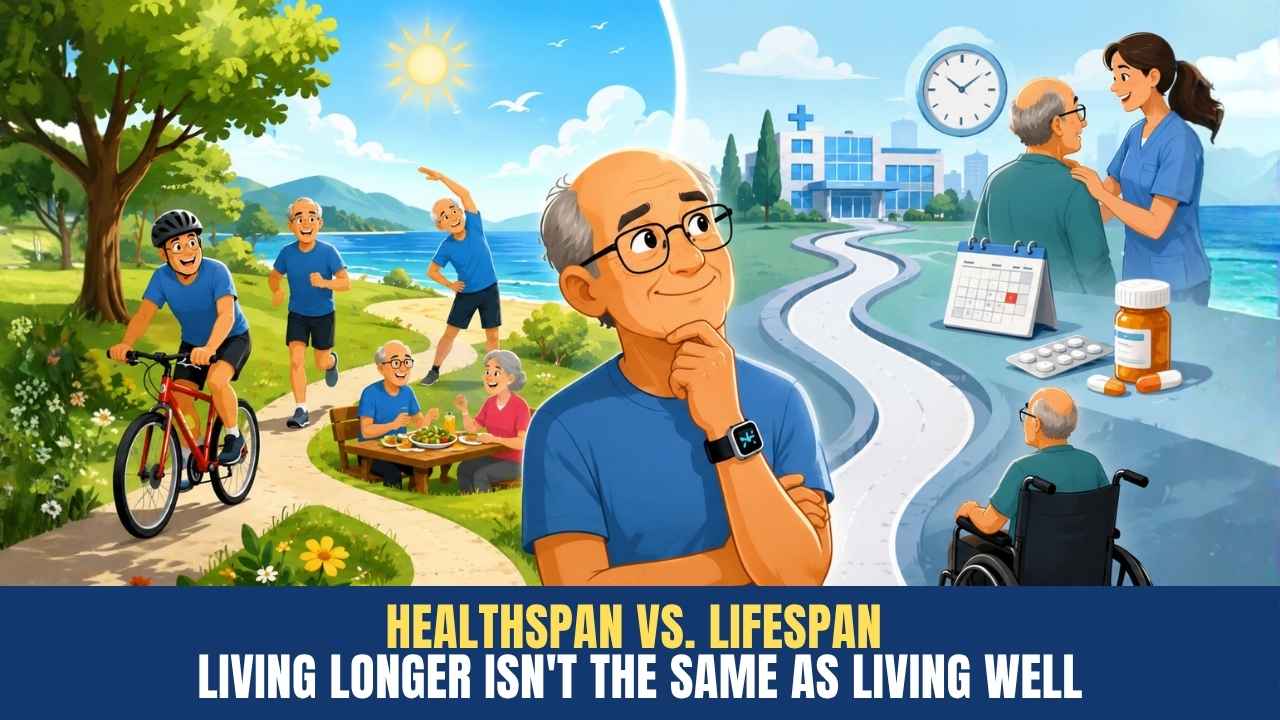

Quick question: would you rather live to 95 with your last 15 years spent managing chronic illness, or live to 85 feeling genuinely good the whole way through?
Most people pick option two. And that’s exactly why the conversation around aging is shifting. For decades, health was measured almost entirely by one number — lifespan, or how many years you live. But a growing body of research says that’s the wrong question. The better question is: how many of those years are actually good ones?
That’s the idea behind healthspan, and understanding the difference between healthspan vs. lifespan might be one of the most useful things you learn this year.
What Is Lifespan?
Lifespan is simple: it’s the total number of years a person lives, from birth to death. It’s the number on a gravestone. It’s what shows up in life expectancy statistics.
Global life expectancy has climbed dramatically since the mid-20th century, largely thanks to medicine, sanitation, and nutrition. We’ve gotten remarkably good at preventing early death and managing conditions that used to be fatal.
But here’s the catch: living longer doesn’t automatically mean living better.
What Is Healthspan?
Healthspan is the number of years a person lives in good health — free from serious chronic disease, disability, or major functional decline. It’s about staying mobile, independent, mentally sharp, and engaged with the people and things you love, for as long as possible.
Think of it this way:
- Lifespan = quantity of years
- Healthspan = quality of those years
Someone who lives to 90 but spends the last two decades dealing with chronic pain, memory loss, or limited mobility has a long lifespan but a short healthspan. Someone who lives to 82 but stays active, sharp, and independent until near the end has a shorter lifespan — but arguably the better outcome.
The Healthspan-Lifespan Gap Is Real
Here’s the part that tends to surprise people: for most of us, lifespan and healthspan aren’t close. Research on this gap consistently shows that people in higher-income countries spend roughly the final decade or more of their lives managing at least one chronic condition. In other words, the average person’s “unhealthy years” now stretch out for close to 20% of their total life.
Modern medicine has become excellent at extending survival — rescuing people from acute illness and turning once-fatal diseases into long-term chronic ones. That’s a real achievement. But it also means more people are living longer with disease, rather than free of it. Better measurement of health should account for function, independence, and quality of life — not just whether someone is still alive.
Why the Healthspan vs. Lifespan Distinction Actually Matters
This isn’t just an academic debate. It changes how you think about your own health decisions.
1. It shifts the goal from “avoiding death” to “protecting function.” Doctors have traditionally tracked survival curves — deaths prevented, hospitalizations avoided, life expectancy gained. Those numbers matter, but they don’t capture whether someone can still climb stairs, live independently, or think clearly.
2. It reframes prevention as the priority. If healthspan is the real goal, then prevention — not just treatment — becomes the main event. Catching risk factors early, before they turn into chronic disease, protects the years you actually get to enjoy.
3. It’s personal, not just clinical. Two people with the same lifespan can have completely different qualities of life. Healthspan puts the focus back on how you want to feel and function, not just how long you’ll technically be alive.
How to Improve Your Healthspan (Starting Now)
The encouraging news: healthspan isn’t fixed. Several everyday habits are strongly linked to a longer, healthier stretch of life.
Move your body regularly. Consistent physical activity is one of the most well-supported ways to preserve mobility, muscle mass, and cardiovascular health as you age.
Prioritize sleep. Poor sleep is tied to higher risks of chronic disease, cognitive decline, and reduced healthspan overall.
Eat with your future self in mind. Diets rich in whole foods and lower in ultra-processed foods are consistently linked to lower rates of chronic disease.
Know your numbers. Biomarkers like cholesterol levels, blood sugar (HbA1c), and inflammation markers are associated with healthspan outcomes. Regular checkups catch problems while they’re still manageable.
Protect your mental health. Chronic stress, isolation, and untreated mental health conditions all take a measurable toll on long-term physical health.
Stay socially connected. Strong relationships are repeatedly linked to better healthy-aging outcomes — connection isn’t just emotionally nice, it’s physically protective.
Don’t skip preventive care. Regular screenings and checkups remain one of the most effective tools for catching issues before they shorten your healthspan.
The Bottom Line
Lifespan tells you how long you’ll be alive. Healthspan tells you how good those years will feel. Neither number is something you can fully control — but healthspan is far more within your influence than most people realize.
The goal isn’t just to add years to your life. It’s to add life to your years.
Disclaimer
This article is provided for general informational and educational purposes only and does not constitute medical advice, diagnosis, or treatment. It is not a substitute for professional medical guidance from a qualified healthcare provider. Always consult your physician or another qualified health professional before making changes to your diet, exercise routine, medications, or overall health plan, and with any questions you may have regarding a medical condition. Reliance on any information in this article is solely at your own risk. The author and publisher are not liable for any outcomes resulting from the use of this content.

10 Body Changes After 60 Worth Discussing With Your Doctor
Download these helpful checklists to guide you through your buying and selling journey.Home Buyer's ChecklistHome Seller's ChecklistMistakes To Avoid
Morning Headaches in Seniors: 9 Causes, Warning Signs and What to Do
Download these helpful checklists to guide you through your buying and selling journey.Home Buyer's ChecklistHome Seller's ChecklistMistakes To Avoid
Sudden Weight Gain From Fluid Retention: Causes, Warning Signs & What to Do
Download these helpful checklists to guide you through your buying and selling journey.Home Buyer's ChecklistHome Seller's ChecklistMistakes To Avoid
Download these helpful checklists to guide you through your buying and selling journey.

Home Buyer’s Checklist

Home Seller’s Checklist

Mistakes To Avoid