
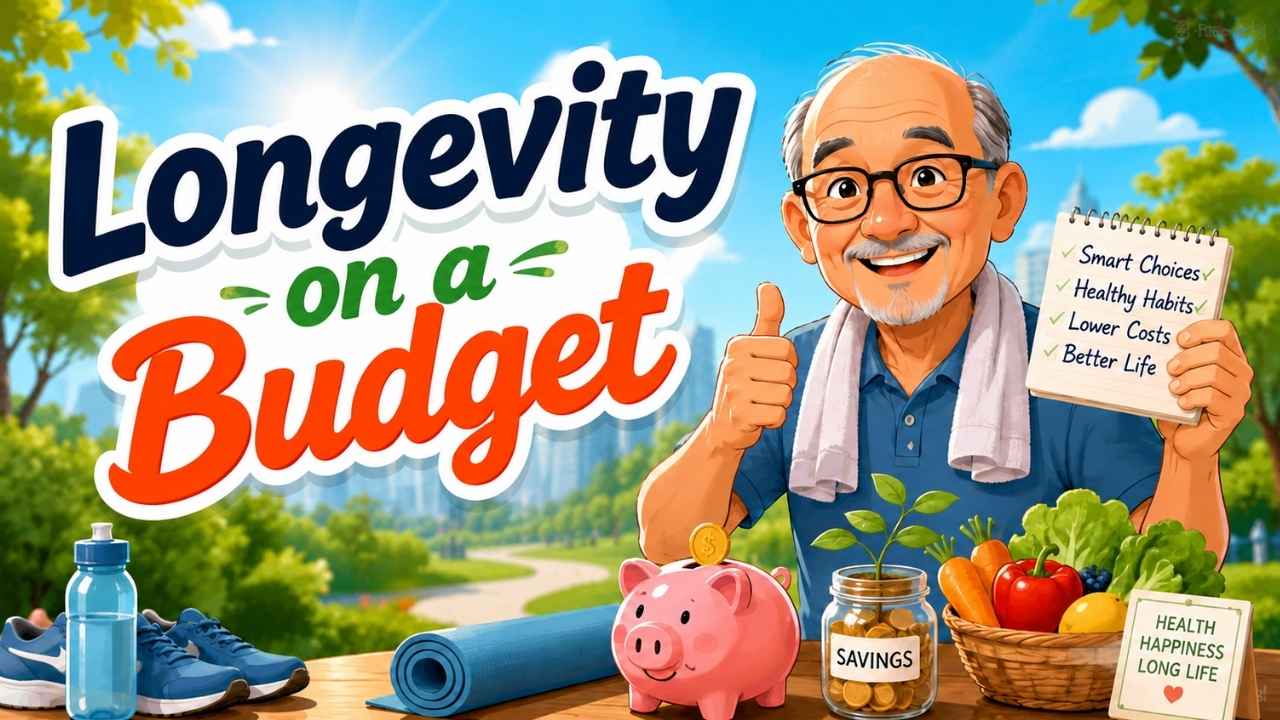

Let’s get something out of the way first: you have probably seen the headlines. Tech billionaires spending millions of dollars a year on blood plasma, personal physician teams, and stem cell therapy, all in pursuit of a longer life. It can make longevity feel like a rich person’s hobby — something reserved for people who can drop five figures on a “biological age” test.
Here’s the good news, and it’s backed by decades of research: the habits with the strongest evidence for adding healthy years to your life are also the cheapest ones. Sleep, food, movement, and connection consistently outperform expensive interventions in the studies that actually track outcomes like disease risk and lifespan. The fancy stuff might shave a few points off a lab test. The basics are what move the needle on actually living longer.
This blog exists for exactly that reason. We’re not selling you a $300 supplement stack or a red-light therapy panel. We’re here to talk about longevity on a budget — real, affordable, evidence-based strategies for extending both your lifespan (how long you live) and your healthspan (how many of those years you spend actually feeling good).
Let’s dig in.
1. Sleep Is the Cheapest Longevity Drug on Earth
If there were a pill that repaired your cells, regulated your hormones, lowered your risk of heart disease, and sharpened your memory, and it was completely free, you’d assume everyone was taking it. That pill exists. It’s called sleep.
Consistent, high-quality sleep is one of the most well-supported longevity habits in the research, tied to lower rates of cardiovascular disease, better immune function, and improved cognitive health over time.
Budget-friendly upgrades:
- Keep a consistent sleep and wake time, even on weekends.
- Turn off screens 30 minutes before bed — studies have linked this small change to better sleep quality and fewer nighttime awakenings.
- Keep your bedroom cool and dark. Blackout curtains cost less than a single bottle of most anti-aging supplements.
2. Eat Like Your Cells Are Watching (Because They Are)
You don’t need an expensive meal delivery service to eat for longevity. Some of the most-studied longevity diets in the world — the Mediterranean diet, the traditional diets of Blue Zone regions — are built on inexpensive staples: beans, lentils, leafy greens, whole grains, and olive oil.
Cheap, nutrient-dense longevity foods:
- Legumes (beans, lentils, chickpeas) — fiber-rich, protein-packed, and among the cheapest foods per calorie in any grocery store.
- Frozen vegetables — just as nutritious as fresh, often a fraction of the cost, and they don’t go bad before you get to them.
- Fermented foods — foods like kimchi, sauerkraut, and plain yogurt support a healthy gut microbiome and don’t need to be exotic or expensive to count.
- Oats and whole grains — affordable, filling, and linked to better long-term metabolic health.
3. Move Your Body — No Gym Membership Required
Regular movement is repeatedly identified by longevity researchers as one of the most effective, well-supported habits for a longer life, and it costs nothing.
Zero-cost or low-cost ways to move:
- Brisk walking for 30 minutes a day.
- Bodyweight strength training (squats, push-ups, lunges) using free videos or apps.
- A short, high-intensity workout once or twice a week.
- Taking the stairs, walking meetings, parking farther away — “movement snacks” add up.
4. Protect Your Social Health — It’s Just as Important as Physical Health
Loneliness and social isolation are associated with increased health risks comparable to some well-known physical risk factors. Meanwhile, strong social ties are one of the most consistent predictors of a long, healthy life across longevity research.
Free ways to invest in connection:
- Schedule a regular call or coffee with a friend or family member.
- Join a free community group, walking club, or volunteer organization.
- Prioritize in-person time over scrolling — the research increasingly points to real connection, not just contact, as the protective factor.
5. Manage Stress Without Spending a Dime
Chronic stress accelerates aging at a cellular level. The good news is that some of the most effective stress-reduction tools are entirely free.
- Breathwork and meditation — free apps and YouTube channels offer guided sessions.
- Time in nature — even short walks outdoors are linked to lower cortisol levels.
- Journaling — a notebook and five minutes a day can meaningfully reduce rumination and anxiety.
6. Get the Basics Checked — Prevention Beats Treatment
Preventive care is one of the most underrated longevity tools, and it’s often far cheaper than treating a disease after it develops.
- Take advantage of free or low-cost screenings through community health clinics or employer wellness programs.
- Track basic numbers — blood pressure, blood sugar, cholesterol — since catching issues early is dramatically cheaper (in money and in years) than treating them late.
- Many countries and workplaces offer no-cost annual checkups; don’t leave them unused.
7. Cut the Habits That Quietly Shorten Life
Some of the highest-impact longevity moves are about subtraction, not addition — and they save money too.
- Reducing or quitting smoking and excessive alcohol use are two of the most well-documented ways to extend lifespan.
- Cutting back on ultra-processed foods often lowers your grocery bill while lowering long-term disease risk.
8. Sunlight and Fresh Air: The Original Free Longevity Tool
Moderate, safe sun exposure supports vitamin D levels, which play a role in bone health, immune function, and mood. Combine it with a walk, and you’ve stacked two free longevity habits into one 20-minute break.
9. Build a “Longevity Budget,” Not Just a Financial One
Think of longevity the way you’d think of a household budget: you have limited time, energy, and money, and the goal is to allocate them wisely, not to spend maximally in every category.
Ask yourself:
- What’s the cheapest habit with the strongest evidence? (Usually sleep, food, and movement.)
- What’s one expensive trend I can skip without losing anything meaningful?
- Where can I get “free” longevity value — community, sunlight, nature, laughter?
10. Use What’s Already Free Around You
Public parks, community centers, library fitness resources, free walking trails, and even workplace wellness programs are longevity tools hiding in plain sight. Many towns and cities offer free or low-cost health screenings, fitness classes, and mental health resources that go underused simply because people don’t think to look.
11. Cook More, Order Less
Home-cooked meals are consistently linked to better diet quality and lower risk of chronic disease, and they’re almost always cheaper than takeout or pre-made “health” meals. Batch-cooking beans, grains, and vegetables on a Sunday can set you up with longevity-supporting meals all week for a fraction of the cost of specialty diet programs.
12. Consistency Beats Intensity
The single biggest lesson from longevity research may be this: you don’t need a perfect, expensive regimen. You need a handful of affordable habits, done consistently, for years. The most effective longevity routine is the one that actually fits your life and your budget — not the one with the highest price tag.
The Bottom Line
Longevity doesn’t have to mean expensive supplements, biohacking gadgets, or exclusive clinics. The research consistently points back to the fundamentals: sleep, whole foods, movement, connection, stress management, and prevention. These are available to almost everyone, regardless of income, and they remain the most powerful tools we have for adding healthy years to life.
Start with one habit. Build from there. Longevity on a budget isn’t about doing less — it’s about spending your time, energy, and money on what actually works.
Disclaimer: This blog post is for general informational and educational purposes only and does not constitute medical, dietary, financial, or professional advice. The content is based on publicly available research and general wellness guidance and is not a substitute for personalized recommendations from a licensed physician, registered dietitian, financial advisor, or other qualified professional. Always consult a qualified healthcare provider before making changes to your diet, exercise routine, or health regimen, especially if you have an existing medical condition or are taking medication. Individual results may vary, and no outcome — including any change in lifespan or healthspan — is guaranteed. The authors and publishers of this blog assume no liability for actions taken based on the information provided herein.
Disclaimer
This article is for informational purposes only and does not constitute medical, legal, or financial advice. Individual needs vary widely. Always consult with qualified healthcare providers, licensed financial advisors, or elder care professionals before making decisions regarding senior living arrangements.

10 Body Changes After 60 Worth Discussing With Your Doctor
Download these helpful checklists to guide you through your buying and selling journey.Home Buyer's ChecklistHome Seller's ChecklistMistakes To Avoid

Morning Headaches in Seniors: 9 Causes, Warning Signs and What to Do
Download these helpful checklists to guide you through your buying and selling journey.Home Buyer's ChecklistHome Seller's ChecklistMistakes To Avoid

Sudden Weight Gain From Fluid Retention: Causes, Warning Signs & What to Do
Download these helpful checklists to guide you through your buying and selling journey.Home Buyer's ChecklistHome Seller's ChecklistMistakes To Avoid
Download these helpful checklists to guide you through your buying and selling journey.

Home Buyer’s Checklist

Home Seller’s Checklist

Mistakes To Avoid