
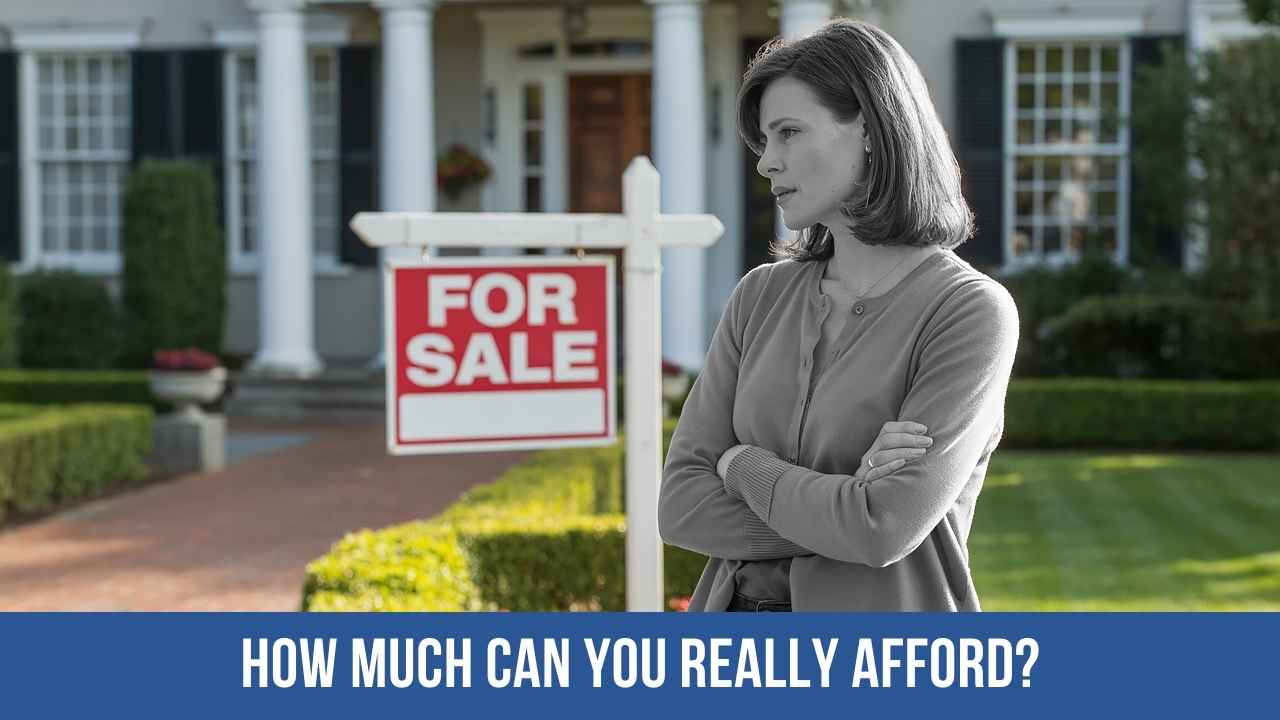

A Practical Guide Beyond Online Calculators
One of the biggest mistakes homebuyers make is relying solely on online affordability calculators. While they’re a helpful starting point, they often ignore real-life expenses, lifestyle choices, and long-term financial comfort.
So let’s answer the real question buyers should be asking: “How much home can I afford without feeling house-poor?”
Step 1: Understand the 28/36 Rule (Baseline, Not a Rulebook)
Most lenders use the 28/36 rule as a guideline:
-
28% Rule:
Your monthly housing cost (mortgage + taxes + insurance + HOA) should not exceed 28% of your gross monthly income. -
36% Rule:
Your total monthly debt (housing + car loans + credit cards + student loans) should not exceed 36% of gross income.
⚠️ Important: Lenders may approve you for more than this—but approval ≠ comfort.
Step 2: What Counts as “Monthly Housing Cost”?
Many buyers think only about the mortgage payment. In reality, affordability includes:
-
Principal & interest
-
Property taxes
-
Homeowners insurance
-
HOA fees (if applicable)
-
Showing maintenance buffer (1–2% of home value annually)
Step 3: Real Examples by Income Bracket
Below are simplified examples assuming:
-
30-year mortgage
-
7% interest rate (example only)
-
10% down payment
-
Property taxes & insurance estimated conservatively
Example 1: Household Income = $60,000/year
-
Gross monthly income: $5,000
-
28% housing limit: $1,400/month
Estimated affordable home price:
➡️ $200,000 – $230,000
Example 2: Household Income = $100,000/year
-
Gross monthly income: $8,333
-
28% housing limit: $2,333/month
Estimated affordable home price:
➡️ $350,000 – $400,000
Why:
This range balances affordability with flexibility—allowing room for:
-
Retirement savings
-
Travel or lifestyle spending
-
Rising costs (insurance, taxes)
Common mistake at this level:
Stretching to $450K+ and sacrificing savings.
Example 3: Household Income = $150,000/year
-
Gross monthly income: $12,500
-
28% housing limit: $3,500/month
Estimated affordable home price:
➡️ $550,000 – $650,000
Why:
This range supports long-term comfort while absorbing:
-
Maintenance costs
-
Potential rate increases (for future buyers)
-
Family or education expenses
Smart buyers at this level often choose below max approval to preserve lifestyle freedom.
Step 4: Why “Approved Amount” Is Often Misleading
Lenders may approve buyers for 40–45% of gross income for housing.
That can look like this:
-
Approved payment: $4,500/month
-
Comfortable payment: $3,200/month
The difference?
➡️ Stress vs. stability
Being approved doesn’t account for:
-
Childcare
-
Medical expenses
-
Travel
-
Emergency savings
-
Job changes
Step 5: A Better Question to Ask Yourself
Instead of asking:
“What’s the maximum home I can buy?”
Ask:
“What payment allows me to sleep well at night?”
A good rule of thumb:
-
Can you still save 15–20% of income?
-
Can you handle a surprise $5,000 repair?
-
Can you afford life—not just the house?
Final Takeaway
The right home price is personal—not just mathematical.
Online calculators give numbers. A smart buying strategy gives peace of mind.
If you want, I can also:
-
Create a downloadable affordability worksheet
-
Adjust examples for local market prices
-
Rewrite this blog for first-time buyers only
-
Add a call-to-action tailored to your referral model
Just tell me how you plan to use it.
Download these helpful checklists to guide you through your buying and selling journey.

Home Buyer’s Checklist

Home Seller’s Checklist

Mistakes To Avoid

Reinventing Yourself at 60: A Real Guide to Starting Over With Purpose
Let's be honest. Nobody really prepares you for this part. You spend your twenties figuring out who you are, your thirties and forties building a career and a family, and your fifties just trying to keep all the plates spinning. Then you hit 60, and suddenly there's...

Should You Work Part-Time in Retirement? Pros, Cons, and Best Jobs
So you've retired. Congratulations, that's a huge milestone. But maybe a few months in, something feels a little off. The days feel long. You miss the people from the office. Or maybe your retirement savings just aren't stretching quite as far as you'd hoped. If any...

Early Signs of Dementia vs. Normal Aging: Know the Difference
Ever walked into a room and forgotten why you're there? Or blanked on a word that was just on the tip of your tongue? If you're over 40, you've probably wondered, even just for a second, "Wait, is this normal, or should I be worried?" You're not alone. Nearly half of...