
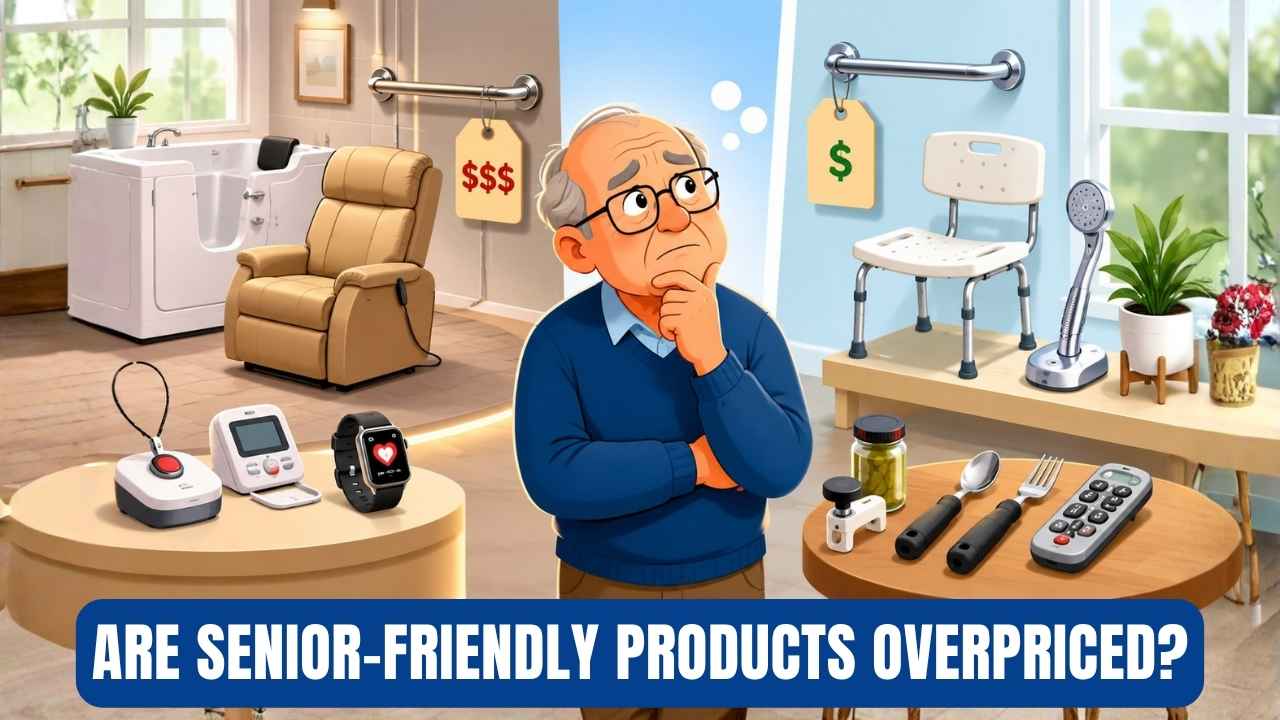

Walk through almost any medical supply store or browse an online catalog, and you’ll notice something surprising: products labeled “senior-friendly” often cost significantly more than similar everyday items.
Is this simply “the senior tax,” or are these products genuinely worth the extra money?
The answer isn’t black and white.
Some products are unquestionably overpriced because of marketing, while others include safety features that can prevent injuries costing thousands of dollars.
Let’s look at the numbers.
1. The Bathroom Grab Bar


A standard towel bar may cost only $15–30.
A properly rated stainless steel grab bar designed to support body weight typically costs $30–100, while professional installation often adds another $100–300 depending on the wall construction.
Scenario
Mary, age 76, slips while stepping out of the shower.
Without a grab bar, she falls and fractures her hip.
A simple $75 grab bar could have prevented a hospital visit that may cost $30,000 or more for treatment and rehabilitation.
Verdict: Usually worth the extra cost.
2. Walk-In Bathtubs


Perhaps the biggest sticker shock comes from walk-in tubs.
Typical costs:
- Basic model: $2,000–5,000
- Average installed price: around $9,000
- Premium installations: $15,000–30,000+
Many homeowners wonder whether they’re paying for genuine safety—or luxury features disguised as necessities.
Alternative
For someone with only mild balance issues:
- Shower chair: $40–120
- Handheld shower head: $30–80
- Grab bars: $30–100 each
Total investment: roughly $150–400, far less than replacing an entire bathtub.
3. Medical Alert Systems


Most monitored medical alert systems cost:
- Equipment: $0–200
- Monthly subscription: $20–50
Premium plans with GPS and automatic fall detection may exceed $60 per month.
Is it overpriced?
If someone lives alone and falls frequently, probably not.
If they rarely leave home and family visits daily, a smartwatch with emergency SOS may provide similar peace of mind at lower ongoing cost.
4. Lift Chairs


Regular recliner:
$300–700
Lift chair:
$800–2,000
The price difference comes from:
- Electric lifting motors
- Reinforced frame
- Higher weight capacity
- Medical-grade durability
For someone with arthritis or knee replacements, standing independently may justify the additional expense.
5. “Senior” Kitchen Gadgets


Examples:
- Easy-grip utensils: $15–40
- Automatic jar opener: $20–60
- Large-button remote control: $15–50
Many similar ergonomic products sold without “senior” branding cost 20–40% less.
This is where marketing often increases the price more than functionality.
Why Are Senior Products More Expensive?
Several factors influence pricing:
- Smaller production volumes
- Medical-grade safety testing
- Regulatory compliance
- Higher-quality materials
- Specialized warranties
- Additional customer support
However, marketing also plays a role. Simply adding terms like “senior,” “medical,” or “elderly” can increase prices, even when the product is nearly identical to a mainstream alternative.
When Paying More Makes Sense
Extra cost is often justified when the product:
- Prevents falls
- Improves mobility
- Reduces caregiver burden
- Helps someone remain independent longer
- Has been independently safety tested
If the added price only changes appearance or branding—not safety or durability—it may be worth comparing alternatives before buying.
Smart Buying Tips
- Compare identical products sold outside the medical market.
- Read independent reviews instead of relying only on marketing claims.
- Check Medicare, veterans’ benefits, insurance, or local aging programs to see if assistance is available.
- Consider whether a lower-cost modification can provide the same level of safety.
- Ask an occupational therapist if a product is truly necessary for your situation.
Final Thoughts
Not every senior-friendly product is overpriced—but not every expensive product is worth the premium either.
The best purchase is the one that matches an individual’s mobility, health, and lifestyle, rather than simply carrying a “senior” label.
Sometimes spending an extra $100 can prevent a devastating injury. Other times, paying an extra $500 buys little more than clever marketing.
The key is to focus on value, not just price.
Disclaimer
This article is for educational and informational purposes only and should not be considered medical, financial, legal, or purchasing advice. Product prices are approximate U.S. market averages as of 2026 and may vary by retailer, location, installation requirements, and available promotions. Always consult a qualified healthcare professional, occupational therapist, or licensed contractor before making decisions involving mobility, accessibility, or home modifications. References to products or price ranges do not constitute endorsements or guarantees.

10 Body Changes After 60 Worth Discussing With Your Doctor
Download these helpful checklists to guide you through your buying and selling journey.Home Buyer's ChecklistHome Seller's ChecklistMistakes To Avoid

Morning Headaches in Seniors: 9 Causes, Warning Signs and What to Do
Download these helpful checklists to guide you through your buying and selling journey.Home Buyer's ChecklistHome Seller's ChecklistMistakes To Avoid

Sudden Weight Gain From Fluid Retention: Causes, Warning Signs & What to Do
Download these helpful checklists to guide you through your buying and selling journey.Home Buyer's ChecklistHome Seller's ChecklistMistakes To Avoid
Download these helpful checklists to guide you through your buying and selling journey.

Home Buyer’s Checklist

Home Seller’s Checklist

Mistakes To Avoid