
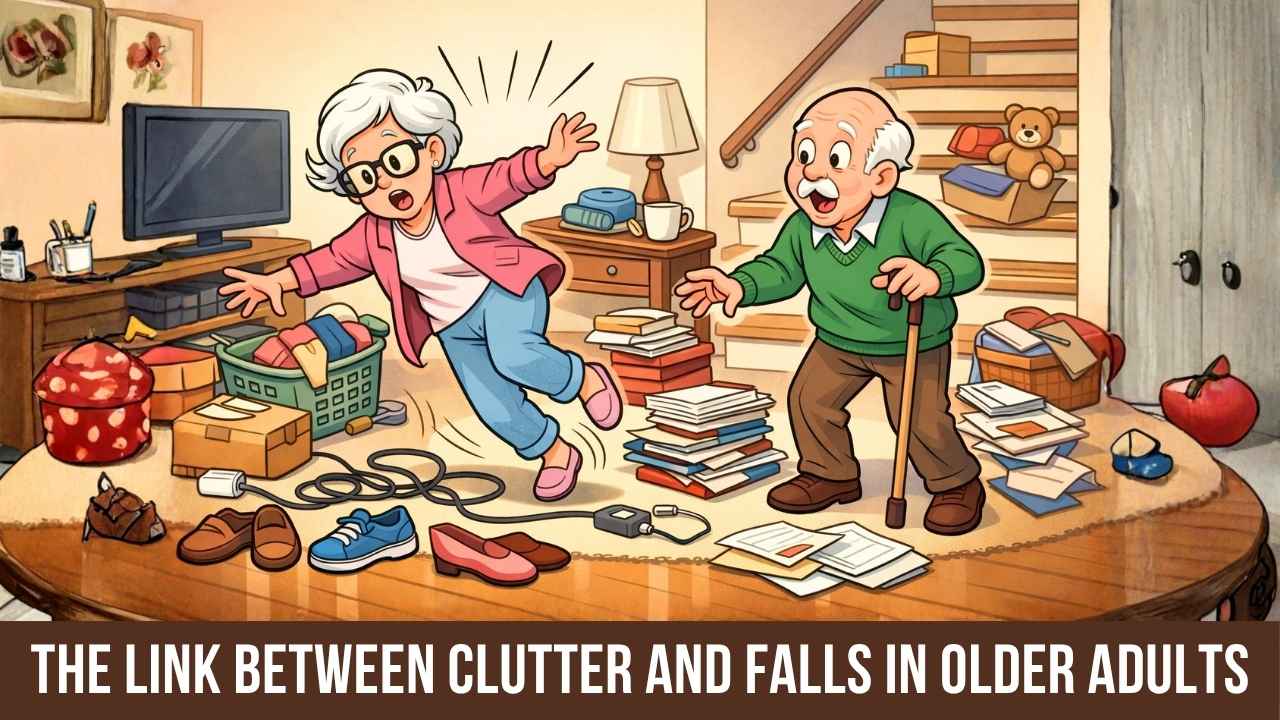

Falls are one of the leading causes of injury among older adults, and surprisingly, clutter is one of the most preventable risks inside the home. As mobility, vision, and balance change with age, everyday items like shoes, cords, or stacks of mail can quickly become serious hazards.
Here are the most common clutter-related risks — and simple ways to fix them.
1. Walkway Clutter and Trip Hazards


Items left on floors — such as shoes, bags, or boxes — create dangerous obstacles. Seniors may not lift their feet as high while walking, increasing the chance of tripping.
Safety Tips:
- Keep walkways clear at all times
- Use storage bins or baskets
- Establish a “no items on the floor” rule
2. Loose Cords and Wires


Electrical cords are easy to overlook but are one of the most common fall hazards in homes. They can catch a foot, walker, or cane unexpectedly.
Safety Tips:
- Use cord organizers
- Secure cords along walls
- Remove unused electronics
3. Excess Furniture and Tight Spaces


Too much furniture makes it difficult for seniors to move safely, especially when using walkers or canes.
Safety Tips:
- Create wide walking paths
- Remove unnecessary furniture
- Rearrange rooms for easy movement
4. Cluttered Stairs


Even small objects on stairs significantly increase fall risk. Stairs already pose a challenge, and clutter makes them much more dangerous.
Safety Tips:
- Keep stairs completely clear
- Install handrails on both sides
- Add proper lighting
5. Paper, Magazines, and Everyday Pileups


Stacks of newspapers, mail, and magazines often accumulate quickly and become overlooked trip hazards.
Safety Tips:
- Use a designated mail basket
- Declutter weekly
- Go digital when possible
Why This Matters
According to health and safety experts, most senior falls happen at home, and many are preventable. Removing clutter is one of the simplest and most effective ways to improve safety and maintain independence.
A safer home means:
- Greater independence
- Fewer injuries
- Better quality of life
- Peace of mind for families
Decluttering doesn’t require a full home makeover. Small changes — like clearing pathways and organizing cords — can make a big difference in preventing falls and supporting safe aging in place.
Disclaimer
This article is for informational and educational purposes only and should not be considered medical, legal, or professional advice. Every individual’s needs and home environment are different. Always consult with qualified healthcare professionals, occupational therapists, or home safety specialists before making safety modifications.
Download these helpful checklists to guide you through your buying and selling journey.

Home Buyer’s Checklist

Home Seller’s Checklist

Mistakes To Avoid

10 Body Changes After 60 Worth Discussing With Your Doctor
Download these helpful checklists to guide you through your buying and selling journey.Home Buyer's ChecklistHome Seller's ChecklistMistakes To Avoid
Morning Headaches in Seniors: 9 Causes, Warning Signs and What to Do
Download these helpful checklists to guide you through your buying and selling journey.Home Buyer's ChecklistHome Seller's ChecklistMistakes To Avoid

Sudden Weight Gain From Fluid Retention: Causes, Warning Signs & What to Do
Download these helpful checklists to guide you through your buying and selling journey.Home Buyer's ChecklistHome Seller's ChecklistMistakes To Avoid