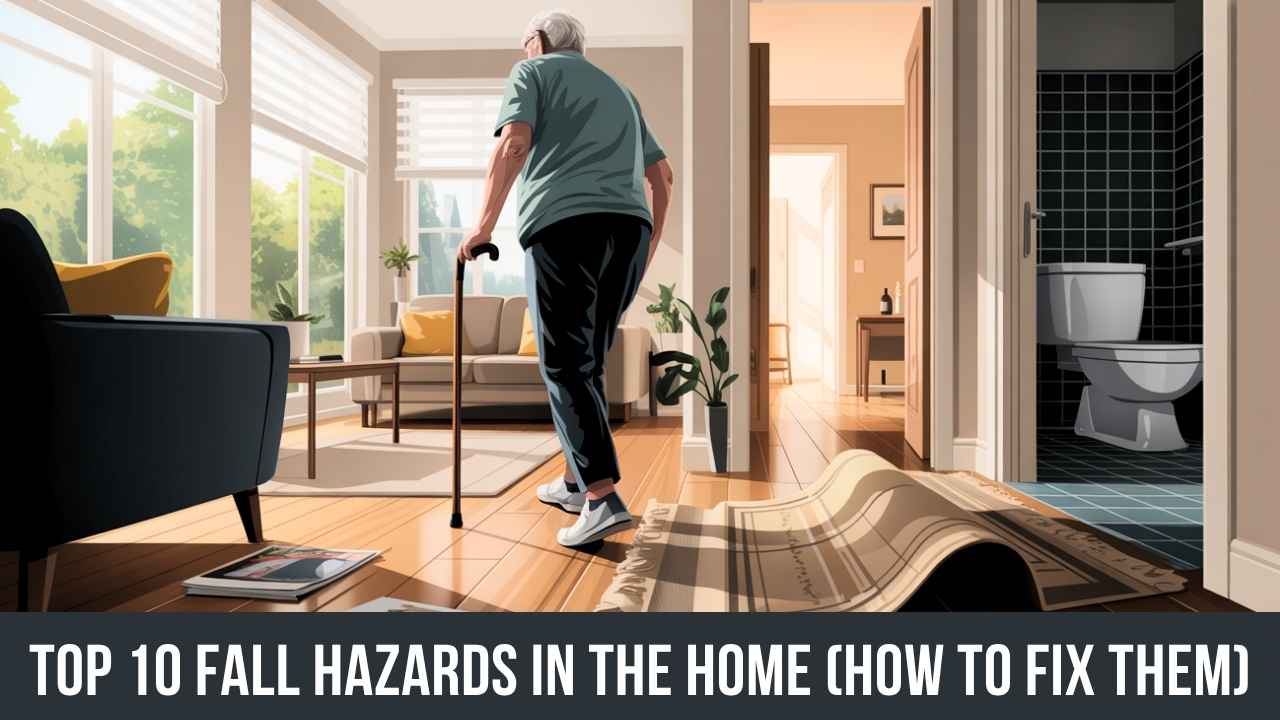

Falls are the leading cause of injury among older adults in North America, with organizations like the Centers for Disease Control and Prevention reporting millions of fall-related incidents each year. The good news? Most falls are preventable with simple home adjustments.
Here are the top 10 fall hazards—and exactly how to fix them.
1. Cluttered Walkways
Hazard: Shoes, cords, and small furniture create tripping risks.
Fix: Keep pathways clear and at least 36 inches wide. Use cord organizers to secure loose wires.
2. Loose Rugs
Hazard: Area rugs can slide or bunch up.
Fix: Remove them or use non-slip backing and double-sided tape.
3. Poor Lighting
Hazard: Dim lighting makes obstacles harder to see.
Fix: Install brighter LED bulbs, nightlights in hallways, and motion-sensor lighting.
4. Slippery Bathroom Surfaces
Hazard: Wet floors and tubs increase fall risk.
Fix: Add grab bars, non-slip mats, and consider walk-in tubs or showers.
5. Stairs Without Handrails
Hazard: Lack of support increases instability.
Fix: Install sturdy handrails on both sides and ensure steps are even and well-lit.
6. Uneven Flooring
Hazard: Thresholds, loose tiles, or warped wood can trip you.
Fix: Repair uneven surfaces and use transition strips where needed.
7. Inappropriate Footwear
Hazard: Slippers or socks without grip can slip easily.
Fix: Wear non-slip, well-fitted shoes—even indoors.
8. Hard-to-Reach Items
Hazard: Climbing stools or chairs increases fall risk.
Fix: Store frequently used items at waist-to-shoulder height.
9. Pets Underfoot
Hazard: Small pets can cause unexpected trips.
Fix: Use bells or bright collars on pets and train them to avoid walkways.
10. Lack of Assistive Devices
Hazard: Not using needed support increases instability.
Fix: Use canes, walkers, or install grab bars as recommended by healthcare professionals.
Final Thought
Creating a safer home doesn’t require a full renovation—just intentional, practical changes. Whether you’re a homeowner, caregiver, or real estate professional, addressing these hazards can significantly improve safety and quality of life.
Disclaimer
This article is for informational purposes only and does not constitute medical, legal, or professional advice. Always consult with a qualified healthcare provider, licensed contractor, or safety specialist before making significant changes to your home or health routine. Individual needs and risks may vary.
Download these helpful checklists to guide you through your buying and selling journey.

Home Buyer’s Checklist
Home Seller’s Checklist
Mistakes To Avoid

10 Body Changes After 60 Worth Discussing With Your Doctor
Download these helpful checklists to guide you through your buying and selling journey.Home Buyer's ChecklistHome Seller's ChecklistMistakes To Avoid
Morning Headaches in Seniors: 9 Causes, Warning Signs and What to Do
Download these helpful checklists to guide you through your buying and selling journey.Home Buyer's ChecklistHome Seller's ChecklistMistakes To Avoid
Sudden Weight Gain From Fluid Retention: Causes, Warning Signs & What to Do
Download these helpful checklists to guide you through your buying and selling journey.Home Buyer's ChecklistHome Seller's ChecklistMistakes To Avoid