
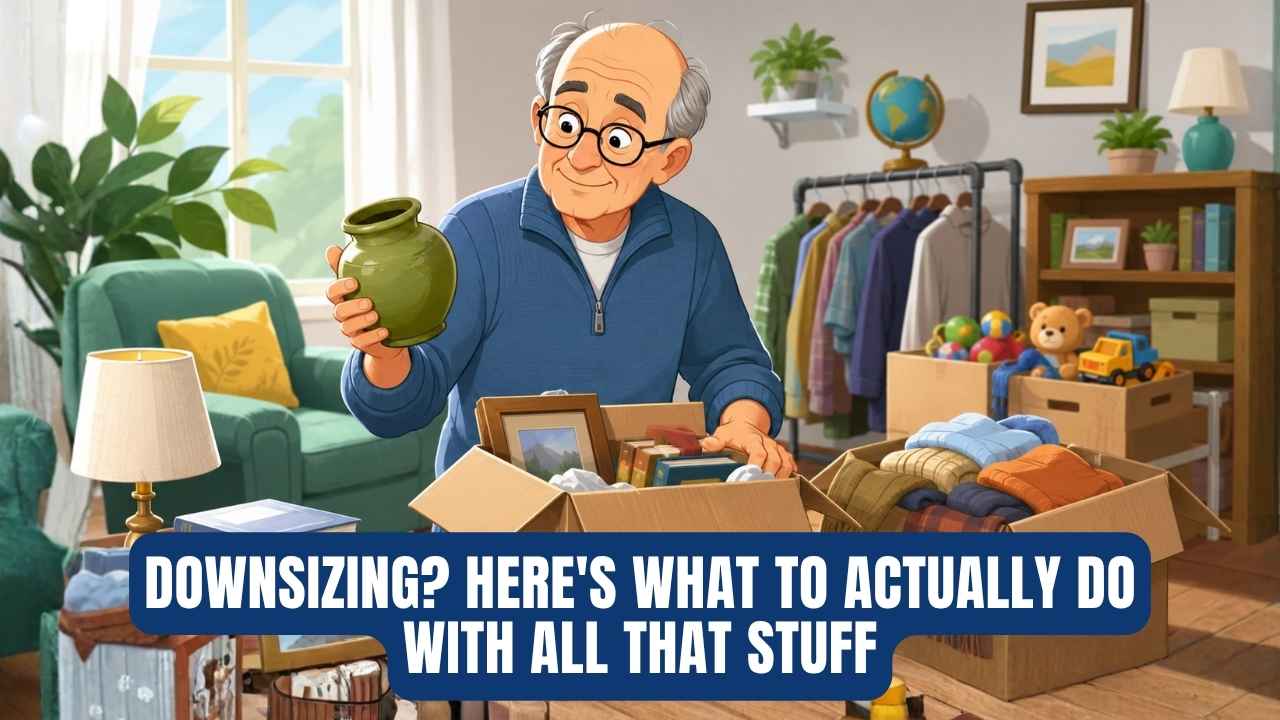

So you’ve made the decision to downsize. Maybe you’re moving into a smaller home, helping a parent transition into senior living, or just craving a simpler life with less to manage. Congratulations — that’s a big, brave step.
Now comes the part nobody really prepares you for: the stuff.
The furniture. The boxes in the attic. The china your grandmother left you. The garage full of “I’ll get to this someday.” If you’re staring at it all wondering where on earth to even begin, take a breath. You are not alone, and you are not behind. Downsizing is equal parts logistics and emotion, and this guide is here to help you handle both.
Why Downsizing Feels So Hard (And Why That’s Normal)
Here’s something worth saying out loud: downsizing your belongings isn’t just a physical task, it’s an emotional one. Every item in your home is a small time capsule — a memory, a “just in case,” a piece of who you were at a certain point in your life. It’s completely normal to feel overwhelmed, sentimental, or even a little grieved by the process.
The good news? You don’t have to make every decision at once, and you don’t have to do it alone. Give yourself permission to go slowly, and remember: the goal isn’t to get rid of everything. It’s to keep what truly serves your next chapter.
Start With a Plan, Not a Trash Bag
Before you touch a single box, take a trip to your new space (or measure your current one if you’re staying put but simplifying). Note the room sizes, closet space, and storage areas. This becomes your blueprint for what can realistically come with you.
A few practical tips to start strong:
- Tackle big items first. Furniture, appliances, and large pieces take up the most room, so deciding on these early gives you a clearer picture of what space is left for everything else.
- Give yourself a real timeline. Don’t plan to declutter an entire house in a weekend. Break it down room by room, and build in buffer time so you’re not rushing sentimental decisions.
- Use a simple sorting system. A classic and effective method is four boxes or piles: Keep, Donate, Sell, and Undecided. Some people also add a “Family” pile for items loved ones might want.
What to Do With Belongings When Downsizing: Room by Room
Kitchen
Duplicates are the biggest culprit here. Do you really need three sets of mixing bowls or two coffee makers? Keep what you use regularly, and let go of the rest.
Closets and Wardrobe
If you haven’t worn it in the past year (excluding true seasonal or special-occasion pieces), it’s probably safe to donate. Be honest with yourself about the “someday” clothes — someday rarely comes.
Bathroom
This one’s easy: check expiration dates on medications and toiletries, and toss anything expired or unused. It’s a quick decluttering win that builds momentum for harder rooms.
Garage and Storage Areas
These spaces tend to become where things go to be forgotten. Set aside real time here, and be prepared to let go of tools, holiday decorations, or projects you know you’ll never finish.
Sentimental Items and Keepsakes
Save this room for last — after you’ve built confidence with easier decisions. When it comes to memorabilia, photos, and heirlooms, ask yourself:
- Will I actually miss this if it’s gone?
- Does this bring back a good memory or a heavy one?
- Could I take a photo of this item instead of keeping the physical object?
You don’t have to keep everything to honor a memory. A single, well-chosen keepsake can hold as much meaning as an entire box of them.
Deciding What to Keep, Donate, Sell, or Toss
Once you’ve sorted your belongings, it’s time to decide where each pile actually goes:
Keep — Items you use regularly or that hold irreplaceable meaning and fit your new space.
Donate — Gently used clothing, furniture, books, and household goods are almost always welcome at local charities, shelters, and community organizations. Donating is often the fastest way to clear space while giving items a second life.
Sell — For furniture, antiques, or collectibles that may hold real value, research before you part with them. Check online marketplaces, local auction houses, or ask a librarian about antique price guides. A quick appraisal can turn “just an old dresser” into meaningful moving-day cash.
Toss — Broken, expired, or unusable items. Be responsible here — recycle where you can rather than sending everything to a landfill.
What If Nobody Wants Your Stuff?
This is one of the most common (and hardest) realities of downsizing, especially for those passing down family heirlooms. Tastes change between generations, and many adult children simply don’t have the space — or desire — for items their parents cherished.
If this happens to you:
- Offer items to extended family or friends before assuming no one wants them.
- Look into estate sale companies or consignment shops for valuable pieces.
- Consider donating meaningful items to a museum, historical society, or organization aligned with their significance.
- Give yourself grace. Letting an item go doesn’t erase the memory attached to it.
When You’re Not Ready to Decide: Storage as a Bridge
If you’re torn on certain items, a short-term storage unit can be a helpful middle ground. It takes the pressure off making permanent decisions all at once and gives you time to revisit items with a clearer head later on.
A Gentle Reminder
Downsizing your belongings is ultimately about making room — not just in your home, but in your life — for what matters most right now. It’s okay to feel emotional. It’s okay to change your mind. And it’s okay to take this one box, one room, and one decision at a time.
You’re not just getting rid of things. You’re choosing what comes with you into the next chapter.
Disclaimer: This article is intended for general informational and educational purposes only and does not constitute professional moving, legal, financial, tax, or estate planning advice. Decisions about valuable items, antiques, estate distribution, or disposal of certain materials (such as medications, chemicals, or electronics) may be subject to local laws and regulations. Please consult a qualified professional — such as an estate attorney, financial advisor, appraiser, or your local waste management authority — before making decisions specific to your situation. The author and publisher assume no liability for actions taken based on the content of this article.

10 Body Changes After 60 Worth Discussing With Your Doctor
Download these helpful checklists to guide you through your buying and selling journey.Home Buyer's ChecklistHome Seller's ChecklistMistakes To Avoid

Morning Headaches in Seniors: 9 Causes, Warning Signs and What to Do
Download these helpful checklists to guide you through your buying and selling journey.Home Buyer's ChecklistHome Seller's ChecklistMistakes To Avoid

Sudden Weight Gain From Fluid Retention: Causes, Warning Signs & What to Do
Download these helpful checklists to guide you through your buying and selling journey.Home Buyer's ChecklistHome Seller's ChecklistMistakes To Avoid
Download these helpful checklists to guide you through your buying and selling journey.

Home Buyer’s Checklist

Home Seller’s Checklist

Mistakes To Avoid