


When smart homes first hit the market, they promised convenience, comfort, and even savings. Voice assistants that play music on command, thermostats that learn your habits, and doorbell cameras that let you see who’s knocking from anywhere. But behind that convenience, there is a growing concern that these same devices may be watching and listening more than you realize.
The Devices That Never Stop Listening
Take voice assistants like Amazon Alexa or Google Home. According to a 2022 study from Northeastern University, these devices are not always as quiet as we think. Researchers found that smart speakers can be accidentally triggered and record conversations without the user knowing. In fact, Amazon admitted in 2019 that some Alexa voice recordings were manually reviewed by employees to improve the system. That means snippets of private conversations could end up being listened to by someone across the globe.
Data Collection That Feels Endless
Smart thermostats, security cameras, and even light bulbs are constantly gathering data. A report from the Mozilla Foundation revealed that 72 percent of smart home devices fail to meet basic privacy standards. Many collect more data than they need, such as tracking when you are home, what time you sleep, or even how often you use your appliances. This data is often shared with third parties, sometimes advertisers, and in certain cases law enforcement.
Privacy Breaches Are Already Happening
This is not a “what if” scenario. In 2021, hackers gained access to over 150,000 security cameras made by the company Verkada. The breach exposed footage from schools, hospitals, and even Tesla factories. In another case, a family reported that their baby monitor had been hacked, allowing strangers to watch their child and even speak through the device. Incidents like these show how fragile the security of connected homes can be.
What People Think About It
Surveys reflect just how uneasy homeowners are starting to feel. A Pew Research Center survey found that 54 percent of Americans believe it is not possible to go through daily life without being tracked by companies. Another study by Deloitte showed that while 66 percent of U.S. households own at least one smart device, nearly half of those owners worry that the devices could expose personal data.
What You Can Do to Protect Yourself
You don’t have to ditch your smart home completely, but you do need to be smart about it. Experts recommend changing default passwords, updating device software regularly, and turning off features you don’t need, such as voice recording history. Reading the privacy policy before buying a device can also help, though most people admittedly skip this step. Finally, consider keeping sensitive conversations away from devices that are always listening.
The Bottom Line
Smart homes have incredible potential to make our lives easier, but convenience often comes at a cost. Every click, every voice command, and every automated routine is data that companies can use, share, or even lose to hackers. The truth is, your smart home might be spying on you right now without you realizing it. The real question is how much privacy you are willing to trade for comfort.

12 Cozy Home Essentials for a Happier, More Relaxing Senior Living Space
There's a quiet kind of joy in a home that just feels good — the kind where the light hits softly in the afternoon, your favorite chair is exactly where you left it, and everything within reach makes daily life a little sweeter. For seniors living alone, that feeling...

Downsizing? Here’s What to Actually Do With All That Stuff
So you've made the decision to downsize. Maybe you're moving into a smaller home, helping a parent transition into senior living, or just craving a simpler life with less to manage. Congratulations — that's a big, brave step. Now comes the part nobody really prepares...
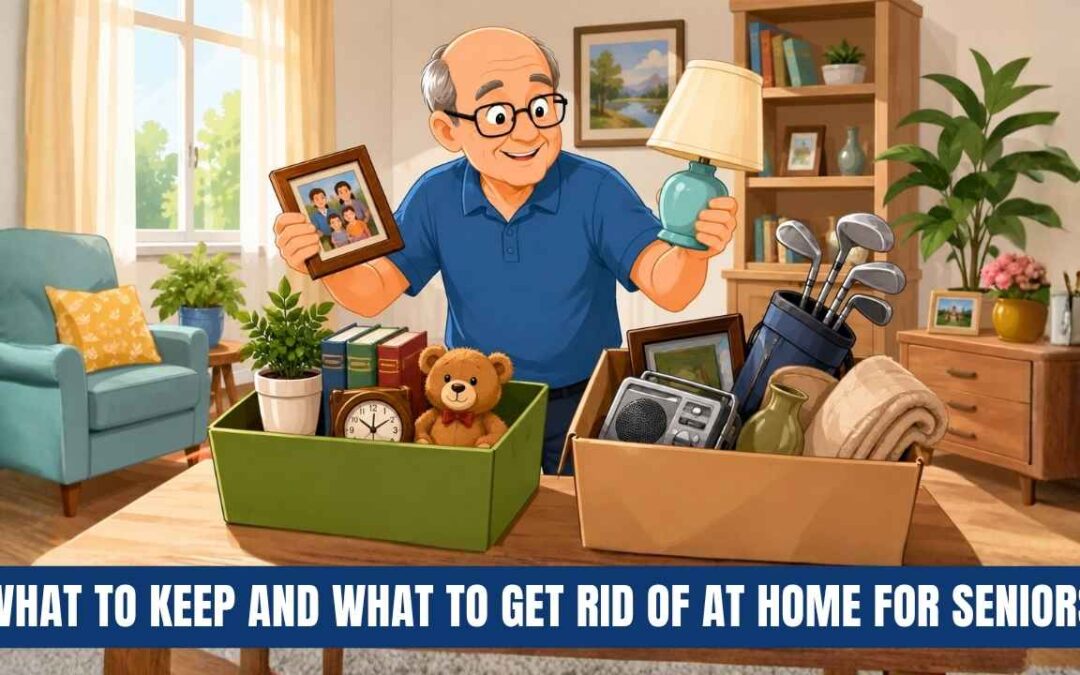
What to Keep and What to Get Rid Of at Home for Seniors: A Room-by-Room Safety & Downsizing Guide
What to Keep and What to Get Rid Of at Home for Seniors: A Room-by-Room Safety & Downsizing Guide Let's be honest — most of us hold onto things "just in case." A closet full of maybe-someday items. A rug that's been in the family for twenty years. A stack of...